


The world of work has been disrupted in so many fundamental ways since the start of the COVID-19 pandemic and things will never return to normal. Prior to COVID-19, digital disruption had already started to change the shape of the modern workplace redefining the way work is done worldwide. COVID-19 accelerated the rapid adoption of digitalization but also changed the workplace as we knew it. What does all of this mean for modern-day workers, employers, trade unions and conditions of service generally?
Tomorrow, Saturday, 1st May is International Workers Day and as we celebrate Workers Day in South Africa, it calls for serious reflection on worker’s rights and conditions of service as the COVID-19 pandemic continues to take hold of our lives, how we work and the general state of our existence. Since the lockdown at the end of March last year, millions of South Africa’s workforce were forced to abandon their places of work and started working from home, while others were forced to work for reduced hours and even worse yet, millions had lost their jobs.
I wonder how many have paused to consider these impacts in the context of South Africa’s vast socio-economic challenges. For many South Africans, the mere ritual of leaving home early in the morning, using public transport and finding their way to an office, a factory or a general place of work carries with it a sense of respect, pride and dignity within both the family and the local community at large. What many have had a lifelong struggle to achieve, was taken away in one foul swoop and must have had a major psychological effect on workers generally.
Additionally, many South African workers do not have the luxury of living in a safe working environment never mind the conversion of this environment into a safe space to work. Couple this with the added requirement of digital enablement, workers now need the tools to connect them to their workplaces and their colleagues to ensure their continued productivity in a virtual environment. Workers now require laptops, data, good quality network connectivity, a quiet place to work from as well as a safe and dignified workspace that allows them to be motivated, engaged and productive. Many South Africans live in extended families and in many instances live in crowded and informal settlements, in addition to having young children occupying the same space.

I am curious to know how employers have been coping with work from home challenges as well as how they have been enabling their employees to work from home. Whilst many global corporates have extremely stringent health and safety guidelines which form a prerequisite for creating healthy and safe workspaces for their employees – how have they reconciled with the current lack of safe working conditions most South Africans experience daily?
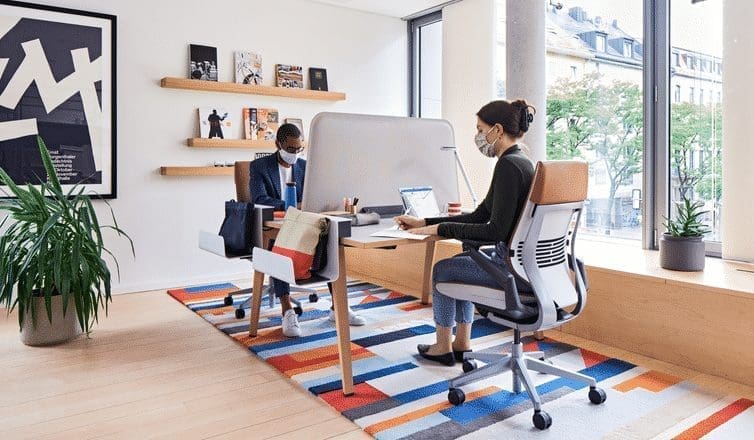
Something as simple as a comfortable chair and a desk or items of furniture which we may take for granted, the majority of working-class employees simply do not have. I am aware that some big corporations have been subsidizing their employee’s home office furniture and equipment to create a comfortable working environment, but this is few and far between. It leaves one to wonder how the rest of the working population is getting along. In addition to the need for safe spaces, working from home has dramatically increased screen time and work hours. The mere fact that most workers are working online and engaging virtually and in digital spaces as opposed to physical spaces means that workers now have to work longer hours in order to reach work commitments. This is inevitably leading to digital fatigue and fewer opportunities for workers to take breaks, relax, rejuvenate and resume productive work.
With the majority of workers now off-site internal communication has been disrupted and is in all likelihood presenting new challenges on how to keep employees informed and engaged. Added to this is the heightened need to reduce overall levels of stress, workers have to care for or bury close family members and friends. The overall collective anxiety in respect of contracting the virus and anticipation for vaccine rollouts during this time calls for increased employer support such as counselling, time off from work and general empathy when engaging employees.
Work from home has led to a disconnect between workers and their unions too who are the custodians who engage on their behalf in order to protect worker rights and bargain on their behalf. The pandemic would inevitably have affected the efficacy of unions to represent their workers effectively, despite the need for increased worker protection. One of the negative impacts of the pandemic has undoubtedly been its impact on the economy, resulting in massive job losses and reduced company turnovers which inevitably means workers would have had salary cuts, no or small increases or bonuses and in some instances a reduction of their benefits. In a world where much has changed and people are expected to be grateful for what they have, it is also undoubtedly a breeding ground for worker exploitation. Now more than ever workers need to be represented boldly so that their rights are not eroded by the new world of work.
Frontline workers generally and those in the healthcare sector specifically have been at the forefront of the pandemic and have paid the biggest price both with their lives and the highly pressurized and unrealistic expectation to serve the public despite the toll it is taken both on their mental and physical health. While digital intervention and its adoption has been accelerated during COVID, the human cost of the pandemic cannot be fairly calculated. Health care workers have to work under unusually high risk or even unfit work conditions. While the ideal is to ensure the safety of workers first how do we strike a balance between the need to save lives versus the conditions within which ordinary men and women are expected to work every day?
Now more than ever, all stakeholders need to come together to design safe work environments, even if they now work from home, that considers both the mental and physical strain the pandemic has had on workers. Workers are central to value creation and creating enabling environments for their productive work is not their responsibility. Both the government and employers need to step up and ensure that worker rights are protected and that workers are given the appropriate health and wellness support so that they can continue to hold up the economy. Let us celebrate and commemorate workers on 1 May, now more than ever.
