


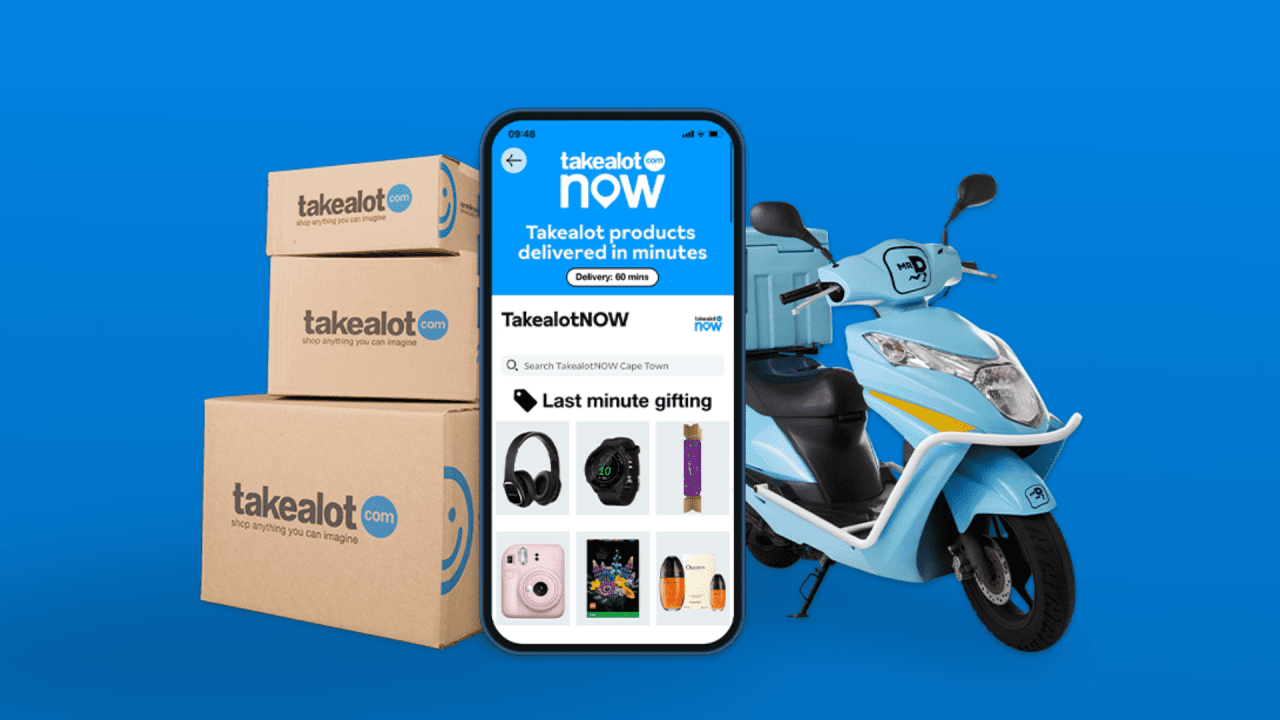
Takealot Group, South Africa’s dominant online retailer, has successfully defended its market share against a wave of international competitors, posting a significant financial turnaround for the 2026 fiscal year.
Parent company Naspers confirmed today that the Takealot Group swung to a full-year aEBIT profit of $11 million (R180 million), a dramatic recovery from a $13 million (R213 million) loss in the previous year.
The results highlight the resilience of the local e-commerce leader in the face of aggressive market entries.
Takealot Group’s market leadership is under relentless pressure from multiple angles. Globally, the platform faces stiff competition from Amazon’s localized expansion and the aggressive pricing of Chinese retailers Shein and Temu.
Locally, the fight is just as intense, with traditional powerhouses Checkers Sixty60 and Makro leveraging their physical footprints to capture a growing share of South African online shoppers.
Revenue Surge and Profitability Drivers
The group reported an 18% increase in revenue (excluding M&A) to $1 billion (R16 billion), demonstrating robust consumer demand. According to the Naspers financial report, the profitability surge was fueled by a combination of strategic initiatives:
-
Category Mix Optimization: Shifting focus to higher-margin product categories.
-
Retail Media Growth: Increased advertising revenue from brands using Takealot’s platform.
-
TakealotMORE Subscription: The loyalty program proved highly effective, capturing 27% of the Gross Merchandise Value (GMV) and encouraging higher shopping frequency.
The group’s aEBITDA skyrocketed by 86% to $78 million, while total group GMV grew by 14% to $2 billion.
Core Platforms: Takealot.com and Mr D
The flagship marketplace, Takealot.com, remains the primary revenue engine, generating $906 million in revenue, a 28% year-on-year increase. The platform achieved an aEBIT profit of $7 million, supported by 18% order growth.
Simultaneously, the group’s on-demand delivery service, Mr D, posted an 18% revenue increase to $138 million. Mr D continues to be a stable profit center, maintaining a steady aEBIT of $4 million.
Defending Market Leadership Against Global Giants
The financial results come at a time of heightened competition in the South African digital market. Since Amazon’s localized launch and the viral rise of Temu and Shein, local incumbents have been under pressure to compete on price and delivery speed.
However, Takealot Group has held its ground. Naspers emphasized that the integration of TakealotMORE and the expansion of Takealot Fulfilment Solutions (TFS) have created a “moat” around its business. TFS is now being scaled as a standalone revenue stream, allowing external customers to leverage Takealot’ Groups extensive logistics network across South Africa.
Future Strategy: Scaling Logistics and Efficiency
Looking ahead to fiscal year 2027, Naspers outlined a strategy to further monetize its infrastructure.
“This strengthens Takealot Group’s integrated business model,” the company stated. “Takealot.com and Mr D generate the transactional volume that provides scale, TakealotMORE deepens customer engagement, and TFS converts operational capacity into revenue – improving overall business efficiency.”
By leveraging its logistics footprint to serve third-party sellers and businesses, Takealot Group aims to improve overall business efficiency and maintain its profitability trajectory, proving that localized infrastructure is a key differentiator against international competitors who rely heavily on cross-border shipping.
Also read: GUGU LOURIE: Underestimating Takealot could be Amazon’s achilles heel
