


by Christopher Webb, and Natasha Vally
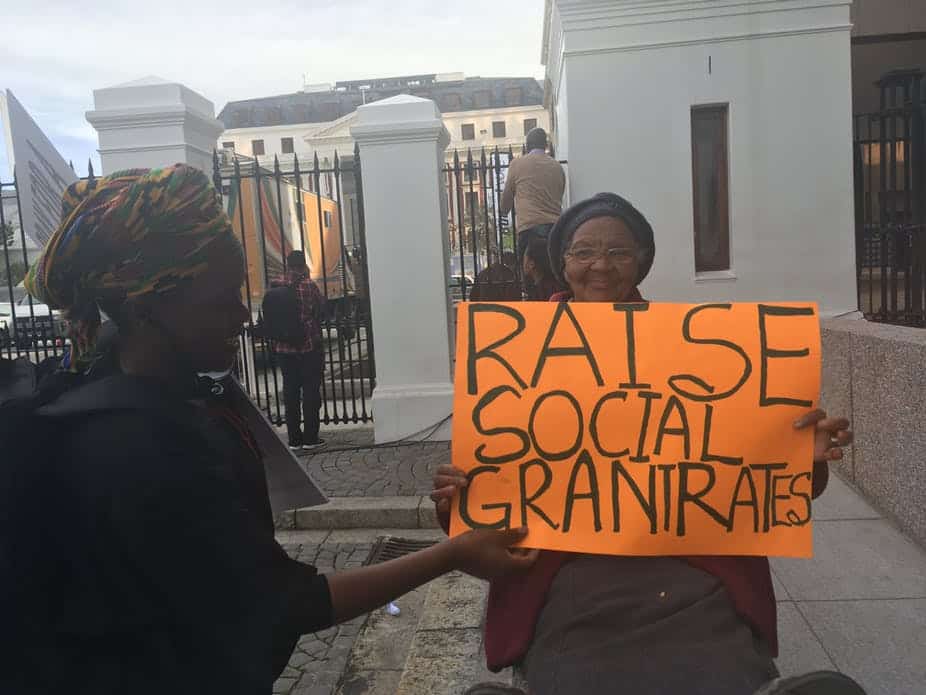
South African President Cyril Ramaphosa recently announced a significant package of social and economic measures to address the fallout from the country’s COVID-19 lockdown. The package includes a R50 billion increase to the value of existing social grants, a new grant and delivery of food parcels to poor households. All will last for six months.
The news came after civil society organisations, researchers and unions expressed concerns about the shortfall in existing welfare support.
The social grant increases are particularly necessary now. They will keep millions from starvation. But after the crisis has abated people will face rising levels of unemployment and food costs.
To deal with South Africa’s persistent inequality, high unemployment, and the economic aftermath of the pandemic, grant increases must remain in place after the six month period.
The increases
The supplementation of the grants raises the child social grant (paid to the caregivers of around 12.5 million children) to R740 per child in May 2020. From June to October 2020, child social grants will be decreased to their original amount (R440 per month) and caregivers will receive an additional R500 per month.
A payment increase per caregiver means that instead of a household with three children receiving an additional R1500 per month, they will only get an additional R500 – the same amount as a family with one child. This has been condemned by civil society groups and researchers who called for grant increases per child.
All other grants will be augmented by R250 per month for six months with a special COVID-19 Social Relief of Distress grant of R350 per month for those who are not covered by other grants or the Unemployment Insurance Fund.
The COVID-19 lockdown has clarified the gaps and insufficiencies in South Africa’s social welfare system. The initial package of relief measures was aimed at supporting households by expanding the Unemployment Insurance Fund, but as economists have shown, about 45% of workers are not eligible for the fund.
Informal sector workers also do not qualify for Unemployment Insurance Fund, and only one in five receives income support through the child support grant. The shortfalls leave at least 8 million people without any form of direct income support.
The grant increases, alongside the new COVID-19 grant, will provide a necessary salve to poor households especially as direct food aid is weighed down by lethargic bureaucracies and accusations of corruption.
Read more:
Social protection responses to the COVID-19 lockdown in South Africa
The grant system
Eighteen million people in South Africa rely on social grants, with 20% of households depending on grants as their main source of income. The expansion of grants in the post-apartheid period has made an impact on overall household poverty levels, and the child grant in particular has had a demonstrable effect on children’s health and welfare.
Despite the grants, almost 28% of South Africans live in extreme poverty, defined as below the food poverty line. The importance of grants should not mask the fact that they are insufficient in a context in which unemployment hovers around 40%.
For many years, grant increases have barely kept pace with food inflation, leading to an increase in hunger in households. Food price inflation in South Africa is high and, while in recent years this inflation has ebbed, when it peaked at 12% in 2016 the child support grant rose by only 6%. By our calculations the average increase for the child support grant between 2010 and 2019 was only 5.5% each year. While individual years have seen more sizeable increases, adjusted for inflation, the child support grant has either declined or stagnated in value.
In practice, poor households spend 34% of their total income on food while non-poor households spend only 10%. This means that poor households’ food security is far more susceptible to economic shocks.
Access to the child grant also has positive effects on the health and wellbeing of children. But, as Stephen Deveraux at the Institute of Development Studies at the University of Sussex has shown, grant increases need to be significant to have an impact on child malnutrition.
The stagnation and decline of the value of grants has undermined the health of millions of South African children. The May increase to the child grant brings it in line with the actual monthly cost of securing a nutritionally complete diet for a child between 10 and 13 in 2018, which was R588.45. In doing so, it provides a major opportunity to address child malnutrition and improve income distribution on a national scale.
The grant also goes some way towards empowering women, who face the overwhelming burden of care work. Research has shown that the child support grant enables women in poor communities to exert greater control over general household spending.
Read more:
Why South Africa needs to ensure income security beyond the pandemic
Post-coronavirus
The grant increases alone will not address the expenses associated with basic survival in poor households. This is why grant increases should not be financed with conditional loans that affect future social spending. If, as author and political activist Arundhati Roy has suggested, the pandemic is a portal to a different future, then we must ask what kind of future we would like to see. The pandemic provides an opportunity to redress some of the failures that maintain poverty.
We should not think of substantial grant increases as a stop-gap measure but as one of a series of tools to address poverty. Organisations, grant claimants and activists continue to push for an extended child grant (to age 21 because of the high number of child-headed households), a job-seekers’ grant to cover the high costs of finding work, and a Universal Basic Income.
South Africa should take the opportunity to reimagine a welfare system based on social justice and solidarity. This is especially pressing given the fact that millions of people face a future without secure work. It would be a system that not only expanded access to substantive grants but was part of a larger project of redistribution. The moment calls for bold proposals that go beyond short-term measures. The grant increases alone will not address the expenses associated with basic survival in poor households – and surely, we should exist not only to survive but to live good lives.
Christopher Webb, Instructor in Human Geography, Carleton University and Natasha Vally, Lecturer, Department of Sociology, University of Cape Town
This article is republished from The Conversation under a Creative Commons license. Read the original article.

