Close Menu
  • Homepage
  • News
  • Cloud & AI
  • ECommerce
  • Entertainment
  • Finance
  • Opinion
  • Podcast
  • Contact

Subscribe to Updates

Get the latest technology news from TechFinancials News about FinTech, Tech, Business, Telecoms and Connected Life.

What's Hot

Ethereum Traders Increase Leverage On-Chain As HFDX Liquidity Hits New Highs

2026-01-31

New To On-Chain Perps? HFDX Is Rapidly Emerging As The Beginner-Friendly Option

2026-01-31

Standard Chartered GBA Business Confidence Indices reveal steady business sentiment

2026-01-31
Facebook X (Twitter) Instagram
Trending
  • Ethereum Traders Increase Leverage On-Chain As HFDX Liquidity Hits New Highs
Facebook X (Twitter) Instagram YouTube LinkedIn WhatsApp RSS
TechFinancials
  • Homepage
  • News
  • Cloud & AI
  • ECommerce
  • Entertainment
  • Finance
  • Opinion
  • Podcast
  • Contact
TechFinancials
Home»Opinion»Could A Court Really Order The Destruction Of ChatGPT? The New York Times Thinks So, And It May Be Right
Opinion

Could A Court Really Order The Destruction Of ChatGPT? The New York Times Thinks So, And It May Be Right

João MarinottiBy João Marinotti2024-02-01No Comments5 Mins Read
Share Facebook Twitter Pinterest LinkedIn Tumblr Email
Old media, meet new. Idrees Abbas/SOPA Images/LightRocket via Getty Images
Share
Facebook Twitter LinkedIn Pinterest Email Copy Link

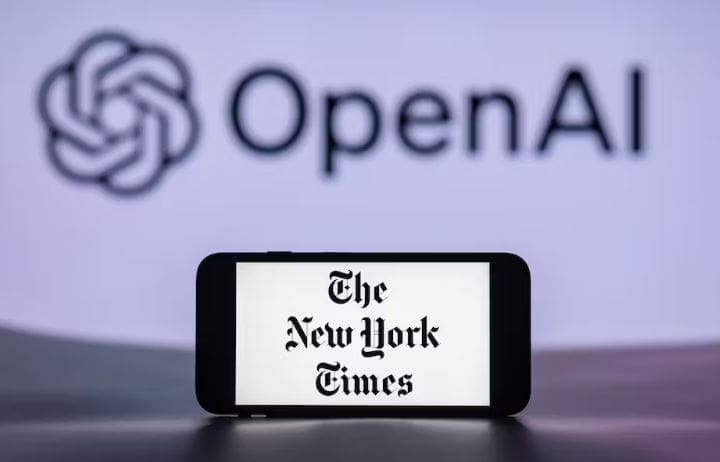
On Dec. 27, 2023, The New York Times filed a lawsuit against OpenAI alleging that the company committed willful copyright infringement through its generative AI tool ChatGPT. The Times claimed both that ChatGPT was unlawfully trained on vast amounts of text from its articles and that ChatGPT’s output contained language directly taken from its articles.

To remedy this, the Times asked for more than just money: It asked a federal court to order the “destruction” of ChatGPT.

If granted, this request would force OpenAI to delete its trained large language models, such as GPT-4, as well as its training data, which would prevent the company from rebuilding its technology.

This prospect is alarming to the 100 million people who use ChatGPT every week. And it raises two questions that interest me as a law professor. First, can a federal court actually order the destruction of ChatGPT? And second, if it can, will it?

Destruction in the court

The answer to the first question is yes. Under copyright law, courts do have the power to issue destruction orders.

To understand why, consider vinyl records. Their resurging popularity has attracted counterfeiters who sell pirated records.

If a record label sues a counterfeiter for copyright infringement and wins, what happens to the counterfeiter’s inventory? What happens to the master and stamper disks used to mass-produce the counterfeits, and the machinery used to create those disks in the first place?

To address these questions, copyright law grants courts the power to destroy infringing goods and the equipment used to create them. From the law’s perspective, there’s no legal use for a pirated vinyl record. There’s also no legitimate reason for a counterfeiter to keep a pirated master disk. Letting them keep these items would only enable more lawbreaking.

So in some cases, destruction is the only logical legal solution. And if a court decides ChatGPT is like an infringing good or pirating equipment, it could order that it be destroyed. In its complaint, the Times offered arguments that ChatGPT fits both analogies.

Play
NBC News reports on The New York Times’ lawsuit.

Copyright law has never been used to destroy AI models, but OpenAI shouldn’t take solace in this fact. The law has been increasingly open to the idea of targeting AI.

Consider the Federal Trade Commission’s recent use of algorithmic disgorgement as an example. The FTC has forced companies such as WeightWatchers to delete not only unlawfully collected data but also the algorithms and AI models trained on such data.

Why ChatGPT will likely live another day

It seems to be only a matter of time before copyright law is used to order the destruction of AI models and datasets. But I don’t think that’s going to happen in this case. Instead, I see three more likely outcomes.

The first and most straightforward is that the two parties could settle. In the case of a successful settlement, which may be likely, the lawsuit would be dismissed and no destruction would be ordered.

The second is that the court might side with OpenAI, agreeing that ChatGPT is protected by the copyright doctrine of “fair use.” If OpenAI can argue that ChatGPT is transformative and that its service does not provide a substitute for The New York Times’ content, it just might win.

The third possibility is that OpenAI loses but the law saves ChatGPT anyway. Courts can order destruction only if two requirements are met: First, destruction must not prevent lawful activities, and second, it must be “the only remedy” that could prevent infringement.

That means OpenAI could save ChatGPT by proving either that ChatGPT has legitimate, noninfringing uses or that destroying it isn’t necessary to prevent further copyright violations.

Both outcomes seem possible, but for the sake of argument, imagine that the first requirement for destruction is met. The court could conclude that, because of the articles in ChatGPT’s training data, all uses infringe on the Times’ copyrights – an argument put forth in various other lawsuits against generative AI companies.

In this scenario, the court would issue an injunction ordering OpenAI to stop infringing on copyrights. Would OpenAI violate this order? Probably not. A single counterfeiter in a shady warehouse might try to get away with that, but that’s less likely with a US$100 billion company.

Instead, it might try to retrain its AI models without using articles from the Times, or it might develop other software guardrails to prevent further problems. With these possibilities in mind, OpenAI would likely succeed on the second requirement, and the court wouldn’t order the destruction of ChatGPT.

Given all of these hurdles, I think it’s extremely unlikely that any court would order OpenAI to destroy ChatGPT and its training data. But developers should know that courts do have the power to destroy unlawful AI, and they seem increasingly willing to use it.The Conversation

João Marinotti, Associate Professor of Law, Indiana University

This article is republished from The Conversation under a Creative Commons license. Read the original article.

AI ChatGPT Copyright intellectual property New York Times OpenAI piracy Piricay ethical AI
Share. Facebook Twitter Pinterest LinkedIn Tumblr Email
João Marinotti

Related Posts

South Africa Could Unlock SME Growth By Exploiting AI’s Potential Through Corporate ESD Funds

2026-01-28

How Local Leaders Can Shift Their Trajectory In 2026

2026-01-23

Why Legal Businesses Must Lead Digital Transformation Rather Than Chase It

2026-01-23

Directing The Dual Workforce In The Age of AI Agents

2026-01-22

The Productivity Myth That’s Costing South Africa Talent

2026-01-21

The Boardroom Challenge: Governing AI, Data And Digital

2026-01-20

Ransomware: What It Is And Why It’s Your Problem

2026-01-19

AI Can Make The Dead Talk – Why This Doesn’t Comfort Us

2026-01-19

Can Taxpayers Lose By Challenging SARS?

2026-01-16
Leave A Reply Cancel Reply

DON'T MISS
Breaking News

Meet The €2.95M Capricorn 01 Zagato Hypercar Rebel

capricorn GROUP (capricorn), the German-based industry leader in automotive and motorsport lightweight technology, presented two…

SARB Holds Repo Rate Steady in Cautious Monetary Policy Decision

2026-01-29

Huawei Says The Next Wave Of Infrastructure Investment Must Include People, Not Only Platforms

2026-01-21

South Africa: Best Starting Point In Years, With 3 Clear Priorities Ahead

2026-01-12
Stay In Touch
  • Facebook
  • Twitter
  • YouTube
  • LinkedIn
OUR PICKS

How a Major Hotel Group Is Electrifying South Africa’s Travel

2026-01-29

Volvo C70: 30 Years Of The Car That Changed The Way Volvo Looked

2026-01-29

The EX60 Cross Country: Built For The “Go Anywhere” Attitude

2026-01-23

Mettus Launches Splendi App To Help Young South Africans Manage Their Credit Health

2026-01-22

Subscribe to Updates

Get the latest tech news from TechFinancials about telecoms, fintech and connected life.

About Us

TechFinancials delivers in-depth analysis of tech, digital revolution, fintech, e-commerce, digital banking and breaking tech news.

Facebook X (Twitter) Instagram YouTube LinkedIn WhatsApp Reddit RSS
Our Picks

Ethereum Traders Increase Leverage On-Chain As HFDX Liquidity Hits New Highs

2026-01-31

New To On-Chain Perps? HFDX Is Rapidly Emerging As The Beginner-Friendly Option

2026-01-31

Standard Chartered GBA Business Confidence Indices reveal steady business sentiment

2026-01-31
Recent Posts
  • Ethereum Traders Increase Leverage On-Chain As HFDX Liquidity Hits New Highs
  • New To On-Chain Perps? HFDX Is Rapidly Emerging As The Beginner-Friendly Option
  • Standard Chartered GBA Business Confidence Indices reveal steady business sentiment
  • AFF draws 4,000+ global political and business leaders, inaugural Global Business Summit
  • NSFW AI Chat with Advanced Memory Systems for Contextual Interaction Launches on Dream Companion
TechFinancials
RSS Facebook X (Twitter) LinkedIn YouTube WhatsApp
  • Homepage
  • Newsletter
  • Contact
  • Advertise
  • Privacy Policy
  • About
© 2026 TechFinancials. Designed by TFS Media. TechFinancials brings you trusted, around-the-clock news on African tech, crypto, and finance. Our goal is to keep you informed in this fast-moving digital world. Now, the serious part (please read this): Trading is Risky: Buying and selling things like cryptocurrencies and CFDs is very risky. Because of leverage, you can lose your money much faster than you might expect. We Are Not Advisors: We are a news website. We do not provide investment, legal, or financial advice. Our content is for information and education only. Do Your Own Research: Never rely on a single source. Always conduct your own research before making any financial decision. A link to another company is not our stamp of approval. You Are Responsible: Your investments are your own. You could lose some or all of your money. Past performance does not predict future results. In short: We report the news. You make the decisions, and you take the risks. Please be careful.

Type above and press Enter to search. Press Esc to cancel.

Ad Blocker Enabled!
Ad Blocker Enabled!
Our website is made possible by displaying online advertisements to our visitors. Please support us by disabling your Ad Blocker.