
Close Menu
  • Homepage
  • News
  • Cloud & AI
  • ECommerce
  • Entertainment
  • Finance
  • Opinion
  • Podcast
  • Contact

Subscribe to Updates

Get the latest technology news from TechFinancials News about FinTech, Tech, Business, Telecoms and Connected Life.

What's Hot

Holiday Retail momentum and Business Travel Growth Drive National Economic Activity, Visa Consulting & Analytics Reports

2026-01-22

Leading Altcoin to Buy for Solana-Powered Banking Digitap ($TAP) Overtakes $1.49 SUI

2026-01-22

Digitap ($TAP) vs. $1.89 XRP: Why this Crypto Presale is Up 250% and Scaling

2026-01-22
Facebook X (Twitter) Instagram
Trending
  • Holiday Retail momentum and Business Travel Growth Drive National Economic Activity, Visa Consulting & Analytics Reports
Facebook X (Twitter) Instagram YouTube LinkedIn WhatsApp RSS
TechFinancials
  • Homepage
  • News
  • Cloud & AI
  • ECommerce
  • Entertainment
  • Finance
  • Opinion
  • Podcast
  • Contact
TechFinancials
Home»Opinion»Is South Africa’s 75% EV Market Share Ambition For 2030 Hitting A Roadblock?
Opinion

Is South Africa’s 75% EV Market Share Ambition For 2030 Hitting A Roadblock?

Lloyd NedoheBy Lloyd Nedohe2024-08-28Updated:2024-08-28No Comments5 Mins Read
Share Facebook Twitter Pinterest LinkedIn Tumblr Email
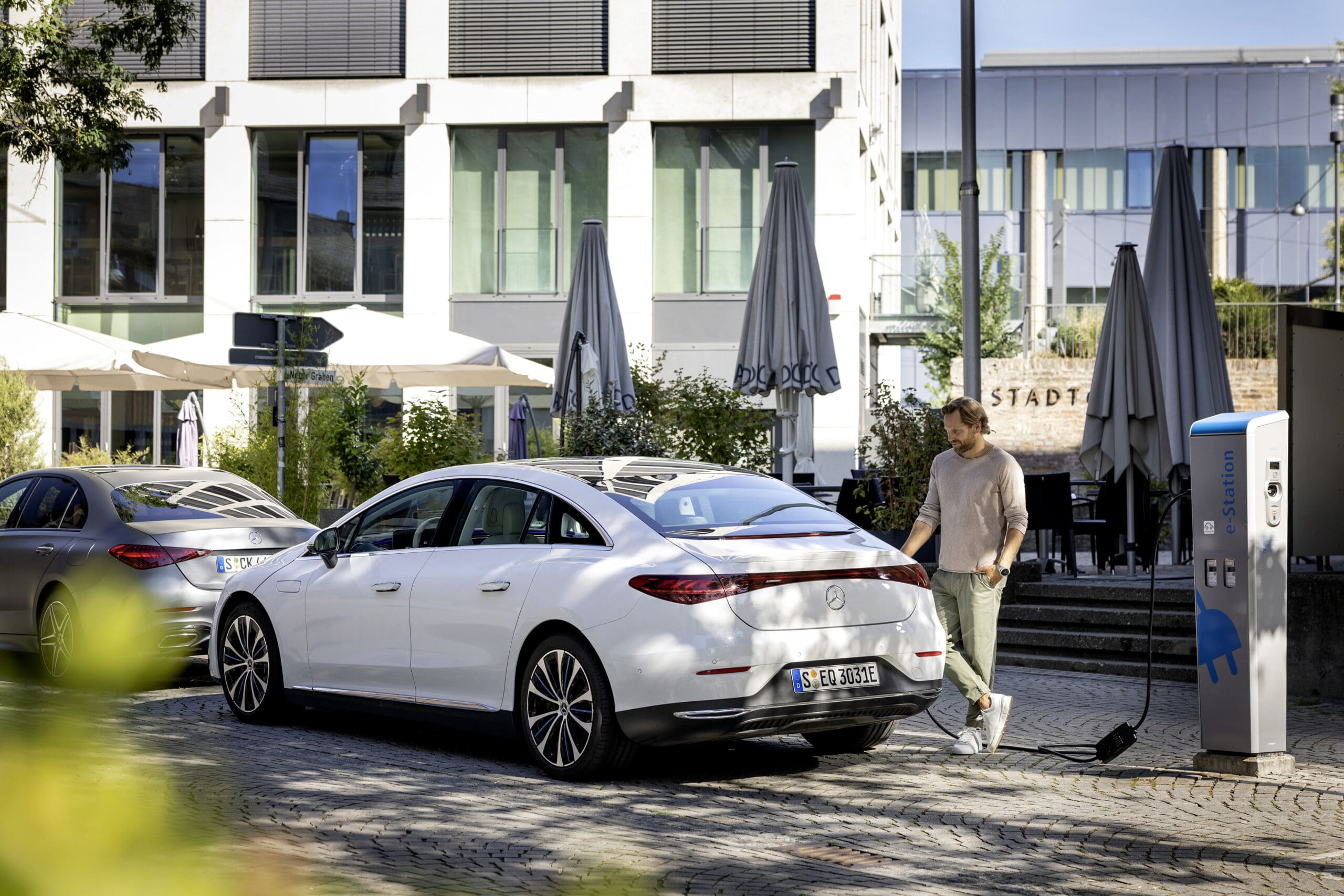
Charging System Pro from Mercedes-Benz
Das Flexible Ladesystem Pro von Mercedes-Benz The Flexible Charging System Pro from Mercedes-Benz
Share
Facebook Twitter LinkedIn Pinterest Email Copy Link

In the first half of 2023, South African auto manufacturers reported modest sales of battery electric vehicles (BEVs), with only 800 units sold nationwide.

Volvo , BMW and Mini led the sales charts, with 374 and 283 units sold, respectively.

Despite having over 12 million vehicles on the road, South Africa’s electric vehicle (EV) fleet remains tiny, with fewer than 2,500 EVs.

This sluggish adoption rate suggests that the country, like the rest of the continent, will face significant challenges in transitioning to environmentally friendly transportation systems and embracing the EV revolution.

In the aftermath of COP28, African leaders have been grappling with the challenge of rapidly transitioning their transport systems from fossil fuels to meet the 1.5°C target.

With ambitious goals to electrify two-thirds of passenger travel by 2030, countries like South Africa face significant hurdles.

Given its current sluggish pace, with fewer than 2,500 electric vehicles on the road, South Africa’s target of 8 million EVs by 2030 seems daunting.

The country’s ambitious goal to achieve 75% electric vehicle (EV) market share by 2030, while also revitalising its ailing public transport systems, seems increasingly unlikely.

High Costs of EVs and Batteries throttle demand

Following significant enhancements in generation capacity that have resulted in excess electricity on the national grid, South Africa’s national power utility, Eskom, has partnered with Gridcars, a subsidiary of Solareff now owned by investor STANLIB, to launch a charging network for its electric vehicle fleet. ESKOM has 10 charging points, which pale against Gridcars’ 350 points countrywide.
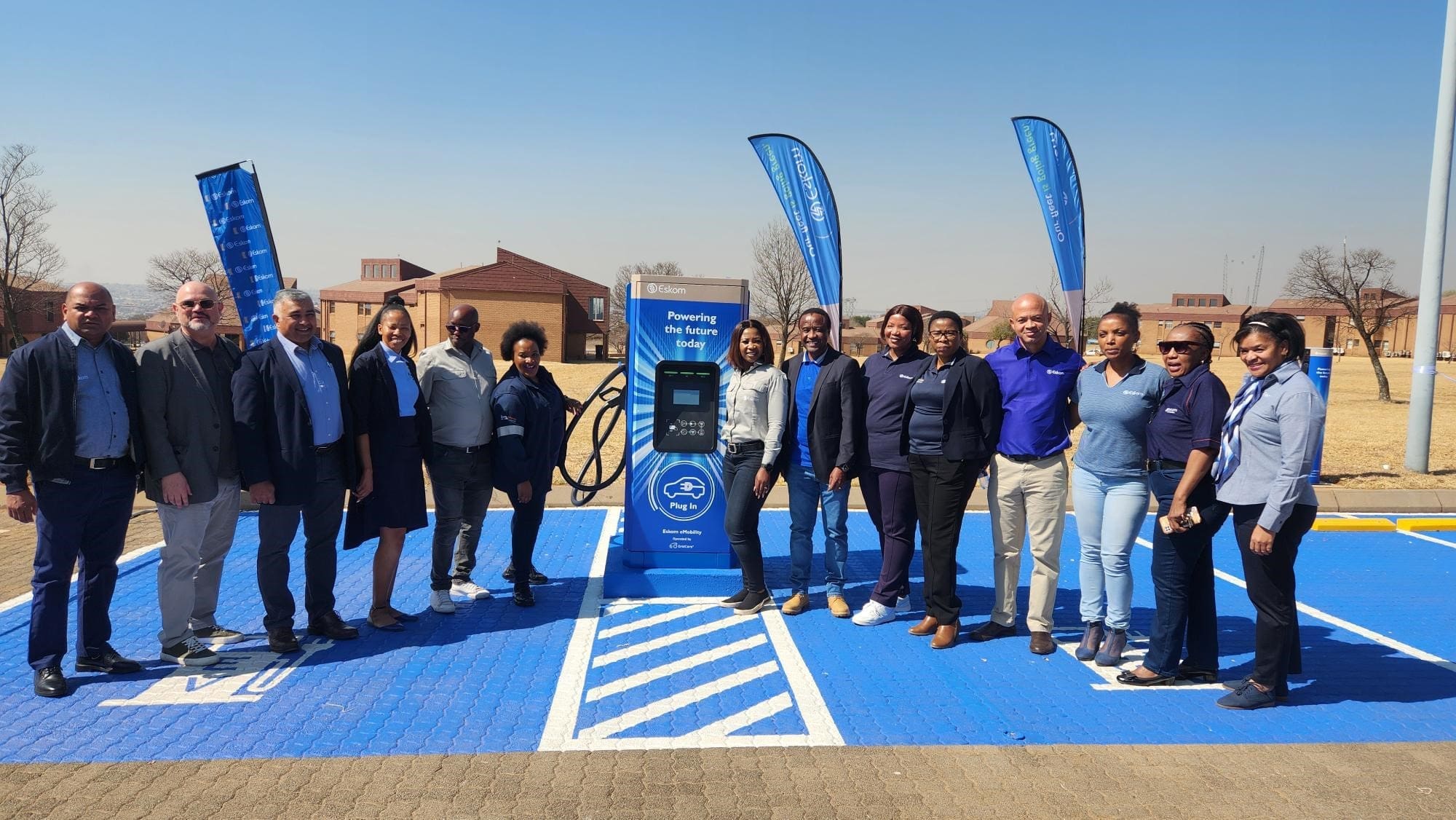
Eskom Launches EV Charging Infrastructure

And yet the most significant challenge in the rollout of charging infrastructure in South Africa is the high cost of EVs and the pressing need for a domestic battery industry. Currently, EV prices are prohibitively high, with the most affordable model, the GWM Haval Ora 03, costing nearly R700,000, while entry-level internal combustion engine (ICE) vehicles are priced below R200,000. This stark price disparity creates a substantial barrier to widespread EV adoption.

On the other hand, batteries represent the most significant expense in an EV, accounting for approximately 30-50% of the total vehicle cost, largely due to the high prices of essential raw materials such as lithium, cobalt, and nickel used in cell production.

Currently, South Africa does not produce battery cells, relying instead on imports to support its nascent battery sector.  This creates a considerable barrier to widespread EV adoption.

Bumpy Road for the Automotive Sector

As South Africa embarks on its journey to EVs, the path ahead is fraught with obstacles. While a clear policy direction is essential, the reality is that the transition will be a complex and challenging process.

The automotive industry, long rooted in ICE, must undergo a radical transformation.

But this shift will not be without its casualties. Jobs will be lost, and entire industries will need to adapt or face extinction.

The cost of investing in new technologies and training will be high, and resistance from vested interests, both public, labour unions and beneficiaries of the current architecture, is inevitable. The political fallout ahead will claim political careers and diminish entire components of the value chain.

Regulation for Imported Vehicles

In the rapidly evolving African EV market, projected to grow from $15.8 billion in 2024 to $25.4 billion by 2029, global giants like Nissan, Volkswagen, Tesla, BMW, BYD, and Toyota are vying for dominance. These international players are leveraging new product launches, strategic collaborations, and mergers to maintain their market stronghold.

Quo Vadis Africa Policy

However, as these global auto manufacturers flood African markets with their EV models, a disturbing trend emerges. The continent risks becoming a dumping ground for inferior products, perpetuating a lopsided trade dynamic. Africa, rich in valuable minerals, exports these resources only to import finished products, missing out on the valuable opportunity to capture the wealth generated by manufacturing. This unequal exchange threatens to stifle Africa’s economic growth and industrial development.

The consequences are stark. Africa’s mineral wealth fails to generate meaningful employment opportunities, as EV manufacturing and value addition occur elsewhere. The continent remains dependent on foreign technology and products, exacerbating inequality and hindering domestic industrial development.

As the world speeds towards an electric revolution, Africa finds itself at a crossroads. The continent’s vast mineral resources, the lifeblood of electric vehicles (EVs), are being extracted and exported, yet Africa remains a mere spectator in the global EV market.

To fully capitalise on the potential of electric mobility and the charging infrastructure, South Africa must prioritise policies and initiatives that make EVs more affordable and accessible to the general public. Additionally, investing in the development of a domestic battery industry would not only support the EV market but also contribute to the country’s economic growth and job creation in the emerging green energy sector.

  • This article was originally published by esgfrontiers. It is republished by TechFinancials under a Creative Commons Attribution-NoDerivatives 4.0 International Licence. Read the original article

electric vehicle EVs EVs in South Africa
Share. Facebook Twitter Pinterest LinkedIn Tumblr Email
Lloyd Nedohe

Related Posts

Directing The Dual Workforce In The Age of AI Agents

2026-01-22

The Productivity Myth That’s Costing South Africa Talent

2026-01-21

The Boardroom Challenge: Governing AI, Data And Digital

2026-01-20

Ransomware: What It Is And Why It’s Your Problem

2026-01-19

Can Taxpayers Lose By Challenging SARS?

2026-01-16

Science Is Best Communicated Through Identity And Culture – How Researchers Are Ensuring STEM Serves Their Communities

2026-01-16

Could ChatGPT Convince You To Buy Something?

2026-01-15

Strengthen Enterprise Resilience with Cohesity’s Advanced AI-powered Data Security Platform

2026-01-13

Trust Is The New Currency Of The Digital Economy

2026-01-12
Leave A Reply Cancel Reply

DON'T MISS
Breaking News

Directing The Dual Workforce In The Age of AI Agents

We will be the last generation to work with all-human workforces. This is not a…

Huawei Says The Next Wave Of Infrastructure Investment Must Include People, Not Only Platforms

2026-01-21

South Africa: Best Starting Point In Years, With 3 Clear Priorities Ahead

2026-01-12

How SA’s Largest Wholesale Network is Paving the Way for a Connected, Agile Future

2025-12-02
Stay In Touch
  • Facebook
  • Twitter
  • YouTube
  • LinkedIn
OUR PICKS

Mettus Launches Splendi App To Help Young South Africans Manage Their Credit Health

2026-01-22

The EX60: A Volvo That Talks Back

2026-01-20

Over R270M In Phuthuma Nathi Dividends Remain Unclaimed

2025-11-27

Africa’s Next Voice Revolution, When 5G Meets AI

2025-11-21

Subscribe to Updates

Get the latest tech news from TechFinancials about telecoms, fintech and connected life.

About Us

TechFinancials delivers in-depth analysis of tech, digital revolution, fintech, e-commerce, digital banking and breaking tech news.

Facebook X (Twitter) Instagram YouTube LinkedIn WhatsApp Reddit RSS
Our Picks

Holiday Retail momentum and Business Travel Growth Drive National Economic Activity, Visa Consulting & Analytics Reports

2026-01-22

Leading Altcoin to Buy for Solana-Powered Banking Digitap ($TAP) Overtakes $1.49 SUI

2026-01-22

Digitap ($TAP) vs. $1.89 XRP: Why this Crypto Presale is Up 250% and Scaling

2026-01-22
Recent Posts
  • Holiday Retail momentum and Business Travel Growth Drive National Economic Activity, Visa Consulting & Analytics Reports
  • Leading Altcoin to Buy for Solana-Powered Banking Digitap ($TAP) Overtakes $1.49 SUI
  • Digitap ($TAP) vs. $1.89 XRP: Why this Crypto Presale is Up 250% and Scaling
  • Solana Price Prediction: Will SOL Reclaim $300 By Years End As Memecoins Look Set To Explode On The SOL Ecosystem
  • Looking To Send Shiba Inu To A Bank Account? Use Remittix’s PayFi Service To Instantly Transfer Your Crypto To FIAT
TechFinancials
RSS Facebook X (Twitter) LinkedIn YouTube WhatsApp
  • Homepage
  • Newsletter
  • Contact
  • Advertise
  • Privacy Policy
  • About
© 2026 TechFinancials. Designed by TFS Media. TechFinancials brings you trusted, around-the-clock news on African tech, crypto, and finance. Our goal is to keep you informed in this fast-moving digital world. Now, the serious part (please read this): Trading is Risky: Buying and selling things like cryptocurrencies and CFDs is very risky. Because of leverage, you can lose your money much faster than you might expect. We Are Not Advisors: We are a news website. We do not provide investment, legal, or financial advice. Our content is for information and education only. Do Your Own Research: Never rely on a single source. Always conduct your own research before making any financial decision. A link to another company is not our stamp of approval. You Are Responsible: Your investments are your own. You could lose some or all of your money. Past performance does not predict future results. In short: We report the news. You make the decisions, and you take the risks. Please be careful.

Type above and press Enter to search. Press Esc to cancel.

Ad Blocker Enabled!
Ad Blocker Enabled!
Our website is made possible by displaying online advertisements to our visitors. Please support us by disabling your Ad Blocker.