


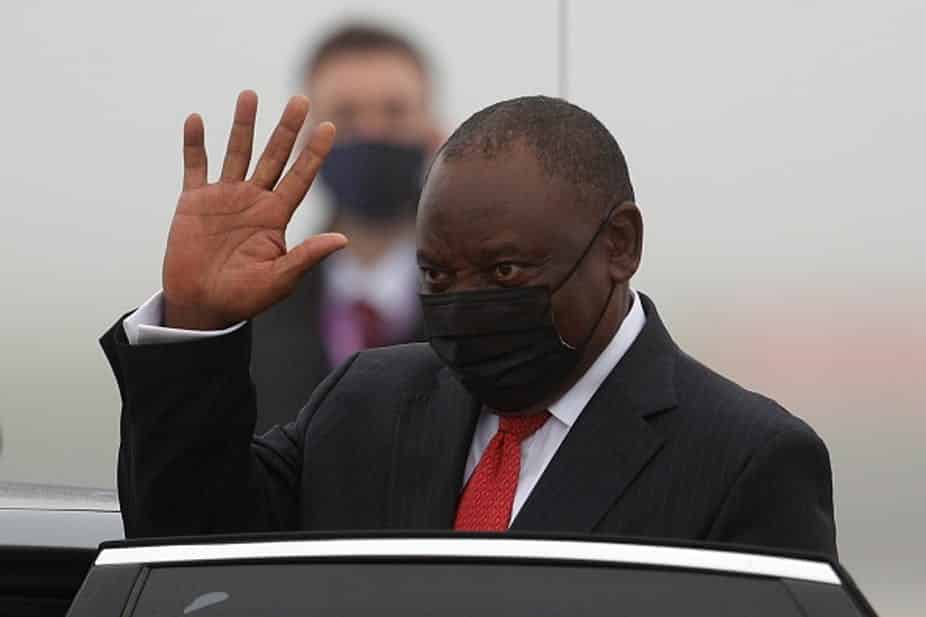
South Africans gave a warm welcome to President Cyril Ramaphosa’s recent announcement about a “set of actions” to respond to the energy crisis in the country.
The plans involve steps to improve the performance of the power stations run by the power utility Eskom, the accelerated procurement of new energy capacity, and making it easier for businesses and households to invest in rooftop solar. The plan also envisages the fundamental transformation of the electricity sector.
Frustration and anger have been growing in the country over power cuts, which have become a fact of life since April 2008. Not only are they a major inconvenience for households and essential services, the economy is also badly affected. Estimates suggest that power cuts have cost the economy R4 billion (over US$238 million) per day.
The worst of the rolling cuts were experienced during July 2022. These were partly due to illegal industrial action and theft and vandalism at power stations. Hence the president’s announcement.
Before, during and after the recent severe power cuts, political will has often been cited as one of the major reasons for government dragging its feet to introduce solutions. The energy and infrastructure economics advisory firm Meridian Economics argued on its site that “substantial political will” was pivotal to the success of such a strategy.
The impression that’s been created is that political will is the only missing ingredient.
But this line of argument is simplistic. As a water governance and political science researcher for almost three decades, I often meet the silver-bullet-effect of political will when scientists invoke it to solve crises. These can range from climate change to poverty and water predicaments to corruption.
From a scientific perspective, such a conclusion shows a direct and linear cause and effect between substantial political will and ending the crisis. But the issue is much more complex. Addressing any big challenge requires much more, such as sufficient acceptance of the reforms by the majority of political actors and society in general.
Below I set out why political will is not the silver bullet many wish it to be to solve South Africa’s electricity crisis.
A concept that’s easily bandied about
A straightforward definition of political will is when an actor is willing to commit time, energy, funds and political capital to achieve change. It is equated with political commitment.
What complicates the narrative around South Africa’s electricity crisis and the (lack) of political will is that the concept is bandied around as the go-to catch phrase to indicate what the fundamental problem is when discussing power cuts, their causes and remedies.
But political will, as a concept, is very vague. Using it doesn’t enrich understanding of the political and policy processes involved in addressing a problem. Commentators omit several elements of political will, politics and policy processes. Political will becomes a mere rhetorical tool.
This doesn’t mean that political will plays no role in policy outcomes. But it is not the only requirement. To “successfully” implement policy and reap desired outcomes requires a number of other inputs and conditions. These include economic resources, knowledge, skills, time, a capable state, a robust legal system and a favourable global context.
It goes even deeper than these necessities for the likelihood of policy outcome success. Ramaphosa’s announcement shows a policy preference. But preferences are distributed among many political actors outside the electricity reform process.
The main question is whether they will accept them.
Other voices
South Africa’s second largest opposition party, the Economic Freedom Fighters (EFF), has already indicated that it does not believe the plan will bring an end to power cuts. It also argues that the government is in effect privatising electricity generation and distribution and that this will increase energy prices to unaffordable levels for poor people.
The main opposition party, the Democratic Alliance, supports the idea, although pointing out that it’s long overdue.
The labour union Solidarity is advocating for the privatisation of the electricity sector. It has submitted a proposal to government for the involvement of experts who previously worked at Eskom. The government and Eskom reacted positively to the idea. But whether it will be incorporated into the policy remains an open question.
Political power
Political power is another ingredient to take into consideration when talking about political will. This boils down to the ability, authority and legitimacy of the key decision makers. If political power and policy options, together with other resources, are major constraints, the government will find it difficult to implement the actions. Said differently, it will lack political will.
Weakly held, easily disregarded or insincere policy preferences can also negatively influence the political will to see the strategy through.
The main question here is whether the government and ruling party can hold their positions on the action plan.
In the coming months, signals of intent towards this position will provide the answer to this question. Things to watch out for will include the credibility of the strategy, willingness to apply sanctions for violating the policy, and the application of evidence-based efforts to promote it.
Nuance needed
Gaining a more nuanced assessment of the ruling party’s political will to see the plan through, the business community and society should investigate these underlying elements and analyse them thoroughly. Political will consists of a number of sub-components. These need to be included in assessing the overall political will of the government to solve the problem.
For now, the paradigm shift shows that the government has the political will to move out of its comfort zone, explore new territories, and take risks founded on rational decision-making. In the coming months, South Africa will receive the necessary signals to show whether the government and ruling party are truly committed to the strategy for ending the power crisis.
These signals will show either risks to the plan or further opportunities that could be exploited.
Richard Meissner, Associate Professor, University of South Africa
This article is republished from The Conversation under a Creative Commons license. Read the original article.
