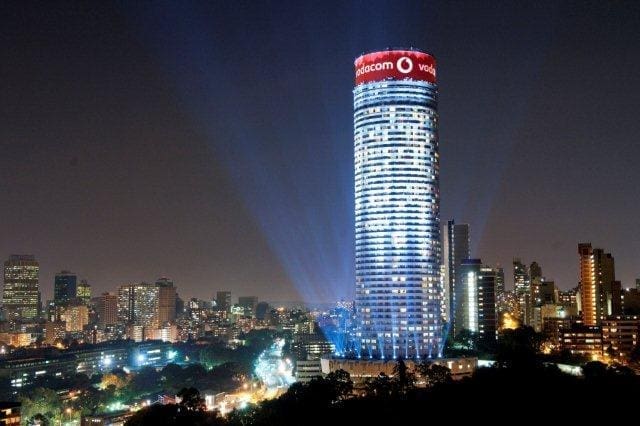
Johannesburg’s Iconic Ponte City Tower Goes Digital: 1,500 Residents Get Free High-Speed Fibre
The landmark deployment connects over 480 residential units, providing free, reliable internet to more than 1,500 occupants and marking a new era of digital inclusion for the historic Johannesburg tower.
Rising 173 metres above the Johannesburg skyline, the Ponte City Tower has long stood as an unmistakable symbol of brutalist architecture, urban resilience, and the shifting tides of South African history.
Once a celebrated icon of modern high-rise living in the 1970s, the hollow cylinder tower later became synonymous with the complex inner-city transitions of Hillbrow.
Today, this monumental landmark is writing a bold new chapter in its history, one defined by seamless digital inclusion thanks to Rise Telecoms, which has recently completed a comprehensive, building-wide fibre deployment, connecting more than 480 residential units to high-quality, fast, and reliable internet.
With high-speed connectivity integrated directly into the building’s core services, internet is no longer an occasional add-on to over 1 500 occupants who now have access to free internet courtesy of the building owner.
For Rise Telecoms, the path to connecting Johannesburg’s most famous residential tower began in the nearby precinct of Maboneng. The foundation was laid when founders of Fibrehoods, an early pioneer in South African aerial fibre, sold the company to Vumatel with the core team members converging to form what became Maboneng Broadband Network.
Operating as a small, localised entity, Maboneng Broadband Network built a fibre-to-the-building backbone network yet initial consumer uptake across apartment units remained modest. Rebranding and expanding beyond Maboneng as Rise Telecoms prior to COVID-19, the team originally deployed a flexible pay-as-you-go model. However, the true catalyst for transformation arrived with the 2020 pandemic.
As the national lockdown forced millions into remote work and online learning, network traffic spiked overnight. What was once an underutilised network was suddenly stress-tested to its limits.
“The pandemic completely flipped the traditional sales dynamic,” says Rise Telecoms’s Chief Operational Officer Eli Friedman. “Instead of us chasing property owners, landlords began proactively reaching out to secure stable, high-speed internet for their residents.”
Eli Friedman
Recognising this market shift, Rise Telecoms pivoted from pay-as-you-go access to a fixed, uncapped model, offering unlimited internet from as little as R99 a month.
“For over a decade, fibre deployment across South Africa had focused almost exclusively on suburban markets, leaving high-density inner-city markets underserved. By targeting student accommodation and high-rise, inner city developments, Rise stepped in to close this gap, turning internet access into an essential daily utility alongside water and electricity,” says Friedman, paid for by the building owners.
This market shift is now at the point where free internet for tenants in high density residential sites has become the standard without which a letting product simply doesn’t compete.
In December 2023, Vumatel fully acquired Rise Telecoms, integrating the enterprise into the Maziv group, providing Rise with the institutional scale of a major telecommunications group while preserving its core mission. Partnering closely with Dark Fibre Africa for backhaul infrastructure and leveraging the widely trusted Vumatel brand, Rise transitioned from an entrepreneurial startup into a structured, highly scalable operator. This strategic alignment accelerated deployment speeds, formalised operating procedures, and supported a shift toward robust Gigabit Passive Optical Network (GPON) architectures. Today, Rise Telecoms operates across major hubs, including Johannesburg, Hatfield in Pretoria, Stellenbosch, and Vanderbijlpark, connecting approximately 55,000 units across more than 600 buildings. With average occupancy of 3 people per unit, over 150 000 students and residents experience free internet on the Rise network.
While Rise had previously provided a shared wi-fi model to the units within Ponte, bringing unlimited connectivity to the entire 54-storey cylinder presented unique operational challenges. Securing physical access to more than 480 individual apartments while navigating the building’s distinctive geometry required roughly six months of careful execution.
The technical deployment relied on 500 metres of 24-core fibre backbone feeder cables alongside 24,000 metres of 4-core drop cable to establish direct unit connections. To drive local economic integration, the installation process and ongoing on-site support were carried out in collaboration with local sub-contractors. Furthermore, the project prioritised skills transfer by providing technical training to Ponte building managers, equipping them with basic network troubleshooting skills to resolve tenant queries directly.
According to Friedman, the human impact of such projects is immediate. Community feedback highlights how stable, uncapped access in the home has transformed daily life, with parents sharing that reliable connectivity helped their children study effectively for their Grade 12 examinations.
With its operating model firmly established, Rise Telecoms is positioned for significant expansion over the next three to five years. Growth strategies will focus heavily on expanding coverage across high-density student housing nationwide, as well as rapidly growing multi-family developments and suburban townhouse complexes. By bridging infrastructure gaps in dense urban environments, Rise continues to demonstrate how targeted digital investments can empower communities, modernise historic structures, and ensure that fast, reliable internet remains accessible to all for free with the innovative business model to enable this.