


by Hovig Tchalian, University of Southern California
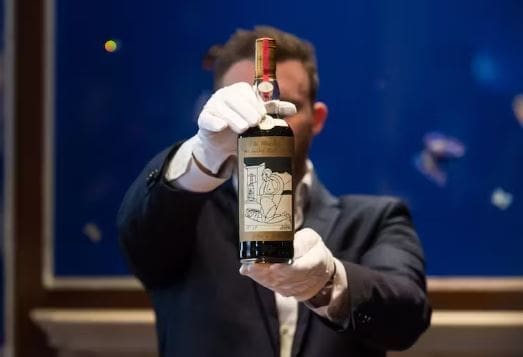
When a rare bottle of Scotch whisky sold for $2.7 million or R50.5 million in November 2023, I was stunned, but I wasn’t surprised.
The whiskey market has been booming for some time.
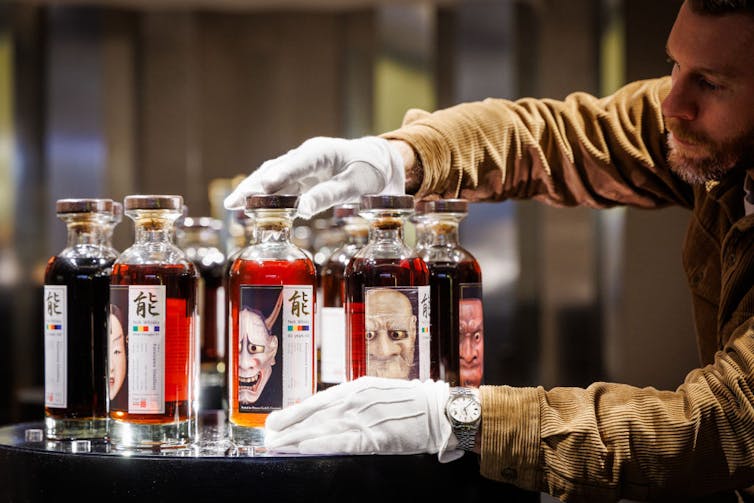
Bourbon brands like Pappy Van Winkle from Buffalo Trace distillery are selling for astronomical prices in the secondary market. Japanese whiskies, which have become popular over the past decade, now fetch prices up to 50 times higher what they did a decade ago.
And in July 2022, a single Ardbeg whisky barrel, aged since 1975, with enough liquid for about 500 bottles, sold at auction for around $19 million. In 1997, the entire Ardbeg distillery had been purchased by Glenmorangie Distillery for roughly $11 million.
How could a single cask of Scotch whisky sell for nearly twice the value of an entire distillery purchased just over two decades earlier?
I’ve been studying specialty markets for a decade, and I see at least two stories to unpack.
One is economic, where items in low supply, like rare bottles or barrels, sell for high prices. And prices in the whiskey market have been rising rapidly over the last two decades, fueled in part by investors. Some investors see luxury collectibles, such as high-end whiskey bottles or casks, as an alternative to other assets like stocks and bonds. (There are, however, signs that the luxury market is softening due to oversupply.)
But a second, overlooked – and arguably more interesting – explanation is social. It revolves around the increasing focus on the purported authenticity of craft products – especially ones like Scotch whisky, which trade on their heritage as much as their flavor.
A ‘brown spirit’ boom
The history of whiskey is one of booms and busts.
Whiskey has been produced in Scotland and Ireland since at least the late 1400s. The spirit spread to the rest of Europe in the mid-to-late 1700s. The late 1800s and early 1900s were boom years, especially for Irish whiskey. The period also witnessed innovations such as aging the spirit in oak barrels, which enhances its flavor. (Scotch, Japanese, Canadian and Indian whisky is spelled without the “e,” and Irish and American whiskey is spelled with the “e.” Whiskey is the general category label.)
In the U.S., Prohibition moved distilling underground until it made a midcentury comeback. Famously, the advent of “white spirits” like vodka and gin pushed down prices of “brown spirits” like whiskey starting in the 1970s. This led to what Scotch distillers call the “whisky loch,” or “lake” – the accumulation of large stores of matured whisky and the resulting shuttering of many whisky producers.
But whiskey has made a comeback since 2000. Prices of some bottles, including highly prized single-malt whiskies produced at a single distillery, have risen by almost 600% over the last decade. American bourbon has also seen a spike in interest – and prices – since at least 2016.
Long perceived as an inferior knockoff of Scotch whisky, Japanese whiskies have also experienced price surges. The House of Suntory, the oldest Japanese distiller, recently announced its own substantial price increases in the primary market, in some cases by as much as 100%. And India, long the largest consumer of Scotch whisky, is also seeing its distilleries produce their own single-malt whiskies and gradually move up-market.
While these increases have largely been confined to the higher end of the market, prices of affordable bottles have gone up, too.
Tristan Fewings/Getty Images
Craving real connections
Not long after the sale of the 1926 Macallan for $2.7 million, Merriam-Webster named “authentic” its 2023 word of the year.
The term’s popularity can be attributed to advances in artificial intelligence – and, with it, misinformation. But much of the focus on authenticity is also the result of the longing for more in-person connections in an increasingly virtual world. People want authentic experiences – or what look like authentic experiences. And that includes the products that they buy.
Authenticity is a notoriously difficult concept to define. But it tends to revolve around following a set of internal or external standards. That might mean following your values or your heart in order to cultivate your best, most real or most authentic self. When it comes to products – think vintage cars, artisanal foods or craft beer – it could mean those products must meet certain criteria to be considered authentic. For example, according to standards defined by the microbrewery movement, in order for craft beer to be considered authentic, it must be produced in-house in small batches.
These sorts of distinctions can be difficult for the average consumer to grasp, and authenticity can be easy to fake. The beer brand Samuel Adams, for instance, attempts to signal its authenticity by associating itself with the people, places and events of the American Revolution. But the brewery also got in trouble for marketing itself as a craft beer without making its beer in-house.
Putting a price on authenticity
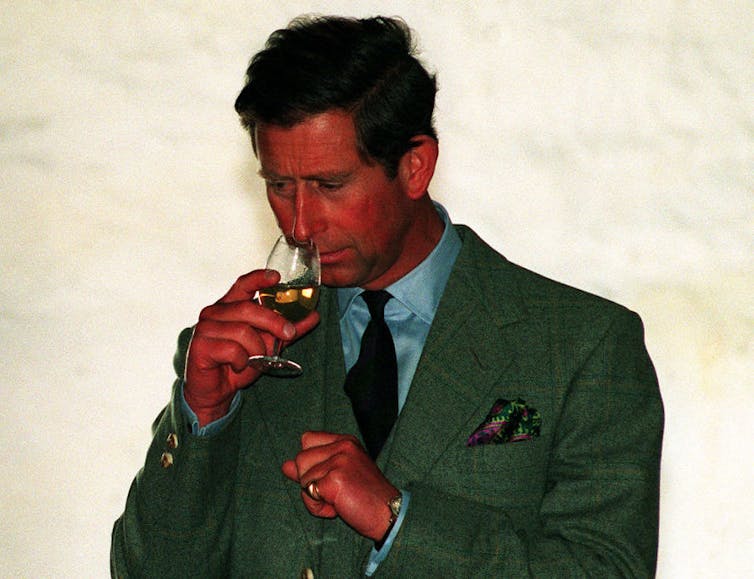
Intangible qualities make whiskey special – aspects such as the aroma, or “nose”; its complexity; and its lingering flavor, or “finish.”
But to boost whiskey’s value, purveyors of high-end whiskey convey the product’s heritage.
A whiskey’s unique locale – what wine enthusiasts call “terroir” – matters greatly to its perceived authenticity.
Chris Bacon/PA Images via Getty Images
During and after the whisky loch, scotch producers realized they were sitting on large stocks of unsold whisky. Much of that whisky was produced and aged starting in the 1960s, before the advent of automation, faster distilling and new ingredients. The desire to return to those more authentic, simpler times allowed distillers to rewrite the stories of those stores.
Scotch whisky has a long-standing reputation as more historically significant – and, therefore, more authentic. Despite research suggesting that even most expert judges can’t distinguish different categories of whisky, a Scotch whisky bottle can sell for as much as 100 times the price of a similarly aged – and similarly complex – Canadian whisky.
One recent study of Canadian whisky showed how distilleries can even use their physical features and local character to enhance perceptions of their spirits’ authenticity. Bottles from older distilleries were deemed more authentic – and could sell for more. Those from newer, factorylike buildings had less appeal to consumers.
There’s a miragelike nature to all of this. A product can be considered authentic if everyone believes and acts like it is.
It should come as no surprise, then, that the history of whiskey is one of perception, not necessarily quality. And this perception helps drive its economic fortunes.
So the next time you search for a nice bottle of whiskey for yourself or as a gift, consider the story and history that’s amplifying its price.
- Hovig Tchalian, Assistant Professor of Entrepreneurship, University of Southern California
- This article is republished from The Conversation under a Creative Commons license. Read the original article.
