Close Menu
  • Homepage
  • News
  • Cloud & AI
  • ECommerce
  • Entertainment
  • Finance
  • Opinion
  • Podcast
  • Contact

Subscribe to Updates

Get the latest technology news from TechFinancials News about FinTech, Tech, Business, Telecoms and Connected Life.

What's Hot

Salesforce Appoints Nick Christodoulou As Area VP Of Sales For Africa

2026-02-02

Why South Africa Cannot Afford To Wait For Healthcare Reform

2026-02-02

How is Technology Used in Cricket?

2026-02-02
Facebook X (Twitter) Instagram
Trending
  • Salesforce Appoints Nick Christodoulou As Area VP Of Sales For Africa
Facebook X (Twitter) Instagram YouTube LinkedIn WhatsApp RSS
TechFinancials
  • Homepage
  • News
  • Cloud & AI
  • ECommerce
  • Entertainment
  • Finance
  • Opinion
  • Podcast
  • Contact
TechFinancials
Home»Opinion»For Minorities, Biased AI Algorithms Can Damage Almost Every Part Of Life
Opinion

For Minorities, Biased AI Algorithms Can Damage Almost Every Part Of Life

Blindfolded by the mistakes of the past, we have entered a wild west without any sheriffs to police the violence of the digital world that’s enveloping our everyday lives. The tragedies are already happening on a daily basis.
The ConversationBy The Conversation2023-08-29No Comments5 Mins Read
Share Facebook Twitter Pinterest LinkedIn Tumblr Email
AI
AI. Shutterstock
Share
Facebook Twitter LinkedIn Pinterest Email Copy Link

by Arshin Adib-Moghaddam, SOAS, University of London

Bad data does not only produce bad outcomes. It can also help to suppress sections of society, for instance vulnerable women and minorities. This is the argument of my new book on the relationship between various forms of racism and sexism and artificial intelligence (AI). The problem is acute. Algorithms generally need to be exposed to data – often taken from the internet – in order to improve at whatever they do, such as screening job applications, or underwriting mortgages.

But the training data often contains many of the biases that exist in the real world. For example, algorithms could learn that most people in a particular job role are male and therefore favour men in job applications. Our data is polluted by a set of myths from the age of “enlightenment”, including biases that lead to discrimination based on gender and sexual identity.

Judging from the history in societies where racism has played a role in
establishing the social and political order, extending privileges to white males –- in Europe, North America and Australia, for instance –- it is simple science to assume that residues of racist discrimination feed into our technology.

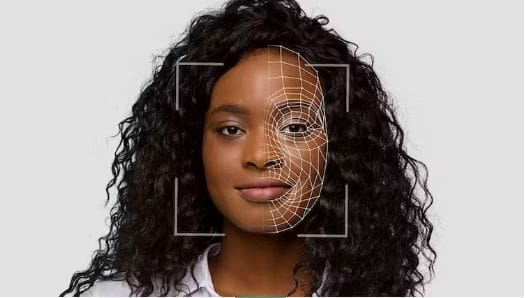
In my research for the book, I have documented some prominent examples. Face recognition software more commonly misidentified black and Asian minorities, leading to false arrests in the US and elsewhere.

Software used in the criminal justice system has predicted that black offenders would have higher recidivism rates than they did. There have been false healthcare decisions. A study found that of the black and white patients assigned the same health risk score by an algorithm used in US health management, the black patients were often sicker than their white counterparts.

This reduced the number of black patients identified for extra care by more than half. Because less money was spent on black patients who have the same level of need as white ones, the algorithm falsely concluded that black patients were healthier than equally sick white patients. Denial of mortgages for minority populations is facilitated by biased data sets. The list goes on.

Machines don’t lie?

Such oppressive algorithms intrude on almost every area of our lives. AI is making matters worse, as it is sold to us as essentially unbiased. We are told that machines don’t lie. Therefore, the logic goes, no one is to blame.

This pseudo-objectiveness is central to the AI-hype created by the Silicon Valley tech giants. It is easily discernible from the speeches of Elon Musk, Mark Zuckerberg and Bill Gates, even if now and then they warn
us about the projects
that they themselves are responsible for.

There are various unaddressed legal and ethical issues at stake. Who is accountable for the mistakes? Could someone claim compensation for an algorithm denying them parole based on their ethnic background in the same way that one might for a toaster that exploded in a kitchen?

The opaque nature of AI technology poses serious challenges to legal systems which have been built around individual or human accountability. On a more fundamental level, basic human rights are threatened, as legal accountability is blurred by the maze of technology placed between perpetrators and the various forms of discrimination that can be conveniently blamed on the machine.

Racism has always been a systematic strategy to order society. It builds, legitimises and enforces hierarchies between the haves and have nots.

Ethical and legal vacuum

In such a world, where it’s difficult to disentangle truth and reality from untruth, our privacy needs to be legally protected. The right to privacy and the concomitant ownership of our virtual and real-life data needs to be codified as a human right, not least in order to harvest the real opportunities that good AI harbours for human security.

But as it stands, the innovators are far ahead of us. Technology has outpaced
legislation. The ethical and legal vacuum thus created is readily exploited by criminals, as this brave new AI world is largely anarchic.

Blindfolded by the mistakes of the past, we have entered a wild west without any sheriffs to police the violence of the digital world that’s enveloping our everyday lives. The tragedies are already happening on a daily basis.

It is time to counter the ethical, political and social costs with a concerted social movement in support of legislation. The first step is to educate ourselves about what is happening right now, as our lives will never be the same. It is our responsibility to plan the course of action for this new AI future. Only in this way can a good use of AI be codified in local, national and global institutions.The Conversation

Arshin Adib-Moghaddam, Professor in Global Thought and Comparative Philosophies, SOAS, University of London

This article is republished from The Conversation under a Creative Commons license. Read the original article.

AI Artificial intelligence Ethnic minorities Race
Share. Facebook Twitter Pinterest LinkedIn Tumblr Email
The Conversation
  • Website

Related Posts

Why South Africa Cannot Afford To Wait For Healthcare Reform

2026-02-02

Stablecoins: The Quiet Revolution South Africa Can’t Ignore

2026-02-02

South Africa Could Unlock SME Growth By Exploiting AI’s Potential Through Corporate ESD Funds

2026-01-28

How Local Leaders Can Shift Their Trajectory In 2026

2026-01-23

Why Legal Businesses Must Lead Digital Transformation Rather Than Chase It

2026-01-23

Directing The Dual Workforce In The Age of AI Agents

2026-01-22

The Productivity Myth That’s Costing South Africa Talent

2026-01-21

The Boardroom Challenge: Governing AI, Data And Digital

2026-01-20

Ransomware: What It Is And Why It’s Your Problem

2026-01-19
Leave A Reply Cancel Reply

DON'T MISS
Breaking News

SA Auto Industry At Crossroads: Cheap Imports Threaten Future

Government must urgently finalise new energy vehicles policy, refine tariffs and deploy anti-dumping measures to…

Paarl Mall Gets R270M Mega Upgrad

2026-02-02

Huawei Says The Next Wave Of Infrastructure Investment Must Include People, Not Only Platforms

2026-01-21

South Africa: Best Starting Point In Years, With 3 Clear Priorities Ahead

2026-01-12
Stay In Touch
  • Facebook
  • Twitter
  • YouTube
  • LinkedIn
OUR PICKS

What’s Stopping Sunny South Africa’s Solar Industry?

2026-02-02

How a Major Hotel Group Is Electrifying South Africa’s Travel

2026-01-29

The EX60 Cross Country: Built For The “Go Anywhere” Attitude

2026-01-23

Mettus Launches Splendi App To Help Young South Africans Manage Their Credit Health

2026-01-22

Subscribe to Updates

Get the latest tech news from TechFinancials about telecoms, fintech and connected life.

About Us

TechFinancials delivers in-depth analysis of tech, digital revolution, fintech, e-commerce, digital banking and breaking tech news.

Facebook X (Twitter) Instagram YouTube LinkedIn WhatsApp Reddit RSS
Our Picks

Salesforce Appoints Nick Christodoulou As Area VP Of Sales For Africa

2026-02-02

Why South Africa Cannot Afford To Wait For Healthcare Reform

2026-02-02

How is Technology Used in Cricket?

2026-02-02
Recent Posts
  • Salesforce Appoints Nick Christodoulou As Area VP Of Sales For Africa
  • Why South Africa Cannot Afford To Wait For Healthcare Reform
  • How is Technology Used in Cricket?
  • SA Auto Industry At Crossroads: Cheap Imports Threaten Future
  • Stablecoins: The Quiet Revolution South Africa Can’t Ignore
TechFinancials
RSS Facebook X (Twitter) LinkedIn YouTube WhatsApp
  • Homepage
  • Newsletter
  • Contact
  • Advertise
  • Privacy Policy
  • About
© 2026 TechFinancials. Designed by TFS Media. TechFinancials brings you trusted, around-the-clock news on African tech, crypto, and finance. Our goal is to keep you informed in this fast-moving digital world. Now, the serious part (please read this): Trading is Risky: Buying and selling things like cryptocurrencies and CFDs is very risky. Because of leverage, you can lose your money much faster than you might expect. We Are Not Advisors: We are a news website. We do not provide investment, legal, or financial advice. Our content is for information and education only. Do Your Own Research: Never rely on a single source. Always conduct your own research before making any financial decision. A link to another company is not our stamp of approval. You Are Responsible: Your investments are your own. You could lose some or all of your money. Past performance does not predict future results. In short: We report the news. You make the decisions, and you take the risks. Please be careful.

Type above and press Enter to search. Press Esc to cancel.

Ad Blocker Enabled!
Ad Blocker Enabled!
Our website is made possible by displaying online advertisements to our visitors. Please support us by disabling your Ad Blocker.