





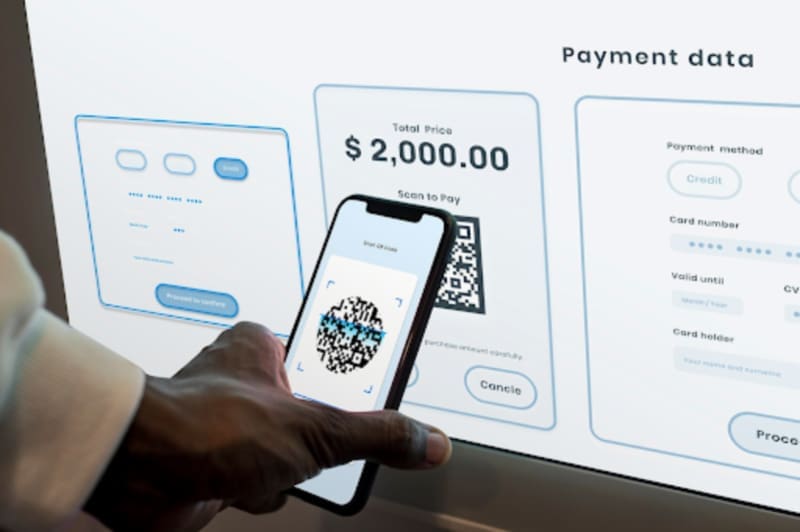
In mature digital markets, online payments are relatively straightforward. A customer types in credit card details, an payment gateway processes the token through Visa or Mastercard rails, and the funds clear within milliseconds. In emerging markets across Africa, however, digital commerce runs on a fundamentally different, far more fragmented infrastructure.
Credit card penetration remains low across most of the continent, with mobile money wallets dominating consumer spending. Millions of daily transactions move through telecom ecosystems such as M-Pesa, Airtel Money, MTN MoMo, and Tigo Pesa. While mobile money has driven financial inclusion, it presents serious backend challenges for high-volume entertainment and digital services. Telecom payment APIs frequently suffer from unannounced downtime, fluctuating response times, and unpredictable rate limits. When thousands of consumers try to complete digital transactions simultaneously, a single unstable gateway can paralyze an entire business.
To survive these infrastructure bottlenecks, modern digital platforms have abandoned simple point-to-point payment integrations. Instead, they rely on sophisticated payment orchestration layers that handle transaction routing, automated retries, and liquidity management behind the scenes.
Multi-tiered routing and automated gateway failovers
Relying on a single payment aggregator is a dangerous strategy for any high-traffic digital operator. If that provider experiences an outage during a busy Friday evening or right before a major sporting event, thousands of transactions fail instantly, leading to user frustration and lost revenue.
Payment orchestration engines solve this through dynamic transaction routing. The system constantly monitors the health, latency, and success rates of multiple payment gateways in real time. If Gateway A starts showing an unusual spike in 504 gateway timeout errors or takes longer than three seconds to return a verification signal, the routing engine automatically redirects subsequent incoming traffic to Gateway B or Gateway C without the customer ever noticing a delay.
For major sports wagering and digital entertainment brands, payment stability is everything. When millions of sports fans fund their wallets minutes before Saturday afternoon fixtures, platforms like Premierbet rely on smart routing layers that dynamically switch traffic between primary and secondary payment aggregators. If an API endpoint on a specific telecom operator begins dropping transaction confirmations, the orchestration engine reroutes subsequent deposit requests through backup clearing houses, preventing checkout abandonment.
Dynamic routing also considers transaction costs. Different payment processors charge varying interchange fees depending on transaction volume, geographical origin, and payment method. Sophisticated payment switches evaluate both speed and processing fees, sending payments down the most cost-effective route that still guarantees immediate settlement.
Asynchronous webhooks and reconciliation bottlenecks
Processing a mobile money deposit involves an asynchronous workflow. When a user requests a payment on a website, the platform sends a push notification (USSD prompt) to the user’s phone, prompting them to enter their mobile PIN.
This process introduces numerous friction points:
- Network congestion can delay the USSD prompt on the user’s handset by several minutes.
- Users might enter their PIN correctly, but the telecom provider’s webhook server fails to notify the merchant platform.
- Intermittent cellular data drops can cause the browser session to disconnect before confirmation arrives.
To handle these inconsistencies, backend systems employ event-driven architectures with idempotent reconciliation workers. Every transaction receives a unique cryptographic key. When a webhook arrives, the system verifies this key to prevent crediting an account twice for the same payment. If a webhook never arrives due to a dropped connection, background polling workers query the telecom operator’s transaction ledger directly to verify payment status and update the user’s wallet balance.
Security and speed at the account level go hand in hand. Once a user authenticates via the Premierbet Login gateway, session tokens link directly to encrypted mobile wallet identifiers. This tokenized setup allows instant one-tap balance top-ups without requiring players to repeatedly type out twelve-digit phone numbers or reveal sensitive financial identifiers on unsecured mobile screens.
Managing liquidity floats for instant withdrawals
While processing deposits smoothly is difficult, managing automated withdrawals is even more complex. In the digital entertainment and iGaming industries, the speed of payouts is the primary metric by which users judge a platform’s reliability. Nobody wants to wait twenty-four hours to receive their winnings.
Offering instant withdrawals requires solving the liquidity float puzzle. To pay out funds automatically via mobile money APIs, an operator must maintain pre-funded cash balances (floats) across dozens of separate merchant accounts with different telecom operators.
If an operator runs out of liquidity in its Airtel Money merchant account on a Sunday night, automated payouts for Airtel users will fail, even if the operator has millions in its M-Pesa or bank accounts. Modern treasury automation tools continuously forecast payout volumes, using historical transaction data to predict demand spikes. When a particular float drops below a set threshold, automated rebalancing sweeps transfer funds across bank accounts and telecom pools to keep payout pipelines flowing smoothly around the clock.
Mitigating fraud and identity mismatch
Instant, automated payment rails naturally attract bad actors attempting to exploit system vulnerabilities. Digital entertainment platforms frequently face risks associated with SIM swap fraud, stolen mobile devices, and unauthorized wallet access.
To prevent fraudulent cash-outs, compliance engines run automated verification checks before approving any withdrawal API call. The system checks whether the recipient’s mobile money registered name matches the identity documents provided during account registration. If the name differs or if the account recently changed its registered phone number within the last twenty-four hours, the automated instant withdrawal is paused, and the transaction is routed to a human risk team for manual verification.
The move toward unified financial orchestration
The rapid evolution of African fintech has proven that payment processing is not just an administrative utility, but a core competitive differentiator. Platforms that master payment orchestration can scale across multiple countries and currencies with minimal operational friction, while those reliant on brittle single-pipe integrations constantly battle downtime and abandoned transactions.
As open banking APIs mature and cross-border payment protocols develop across regional economic zones, the role of intelligent payment routing will only expand. Building resilient, multi-layered payment infrastructures is what allows modern consumer platforms to turn erratic telecommunications networks into reliable, instant digital commerce channels.


