


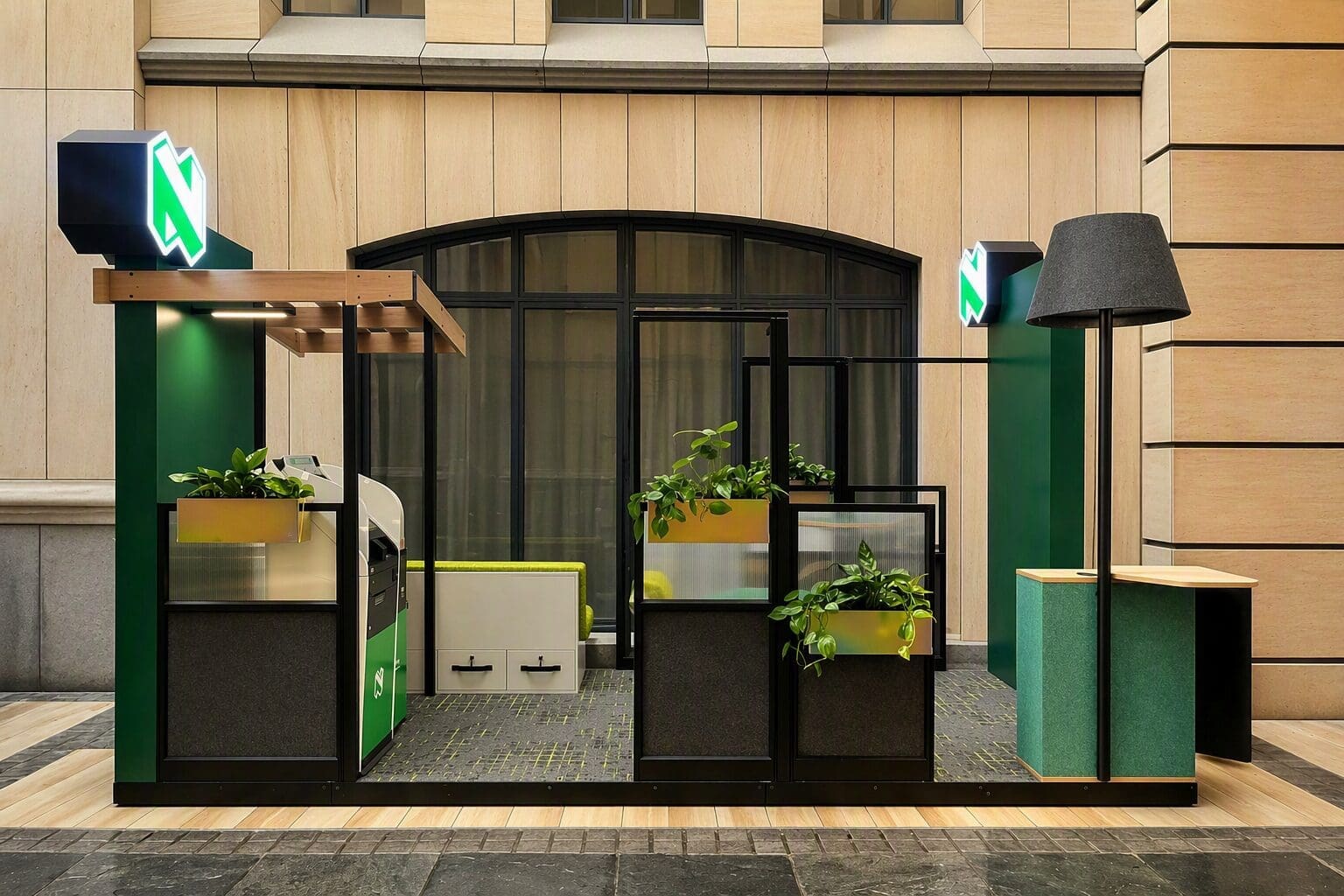
Nedbank’ introduces a Client Connect Zone pilot, a new retail banking concept, as customer expectations reshape the future of banking..
Although South Africans have embraced digital banking at an unprecedented pace, new customer insights suggest convenience is no longer defined solely by mobile apps or online platforms. Increasingly, customers want banking to fit naturally into their daily lives allowing them to access financial services while shopping, meeting friends or running errands rather than making a dedicated trip to a traditional branch.
For banks, this represents a significant shift in customer expectations. Rather than choosing between digital and physical banking, customers increasingly expect both to work together seamlessly, combining the speed and convenience of technology with the reassurance and expertise that comes from having knowledgeable consultants available when needed.
Nedbank’s own customer data reinforces this trend. Every month, the bank’s network of 581 Self-Service Kiosks (SSKs) facilitates more than half a million transactions across more than 60 banking services, demonstrating growing demand for assisted self-service banking.
Today, almost 70% of all instant-issued debit cards are dispensed through the SSK network, while 56% of cards issued through the kiosks are for entry-level banking clients, highlighting the important role assisted self-service continues to play in expanding financial inclusion.
The insights point to digital transformation complementing physical banking touchpoints rather than removing them, and changes what customers expect these touchpoints to accomplish for them.
Against this backdrop, Nedbank has launched a pilot Client Connect Zone with deployment into market planned for Fleurhoff Mall in August. This marks the introduction of a new retail banking concept designed around one central idea: banking should fit into customers’ lives, rather than customers having to fit their lives around banking.
The Client Connect Zone allows customers to engage with their bank while shopping, enjoying a meal, meeting friends or completing everyday errands. It reflects Nedbank’s continued investment in hybrid banking by bringing together digital convenience, assisted self-service and personalised human support in a single customer experience.
According to Accenture’s Global Banking Consumer Study 2025, customers increasingly expect banks to provide seamless experiences across digital and physical channels, with many still preferring face-to-face engagement for more significant financial decisions.
Around the world, banks are responding by redesigning physical banking spaces to focus less on routine transactions and more on advice, engagement and customer experience.
“Our customers are showing us that the future of banking isn’t about digital or physical but it’s about creating experiences that combine the strengths of both,” says Werner Terblanche, Managing Executive of Channel Operations at Nedbank.
“People no longer think about banking in terms of channels.
“They simply want to engage with their bank in the way that best suits their needs at that particular moment. Sometimes that’s through an app, sometimes it’s self-service, and sometimes it’s a conversation with a consultant.
“Our responsibility is to make those experiences work seamlessly together while meeting customers where life happens.”
The Client Connect Zone builds directly on the success of Nedbank’s Self-Service Kiosk (SSK) network and incorporates an SSK within the facility itself, allowing customers to move effortlessly between independent self-service and personalised assistance.
Customers can perform a wide range of everyday banking transactions through the kiosk while consultants remain on hand to assist with account opening, digital onboarding, product education, Nedbank Money app support, servicing enquiries and more complex financial conversations where expert guidance is required.
By bringing assisted self-service and personalised banking together in one convenient location, the Client Connect Zone creates a flexible experience that gives customers greater choice over how they bank. Importantly, the success of the SSK network has challenged one of the biggest misconceptions about digital transformation that customers simply want less human interaction.
‘Clients increasingly appreciate the convenience of completing routine banking tasks independently, but they continue to value having knowledgeable consultants nearby for reassurance, financial education and advice when making more significant financial decisions,’ adds Terblanche.
The diversity of transactions processed through the SSK network reinforces this behaviour. Approximately 26% of kiosk usage relates to card dispensing, 16% to printing services, 7% to product sales, while the remaining 50% comprises a broad range of other banking services, demonstrating that customers are increasingly comfortable using self-service across multiple aspects of their banking journey.
The model is also delivering meaningful operational efficiencies. For example, card dispensing through Self-Service Kiosks can be up to 37.5% more cost-effective than traditional branch processes, reducing waiting times for customers while allowing consultants to dedicate more time to higher-value conversations focused on financial advice and relationship building.
The stronger insight is that customers don’t want fewer physical banking touchpoints, but they want more relevant ones. ‘This pilot is about much more than opening another banking facility,’ elaborates Terblanche. ‘It represents the next evolution of our hybrid banking strategy. We believe the future of banking lies in creating connected experiences where customers can move seamlessly between digital banking, assisted self-service and personalised advice. Banking should be available wherever and whenever customers need it, not only inside traditional branches.’
Over the coming months, Nedbank will use the pilot to better understand how customers engage with banking in high-footfall retail environments, measuring customer engagement, product uptake, digital adoption, customer feedback and referral opportunities to inform the future evolution of its distribution strategy.
