






OpenAI has officially launched ChatGPT for Teens, a dedicated version of its artificial intelligence chatbot designed specifically for users between the ages of 13 and 17 — years after millions of teenagers had already begun using the platform for schoolwork, daily questions, and even companionship.
The San Francisco-based company announced the new experience on August 18, 2026, positioning it as a response to growing concerns about online safety for young people and the unique risks AI chatbots pose to developing adolescent brains.
“We’re introducing ChatGPT for Teens, an experience designed to help teens learn, think critically, deepen understanding, and use AI with confidence,” OpenAI stated in its official announcement. “It provides stronger built-in safety protections for teens, including features to promote healthy use and additional controls for parents.”
The rollout comes as research shows more than 70% of U.S. teens are already turning to AI chatbots for companionship, with half using AI companions regularly, according to a 2025 study from Common Sense Media.
Automatic Placement for Under-18 Users
If OpenAI’s system estimates someone is under 18 or they state their age is between 13 and 17, they are automatically placed into ChatGPT for Teens. Users under 13 are not permitted to use the product.
The launch builds on OpenAI’s foundational work supporting teens on the platform, including introducing Parental Controls, updating the Under-18 Model Spec, creating the Teen Safety Blueprint, rolling out Age-Prediction, and expanding features to support learning and healthy AI use.
Across that work, we have been guided by four commitments: put teen safety first, encourage real-world support, treat teens like teens, and be transparent about how our systems should behave.
Study Mode and Responsible Homework Reminders
At the heart of ChatGPT for Teens is a focus on learning, not shortcutting. OpenAI designed the experience to support moments outside the classroom when help is not always available, while keeping teens engaged in an active and collaborative learning process.
A teen studying for a test, for example, can ask ChatGPT to explain an unfamiliar concept, work through a practice problem, and check their understanding. If they ask for a quick answer, ChatGPT for Teens can guide them toward the steps and questions that help them work through it themselves.
Key features include:
-
Study Mode, which uses guiding questions and step-by-step support to help teens understand the material
-
Responsible homework reminders that recognize when a teen appears to be trying to shortcut an assignment and redirect them toward Study Mode
-
Quizzes and Learning Visualizations that give teens more ways to practice, test knowledge, and see difficult concepts more clearly
-
Study Hours, allowing teens or parents to choose times when Study Mode is on by default

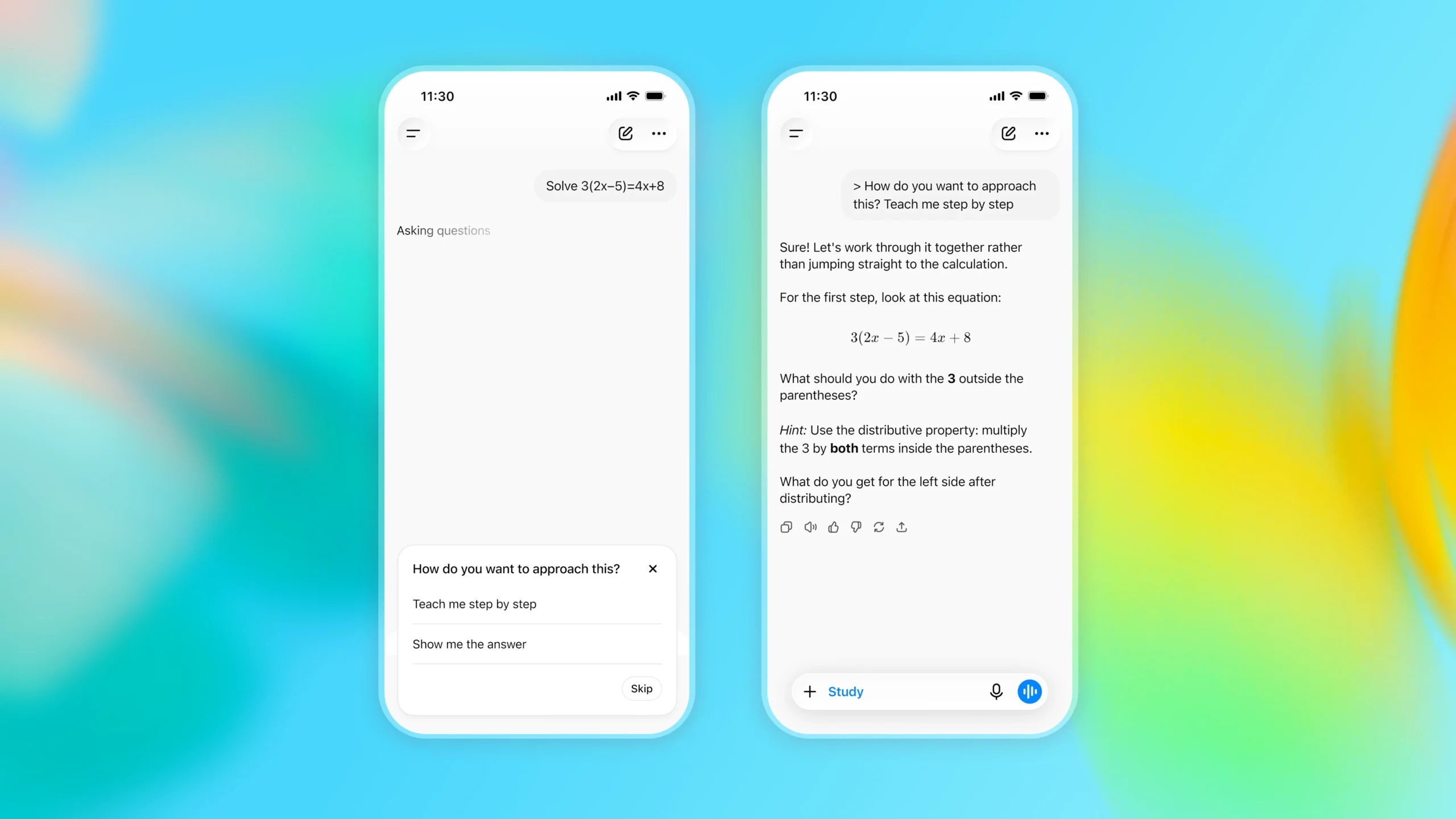
Study Mode was built with teachers, scientists, and pedagogy experts, drawing on longstanding research in learning science. It uses guiding questions, scaffolding, metacognitive prompts, and knowledge checks to help students work through problems step by step instead of simply receiving a solution. Research shows that active retrieval and self-explanation can support stronger comprehension and longer-term retention than passive review alone.
“Not every student has someone at home who can help when they get stuck or have questions with their homework. With the right guardrails, AI can help fill that gap,” said Racquel Gibson, a high school math teacher from Miami, Florida. “Tools like Responsible Homework Reminder can guide students step by step, helping them understand their mistakes, build confidence, and keep learning—not simply hand them an answer. That kind of individualized support can make a meaningful difference for students who want to succeed but don’t always know how to move forward.”
OpenAI emphasized that AI should support learning, not shortcut it, and educators should remain in control of AI experiences in classrooms. ChatGPT for Teens is designed for learning outside the classroom, while ChatGPT for Teachers continues to provide educators and school districts with secure, institution-managed access.
Stronger Protections, On by Default
For teen users, protections are part of the default experience. For users under 18, ChatGPT for Teens applies age-appropriate safeguards designed to reduce exposure to content that may be harmful or developmentally inappropriate, while preserving the ability to learn, create, and explore.
These protections are based on OpenAI’s Under-18 Principles in the Model Spec, informed by developmental science and expert guidance. In practice, that means age-appropriate model protections and product interventions in higher-risk areas such as:
-
Self-harm
-
Violence
-
Eating disorders
-
Dangerous activities
-
Explicit sexual or graphic content
“We want to treat teens like teens, which means that we have to make sure that we’re showing up with the right developmental stage when we’re not either talking down to them or treating them like kids, but we’re also making sure that they’re not exposed to material that they shouldn’t be exposed to,” said Ann O’Leary, Vice President of Global Policy at OpenAI.
For users of ChatGPT for Teens, the chatbot is prevented from suggesting it has personal feelings toward the user or implying that it is conscious or experiences emotions.
Our updated under-18 model spec goes beyond blocking romantic or sexualized roleplay: ChatGPT should not use romantic language, encourage emotional dependence, or imply that it has feelings or consciousness. These stronger protections are designed to reinforce healthy, real-world relationships.
Teens can also switch off the human voice response to minimize the technology’s ability to appear like a person.
Parental Controls and Safety Notifications
Parents with linked teen accounts can set “quiet hours” to block access during specific times and receive safety notifications in limited high-risk situations. OpenAI is adding additional notifications related to eating disorders, “limiting what is shared and focusing on moments when offline support may matter most”.
Each alert would be reviewed by a human before it was sent, and it aimed to have them with parents within an hour of the request being made.
Additional safety features include:
-
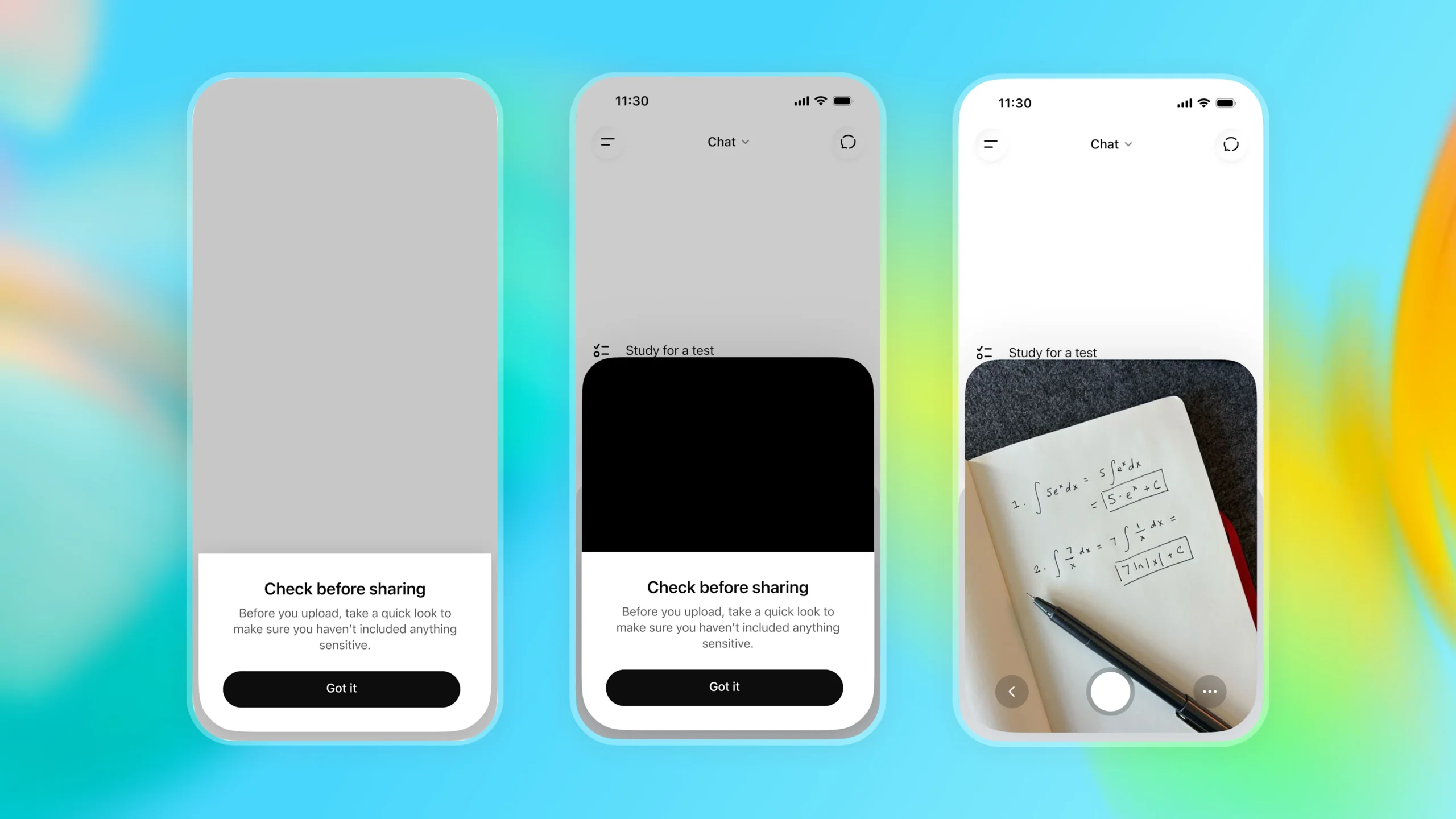
Sensitive-image upload reminders cautioning teens against sharing private or sensitive images
-
Teen-specific onboarding introducing the learning and safety features available to them from the start
-
Break reminders encouraging teens to step away from the tool
-
Product cues consistently identifying ChatGPT as AI
-
Simple customization options, like accent colors and voice variations, to make the experience feel personal without blurring the line between a useful tool and a human relationship
Partnering with CodeAI to Prepare the First AI Generation
To help prepare the first AI generation of students, OpenAI and CodeAI announced a signature partnership to give students and educators access to tools and resources that will help them learn how to use and benefit from AI.
The partnership will focus on the education that surrounds the technology: helping teens understand how AI works, direct it, question it, and create with it—with teachers playing a meaningful role in shaping how AI enters the classroom.
“Every student should know how AI actually works and be able to question the technology, catch its mistakes, and know when to stop trusting it,” said Karim Meghji, CEO of CodeAI. “Give them that foundation, and AI becomes less a force shaping their future and instead something they can question, shape, and create on their own.”
Over the next year, OpenAI and CodeAI will focus on practical programs that help students understand AI, use it with care, and explore how it can support learning and creativity. They will establish a joint advisory council bringing together experts and leaders on child development, youth public policy, and learning science.
What Teens Are Building With AI
Teens are already using AI not only to study, but to build tools, teach themselves new skills, and work on problems in their communities.
In Virginia, Rushil Kukreja, Arhan Menta, and Nayel Rehman developed WiFind, a search-and-rescue system that uses existing Wi-Fi signals to help locate survivors trapped beneath rubble after natural disasters. The project grew out of volunteer work with a local search-and-rescue organization. For the team, AI helped speed up the work of learning from research, prototyping quickly, and turning a promising concept into a tool designed for first responders.
Crystal Yang in Texas used ChatGPT to help develop and scale Audemy, a platform that creates audio-based educational games for blind students, reaching 200,000 users and 50 games.
While each teen used ChatGPT in different ways, they all point to the kinds of uses we want to support: learning from complex material, building with guidance, and applying new skills to real problems. Teens should be able to explore that potential with tools that are capable, age-appropriate, and designed with clear safeguards.
Ongoing Safety Research and Transparency
OpenAI’s protections are underpinned by ongoing safety research informed by developmental science, expert input, and testing model safeguards in areas where teens may face distinct or heightened risks.
The company has begun sharing more of this work publicly, starting with new under-18 evaluations added to system cards that show how models perform against teen-specific standards in challenging sensitive-content cases. These evaluations cover self-harm, eating disorders, violence, age-restricted goods and services, and sexual content.
Teens should be able to use AI to learn, create, and explore. But that access should come with protections that reflect their developmental stage, reinforce real-world relationships, and support healthy use over time. ChatGPT for Teens is our next step in building toward that standard.
Availability
ChatGPT for Teens is rolling out globally to eligible teen accounts on Free and paid personal ChatGPT plans beginning August 18, 2026.


