


Every August, the country turns its attention to women. Panels are convened. Tributes are published. Stages fill with stories of progress. And then September arrives, and the structural conditions that govern the financial lives of most South African women remain precisely as they were.
I am no longer satisfied with that cycle. This Women’s Month, I want a harder conversation about the data we are ignoring, the barriers we are not naming, and the concrete steps organisations must take if the next generation of women leaders is going to be something more than a talking point.
The numbers we need to sit with
Start with retirement. South African women retire with 21% less in pension and provident fund savings than men. On average, women earn 76 cents for every rand men earn a 24% pay gap that widens to 39% among older women. But the gap is not simply about earnings. According to Statistics South Africa’s 2021 Household Survey, 43.4% of children live only with their mothers, compared to just 3.9% with their fathers placing ten times the financial burden on women, who must either earn more to support their families or accept lower-paying roles that offer the flexibility caregiving demands.
The consequences compound. Women are 1.3 times more likely to withdraw from their retirement savings under the two-pot system introduced in September 2024 and 80% more likely to use those withdrawals for school fees. They are not being reckless. They are managing a household financial reality that the system was never designed to accommodate. Only 8% of female fund members are confident they will retire comfortably. Forty-six percent believe they will never have enough saved to retire at all.
These are not abstract statistics. They are an indictment.
The barriers that persist — and the ones we don’t talk about
The pay gap is real and documented. But the less visible barriers are, in many ways, more damaging because they are harder to legislate away.
Discovery Corporate and Employee Benefits’ July 2025 analysis confirms the pattern: women are actively saving and contributing to retirement — yet the system works against them. From age 55, women are 25% more likely than men to invest in more conservatively managed balanced funds, potentially limiting investment growth at the critical years leading up to retirement. They live longer too, a healthy 65-year-old woman will outlive her male counterpart by two years, meaning the same retirement lump sum must stretch further, on less.
This is the caregiving penalty made visible in data. A woman who steps back from the workforce for two or three years in her thirties does not just lose income. She loses compound growth on retirement savings, pension contributions she cannot retroactively recover, and the career momentum that would have driven her into senior roles at precisely the moment those roles began to matter. The mathematics are brutal — and they play out invisibly, over decades, before most women see them coming.
Beyond the financial mechanics, there is the broader structural reality of who holds power in the sector. Women hold 38% of JSE Top 40 board seats but only 27.4% of executive roles. When one of South Africa’s top investment firms ran a recent CEO search, women made up just 14% of the candidate pool. The sector is not nurturing enough women at the senior management level to feed into executive roles — and if that is not addressed urgently, there will not be enough women ready to step into board positions in the next five to ten years.
We are filling the pipeline at the bottom and losing it at the top. That is not a diversity problem. That is a leadership strategy failure.
Why representation in decision-making is not optional
There is a tendency to frame women’s representation in leadership as a social good — something organisations pursue because it is the right thing to do. That framing is both patronising and strategically naïve.
South African women hold 47.2% of senior management roles — the highest proportion in the world, according to SNG Grant Thornton’s 2025 Women in Business report. The talent is here. The capability is demonstrable. What is failing is the institutional will to move that talent into the rooms where consequential decisions are made.
This matters profoundly in financial services. The products we design, the credit models we build, the retirement frameworks we construct — these either reflect the lived realities of women or they don’t. When women are absent from the decision-making table, they are consistently absent from the design brief. The result is a financial system that treats women’s economic lives as edge cases rather than as the mainstream reality they represent. South African single mothers are statistically the sole largest providers for nearly half of the country’s children under 18. There is nothing marginal about that.
Diverse leadership does not just produce fairer outcomes. It produces better products, stronger institutional trust, and more resilient organisations. Firms that fail to develop and platform women in leadership are not being inclusive — they are being commercially reckless.
What organisations must actually do
Intention is not a strategy. If organisations are serious about cultivating the next generation of women leaders, the following are not optional:
Redesign the career architecture. Retirement fund contribution structures, performance evaluation cycles, and promotion criteria must be redesigned to accommodate non-linear careers. A woman who takes a career break to manage caregiving responsibilities should not arrive at 55 financially penalised for a decision the system forced on her. Contribution top-ups, flexible re-entry frameworks, and gap-aware credit assessments are not luxuries — they are baseline requirements.
Make sponsorship — not just mentorship — a leadership imperative. Mentorship tells women what to do. Sponsorship puts them in the room. Senior leaders, men included, must actively advocate for women in succession conversations, assignment decisions, and executive pipelines. The talent is not the problem. The advocacy is.
Build visibility infrastructure. Women in financial services need platforms — media, speaking, thought leadership — that establish their authority publicly and on their own terms. Expertise that remains internal is expertise that the market, the media, and nomination committees never see. Organisations that invest in the public profiles of their senior women are investing in their own institutional credibility.
Measure what matters. Track not just representation at board level but the pipeline beneath it — how many women are in senior management, how many are in succession plans for executive roles, how many are leaving at the mid-career inflection point, and why. What gets measured gets managed. What gets ignored compounds.
The standard we should hold ourselves to
Women’s Month should not be a communications exercise. It should be a moment of genuine organisational reckoning and a point at which we ask honestly whether the decisions being made in our boardrooms, our product design teams, and our talent pipelines reflect the financial realities of the women we serve and the women we employ.
The data tells us, clearly, that for most South African women the financial system is not working. The barriers are structural, the compounding effects are severe, and the solutions require institutional action — not individual resilience.
South African women have demonstrated, repeatedly and measurably, that they are ready to lead. The question is whether our organisations are ready to get out of the way.
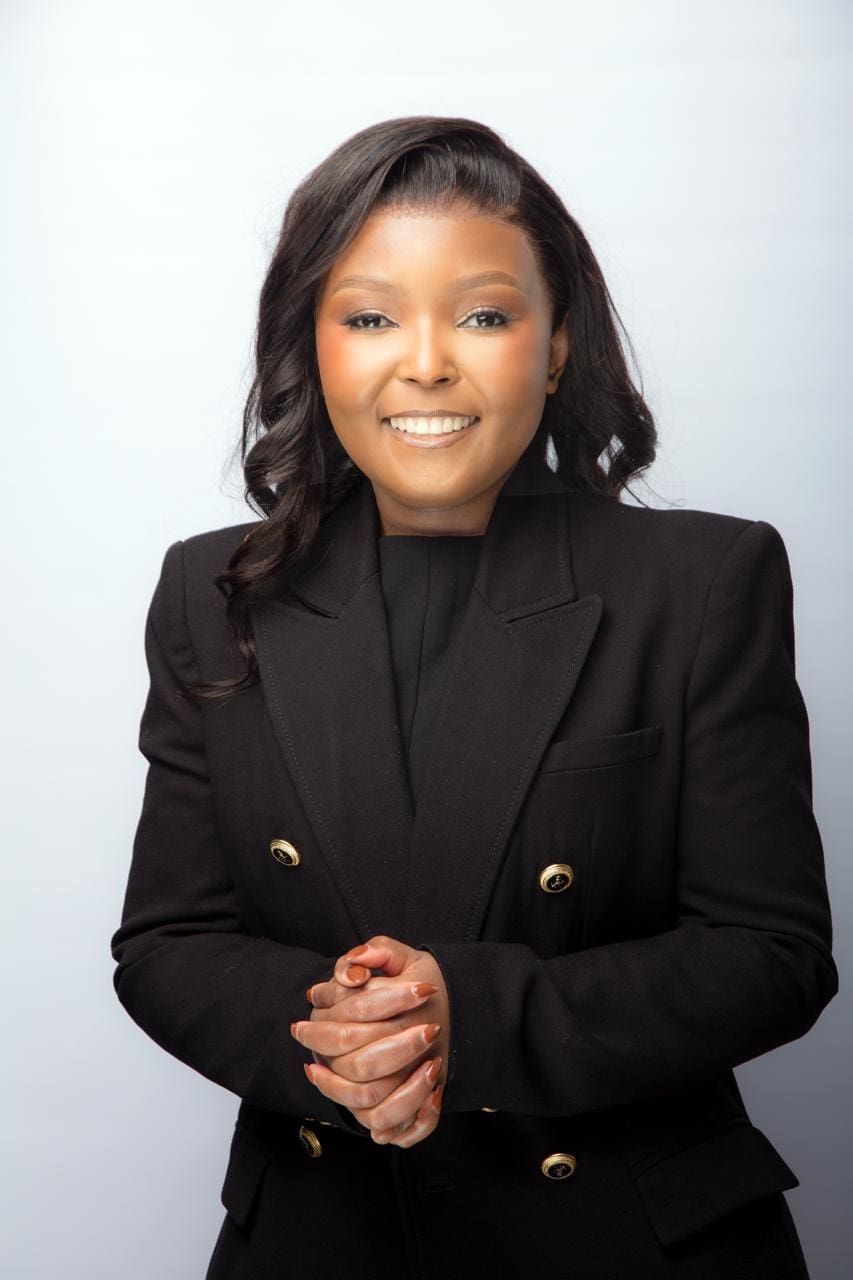
- Zamabomvu Ngubane, Customer Value Optimisation, FNB Private and MBA, CLMP


