


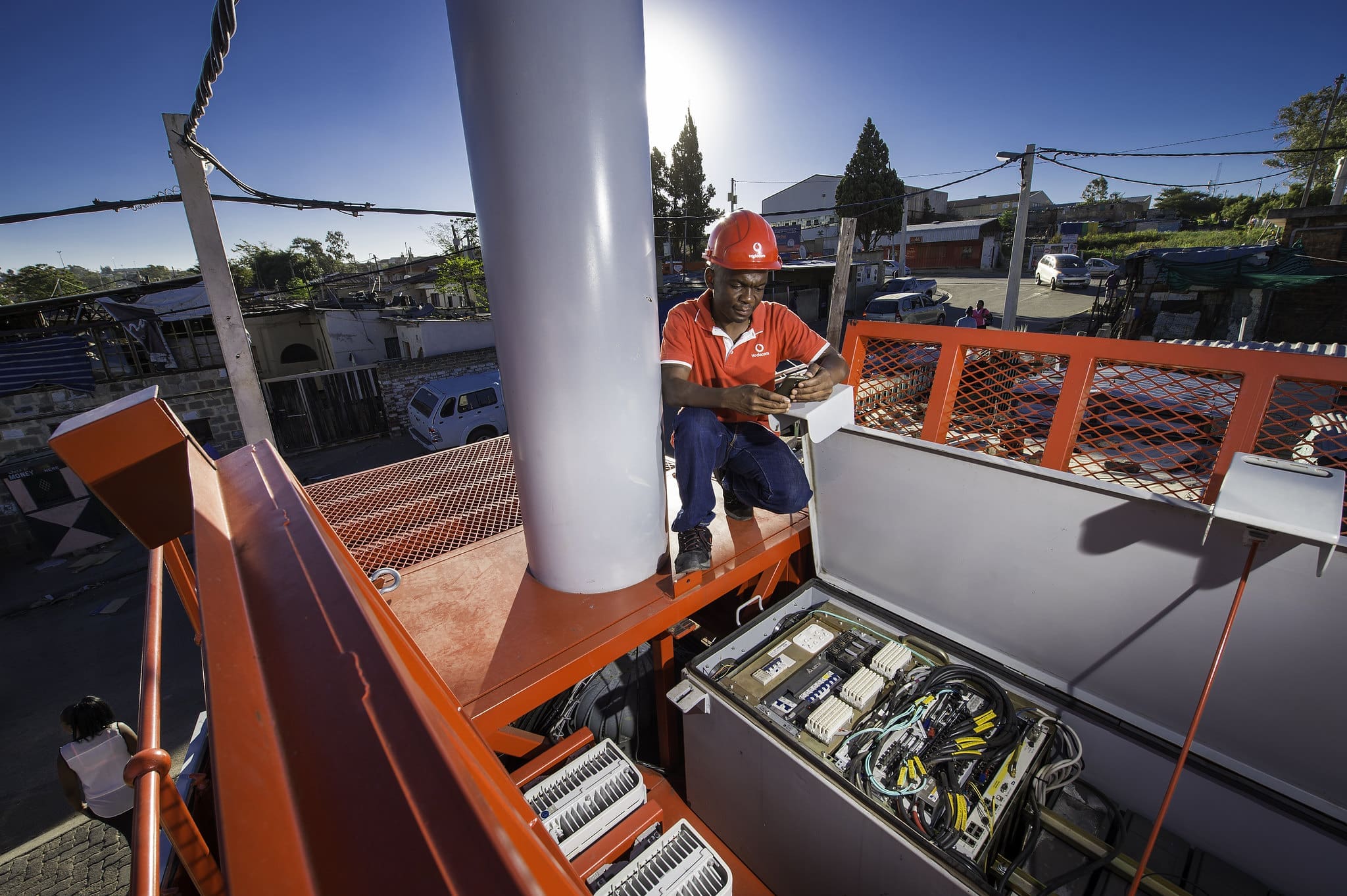
Vodafone is testing a mobile mast equipped with an AI brain and robotic arm that autonomously analyses where customers need coverage most and automatically adjusts the radio antenna to improve the signal.
The self-thinking mast can evaluate demand and local conditions, including weather, to decide where to focus its strongest signal. On sunny days it can direct the signal outdoors, and when it rains, it focuses on providing deeper indoor coverage.
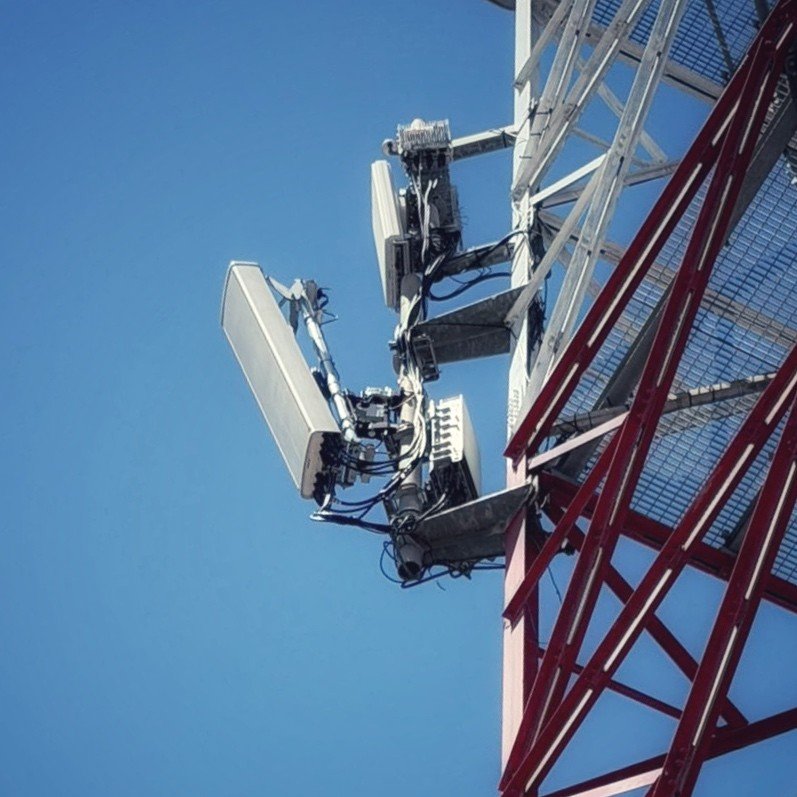
Using an algorithm developed by Vodafone engineers, the AI brain autonomously directs the robotic arm, manufactured by South Korean firm HUMAX Networks, to rotate or tilt the radio antenna to optimise 4G/5G coverage and performance. It continues to think, learn and adapt and can make decisions almost instantly without human intervention.
Quickly redirect signal
Vodafone is trialling the technology at a site in Tirana, Albania, overlooking a busy shopping centre. During the day, the antenna serves shoppers; at night, it automatically shifts coverage to a nearby residential area, adding capacity when evening internet use rises.
The process takes around 20 to 30 minutes. While the movement can technically be speeded up, the pace is designed to conserve energy and is still far faster than the days needed for a manual change or the weeks required to add another antenna.
Today, adjusting an antenna usually requires an engineer to climb the mast. Even with efforts to minimise disruption, the process can take weeks or months because it may require planning permission, agreements with site owners, road closures for heavy equipment, and suitable weather conditions for crews to work safely.
Francisco ‘Paco’ Martin Pignatelli, Director of Mobile Access Engineering, Vodafone, said: “This is an early example of Physical AI in telecoms. By analysing network demand and making autonomous decisions, the AI algorithm can adjust radio antennas to optimise coverage and capacity without human intervention. This enables us to deliver superior connectivity for our customers.”
The project supports Vodafone’s broader effort to integrate autonomous antenna control into its company-wide, open standards-based platform for automating radio access network (RAN) components. Internal teams and third-party developers can use the platform to create intelligent optimisation algorithms that enable antennas to become active, dynamic parts of an adaptive RAN.
Automatically anticipate demand
Weather and other local conditions can shape how and where people connect to the mobile network. A sudden downpour or traffic jam, for instance, can quickly shift traffic patterns across a wide area. By feeding these variables into self-organising network algorithms, antennas across multiple sites can quickly reposition to anticipate demand before it builds.
Vodafone expects similar autonomous products to become available in the coming months. Some of these will move small components inside the antenna to alter the signal, rather than the whole unit, and thereby reducing energy use.
The initiative builds on Vodafone’s rollout of satellite-guided sensors in new mobile mast antennas, which began last year. Using GPS technology, Vodafone can remotely verify that antennas have been installed correctly to maximise radio performance. Correcting misalignment typically requires manual intervention, which can be both time-consuming and costly.
Antenna digitalisation, combined with AI-powered RAN automation, is a major step towards fully autonomous, self-adapting networks. By focusing on practical innovation, Vodafone is demonstrating technology leadership today while helping shape the networks of tomorrow.
