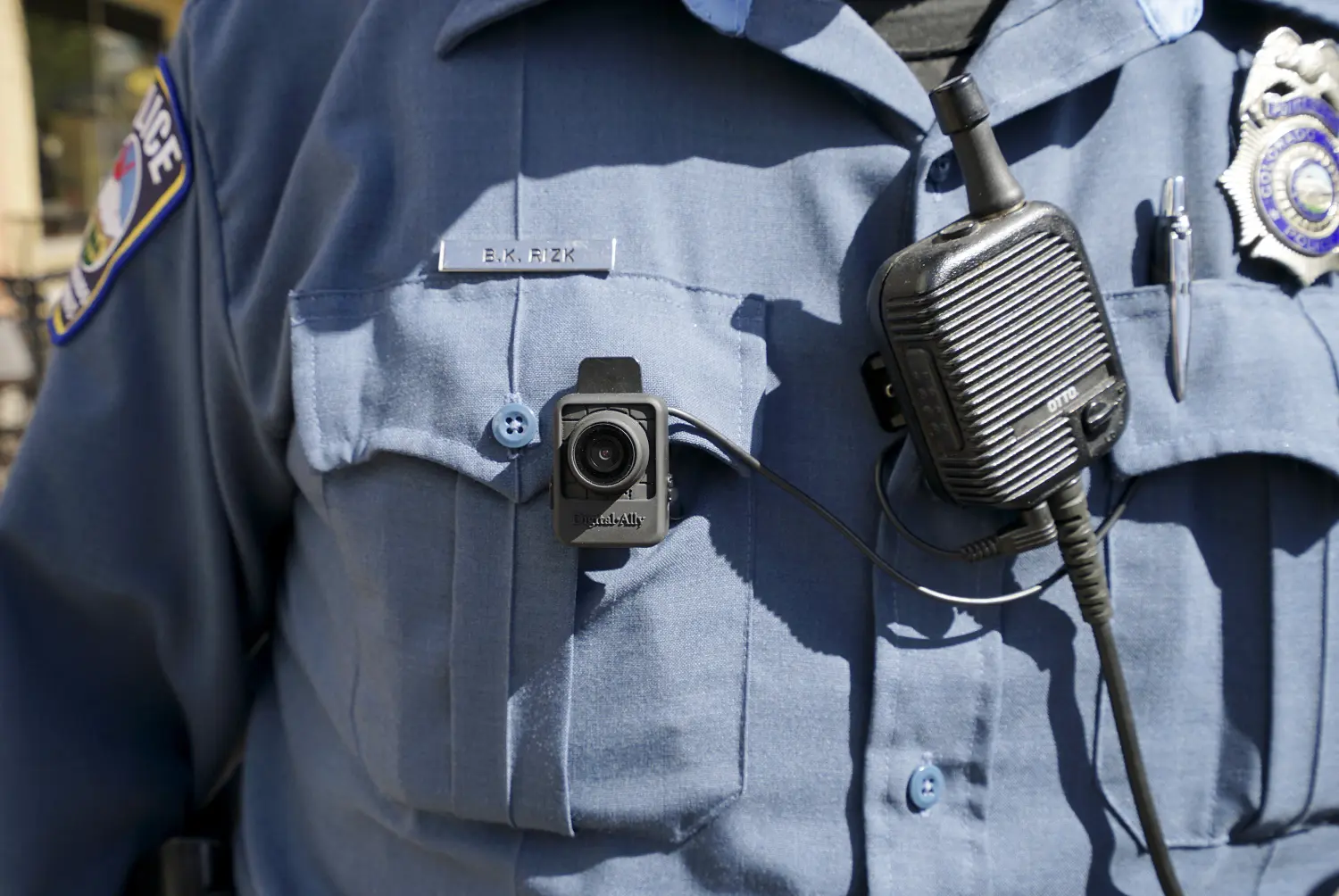
In a significant move toward enhancing transparency and accountability in law enforcement, South African Police Minister Senzo Mchunu has announced plans to deploy body-worn cameras for police officers.

The revelation came in a written Parliamentary response to Democratic Alliance (DA) Member of Parliament (MP) Billy Mzamo, with the rollout set to begin in April 2025.

However, concerns have been raised about the slow pace and limited scale of the initiative.

According to Minister Mchunu, the South African Police Service (SAPS) will commence the procurement of 100 body-worn cameras this year, at an estimated cost of R28,818 per unit.

This translates to an annual expenditure of R2.88 million, with a total investment of R14.4 million over the next five years.

While the initiative has been welcomed as a positive step, critics argue that the deployment of only 100 cameras in a country with nearly 179,000 police officers is insufficient to achieve meaningful impact, says DA in a statement.

The cost of the cameras has raised eyebrows, with some questioning whether the investment will deliver value for money. However, DA MP Billy Mzamo emphasized that the initiative’s success hinges on transparent and efficient implementation.

“While this is a positive step, given that there are nearly 179 000 police officers in South Africa, the deployment of only 100 body-worn cameras this year is too slow and could delay the full benefits of this initiative,”said Mzamo.

“To ensure that these valuable resources are not lost, damaged, or stolen, it is crucial that an effective asset management plan is put in place. At only 100 cameras a year, the risk of this initiative being undermined by preventable losses is high. Without proper tracking and accountability measures, the rollout could be whittled away to almost none within a few years.

“We urge the Minister and SAPS to prioritise the urgent implementation of this initiative by accelerating the rollout, ensuring proper training for officers, and guaranteeing that the technology is used effectively to protect both the public and police officers. In addition, an asset management strategy must be established to safeguard the cameras and ensure their longevity and proper usage.”

The DA has vowed to hold SAPS accountable to ensure that the body-worn camera project does not become another unfulfilled promise to the South African people.

“The DA will continue to monitor this initiative closely to ensure it delivers on its potential,” Mzamo said. “This is not just about technology; it’s about restoring faith in our police service and ensuring justice for all.”

As South Africa takes its first steps toward equipping police officers with body-worn cameras, the focus must remain on transparency, accountability, and efficient implementation. While the initiative marks a positive shift, much work remains to be done to ensure it delivers on its promise of a safer, more accountable policing environment.

The SA Police Service remains shackled to outdated, manual processes that render it ill-equipped for modern law enforcement, the writer says. File photo: BRENTON GEACH/GALLO IMAGES

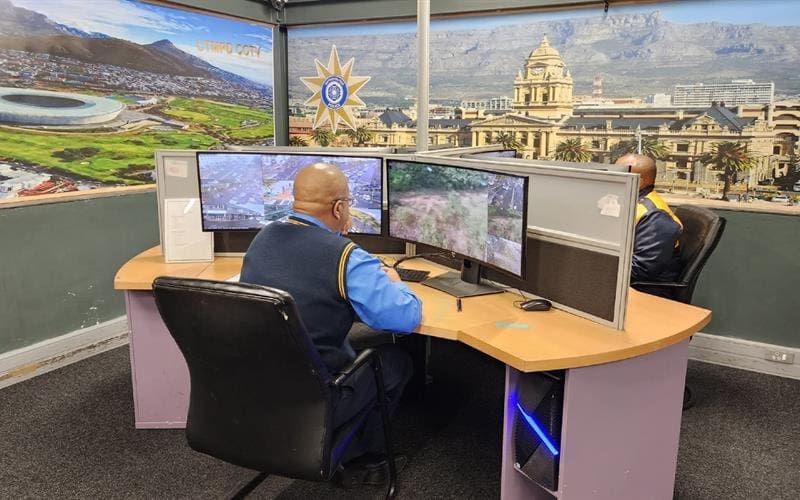
Criminals are increasingly sophisticated, leveraging technology to commit and conceal crimes from prying eyes. All the while the SA Police Service (SAPS) remains shackled to outdated, manual processes that render it ill-equipped for modern law enforcement.

The SAPS is at a crossroads. The question is no longer whether the service  should adopt smart crime-fighting techniques, it’s whether it can do so before the digital train leaves.

The reality is stark. Criminals exploit digital tools to commit crimes, fully aware that the police still cling to “old school” methods that include paper-based case files, manual intelligence processing and face-to-face interactions.

These archaic crime-fighting methods are not just inefficient, they are a liability. For example, incomplete or inaccurate witness statements and the loss of filed records are among the primary reasons cases collapse in court.

Digitising these processes could streamline investigations, reduce delays and safeguard files. The police seem paralysed by a lack of resources, training and political will. A recent personal experience emphasised this glaring gap.

When my mother-in-law’s tenant stole her assets, including a fridge, washing machine and inverter, we reported the crime to the police and even provided CCTV footage of the theft. The female police officer assigned to the case was competent, but hamstrung by systemic inefficiencies. It took her two hours to compile a statement manually.

Worse still, the detective asked us for a memory stick to transfer the CCTV footage. She did not have a memory stick because the state failed to supply this basic item. This incident highlights a troubling truth: the SAPS is not just under-resourced; it is fundamentally unprepared for the digital age.

President Cyril Ramaphosa has reaffirmed South Africa’s commitment to leveraging technology in law enforcement, saying the country is adopting surveillance, analytics, and smart policing solutions to modernize crime-fighting efforts.

Speaking during his annual State of the Nation Address (SONA), Ramaphosa highlighted the crucial role of artificial intelligence (AI) and digital forensics in combatting financial crimes, corruption, and violent offenses.

“We have seen the value of technology in fighting crime,” he stated. “By using AI in its fraud risk detection and verification work, SARS has prevented the leakage of over R95 billion in impermissible refunds, recovered R20 billion in revenue, and dismantled an illicit tobacco and gold scheme.”

The South African Police Service (SAPS) is strengthening its efforts against organized crime through targeted operations such as Operation Shanela, which has successfully led to arrests, firearm recoveries, and the seizure of stolen vehicles.

The President emphasised that tackling gun violence remains a top priority, instructing law enforcement to “prioritise reducing gun-related crime and violence, prevent firearms from entering the illicit market, and recover illegal firearms in circulation.”

To enhance investigative capabilities, SAPS will expand its Detective Service by 4,000 personnel through internal recruitment. Meanwhile, efforts to combat gender-based violence (GBV) will continue with the expansion of support services, including 65 Thuthuzela Care Centres and 16 new sexual offenses courts.

Share.
Leave A Reply

Secret Link
Exit mobile version