

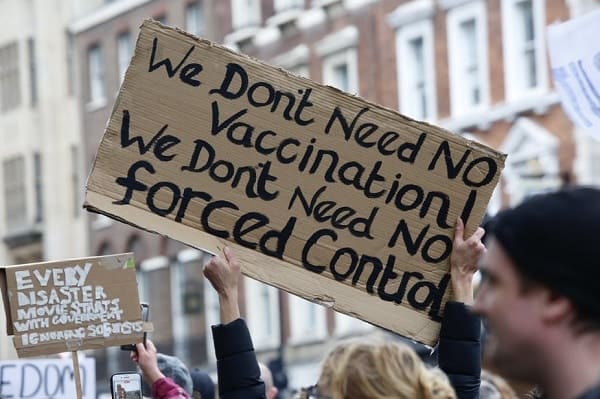
South Africa’s COVID-19 vaccine rollout programme, outlined by the Ministry of Health, had three phases, starting with the most vulnerable population.
Phase one included all the frontline healthcare workers. They received the Johnson and Johnson vaccine. Phase 2 vaccinated people over 60 years old and those in congregate settings. The third and final phase, now under way, covers the remaining South African population.
The programme got off to a shaky start in February 2021. It encountered a number of setbacks such as supply, logistics and governance issues, but has gained momentum in recent weeks. As many as 200,000 doses are being administered daily. By the end of July 2021, almost 2.9% of the South African population had been fully vaccinated and 7.5% had their first of the two Pfizer doses.
Read more:
COVID-19: key questions about South Africa’s vaccine rollout plan
Despite this uptake, many South Africans are still hesitant to take the vaccine. The circulation of misinformation about it poses the danger of hampering efforts to control the pandemic.
In this article, we aim to dispel some of the myths surrounding the COVID-19 vaccines.
Myth 1: The COVID-19 vaccine will affect a woman’s fertility
This myth was sparked when a social media post was shared in December 2020 by Dr Wolfgang Wodarg, a physician and former chief scientist for allergy and respiratory therapy at Pfizer, and Dr Michael Yeadon, a pulmonologist. They claimed that the spike protein on the coronavirus was the same as the spike protein that is responsible for the growth and attachment of the placenta during pregnancy. The fear was that, as a result of the vaccine, the immune system would not be able to differentiate between the two spike proteins and would attack the placental protein.
This is untrue. The overall makeup of the placental protein is very different from the coronavirus spike protein.
Additionally, during the Pfizer vaccine tests, 23 women volunteers became pregnant after taking the vaccine.
Furthermore, the benefits of being vaccinated outweigh the risks of infection for pregnant women.
Myth 2: I’ve had COVID-19, so I don’t need a vaccine
Reinfection with SARS-CoV-2, the virus that causes COVID-19, can occur even in individuals who have previously contracted the virus. But receiving the vaccine can provide protection against severe COVID-19 complications.
The level of protection that is achieved from natural immunity after being infected by the virus is unknown. But scientists believe that the vaccine provides better protection than natural infection.
Read more:
Why you should get a COVID-19 vaccine – even if you’ve already had the coronavirus
Myth 3: COVID-19 vaccine side-effects are dangerous
Several studies have been conducted since the start of the pandemic that have measured South Africans’ perceptions of vaccine issues. A recent study by the University of Johannesburg and the Human Sciences Research Council of South Africa found that of the respondents who did not want to be vaccinated, 25% were concerned about side-effects.
Most of the side effects of the COVID-19 vaccine are mild. They include low grade fever, sore arm and fatigue, and these usually subside after one to three days.
Rare side effects such as blood clots have been reported from the Johnson and Johnson vaccine. The chances of experiencing this side effect are low. The risks of blood clots as a result of COVID-19 infection are 8-10 times higher than risks associated with the vaccine. Doctors are aware of this concern and are trained to identify and treat the condition quickly.
A recent article by Healthline – a medically reviewed and fact checked website – compared the benefits and risks of being vaccinated with those of contracting COVID-19. Lung damage is a complication of COVID-19 while muscle fatigue can be a side effect of the vaccine. This risk-benefit decision is left to the individual to make, but vaccinations have been proven to be safe.
Myth 4: Vaccines have a microchip that will track and control an individual
This conspiracy theory has been propagated by anti-vaxxers who believe that the American business magnate, investor and philanthropist Bill Gates will implant microchips to track people’s movement, using the vaccine as the method of delivery. This is untrue and has been clarified by Gates in the media.
This myth gained traction when a video was shared on Facebook making false claims about the optional microchip on the syringe’s label of the COVID-19 vaccine. This microchip’s purpose is to confirm that the injectable and the vaccine are not counterfeit and haven’t expired. It will also confirm if the injection has been used.
People commenting on the video appeared to have misinterpreted the technology as an injectable. But the microchip is part of the syringe label and not the injectable substance itself.
Read more:
The inherent racism of anti-vaxx movements
Myth 5: The COVID-19 vaccine development was rushed, so it may not be effective
The vaccine was developed very quickly. This was possible because the vaccine technology had been in development for many years. When the genetic information of SARS-CoV-2 was identified, the process could begin quickly. There were sufficient resources to fund the research and social media made it easier to recruit participants for the clinical trials. Because SARS-CoV-2 is contagious, it was easy to tell whether the vaccine worked or not.
Read more:
Pressure is on to develop a COVID-19 vaccine, but corners can’t be cut
Myth 6: The COVID-19 vaccine can alter my DNA
The messenger RNA vaccine (Pfizer) and the viral vector vaccine (Johnson and Johnson) cause your body to develop protection, so that when you are infected by SARS-CoV-2, your body is prepared to fight the virus. DNA is located in the nucleus of your cells and the vaccine material does not enter the nucleus. So it does not alter the DNA.
Read more:
Can the Pfizer or Moderna mRNA vaccines affect my genetic code?
Social media plays a huge role in propagating myths and conspiracy theories. Before you share any information, you should ensure that it is from a scientific and reputable source.
Neelaveni Padayachee, Senior Lecturer, Department of Pharmacy and Pharmacology, University of the Witwatersrand and Varsha Bangalee, Senior Lecturer, Pharmaceutical Sciences, University of KwaZulu-Natal
This article is republished from The Conversation under a Creative Commons license. Read the original article.
