


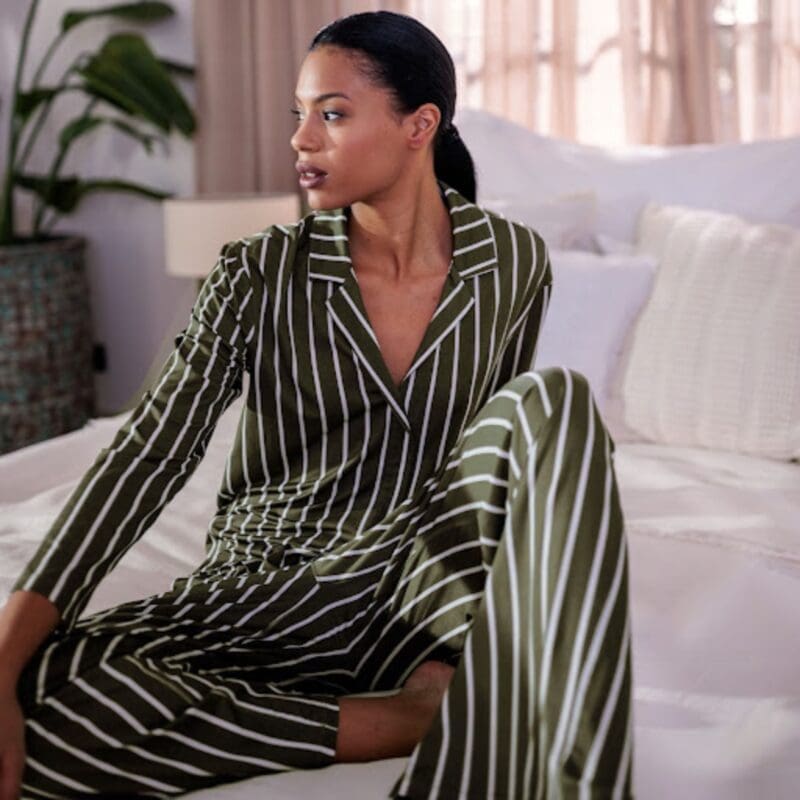

A sleepwear expert has warned that our pyjamas could be costing us a good night’s sleep.
While caffeine and screen time are often blamed for poor sleep quality, one expert warns that what you wear to bed could be keeping you from getting 40 winks.
Simone Friedrichs, Head of Product Innovation sleepwear brand Dagsmejan – who combine innovative fabric technology with clever design to address the UK’s biggest sleeping challenges, said: “A good night’s sleep can be hard to come by, and we often overlook how small design details in our sleepwear affect us overnight. Itchy labels, synthetic fabrics, and constricting seams cause subtle physical disruptions that pull you out of deep sleep cycles without you even realising it.”
Simone’s five hidden nightwear triggers disrupting your sleep cycle:
- Cold feet and restrictive socks (the bed socks mistake): “Cold feet keep your nervous system on high alert. Wearing warm bed socks expands blood vessels in your feet, signalling to your brain that it’s time to sleep. However, wearing standard everyday socks with tight elastic ankles restricts circulation overnight. Opt for light, loose fitting, highly breathable sleep socks made from natural thermoregulating fibres like merino wool. Avoid the cute angora-socks, they look nice, but you will overheat very quickly and your deep-sleep will suffer.”
- The 3am micro tickle (stiff tags): “As your core body temperature shifts overnight, skin sensitivity increases. Raised care tags and stiff labels cause subtle micro-friction against sensitive skin, pulling you out of deep restorative sleep, even if you don’t fully wake up. Look for tagless designs where care instructions are printed directly onto the fabric. And when evaluating a new pj, check the quality of the seams from the inside first.”
- Pillow-bed pressure points (button and zips): “Chunky buttons, metal drawstrings, or zippers create pressure points against your skin as you shift positions. If you can feel the pressure of a fastening on your skin when lying down, your nervous system is actively fighting it all night. Stick to flat, buttonless fronts.”
- Thermal overload (the temperature trap): “To fall into and maintain a deep sleep, your core body temperature needs to drop naturally by around 1-2°C. Fabrics with low breathability act like a heat shield, trapping hot air and moisture against your skin. This prevents your body from cooling down, causing sudden nighttime temperature spikes that force you awake. Look for light, natural fibres or botanical textiles that actively breathe and wick moisture away. ”
Dagsmejan sleepwear has been designed to help with this. Their Balance collection helps you keep the ideal temperature all night using their own NATTWELL fabric which is six times more breathable than cotton and two times softer.
5. The midnight twist (rigid seams): “Throughout the night, the average sleeper naturally shifts position dozens of times as they move between sleep cycles. Rigid waistbands and heavy seams grip onto bed sheets as you roll, wrapping your clothes tightly around your body and restricting movement. Look for flat lock stitching and multi directional stretch that glides smoothly over sheets. A cuff will keep the pants in the right position all night, avoiding roll up.”
“We tend to treat sleepwear as repurposed loungewear,” added Simone Friedrichs, “In reality, our pyjamas and sleep accessories should be engineered specifically around thermoregulation and skin comfort to support uninterrupted sleep.”
