


From Law Enforcement to Educational Leadership
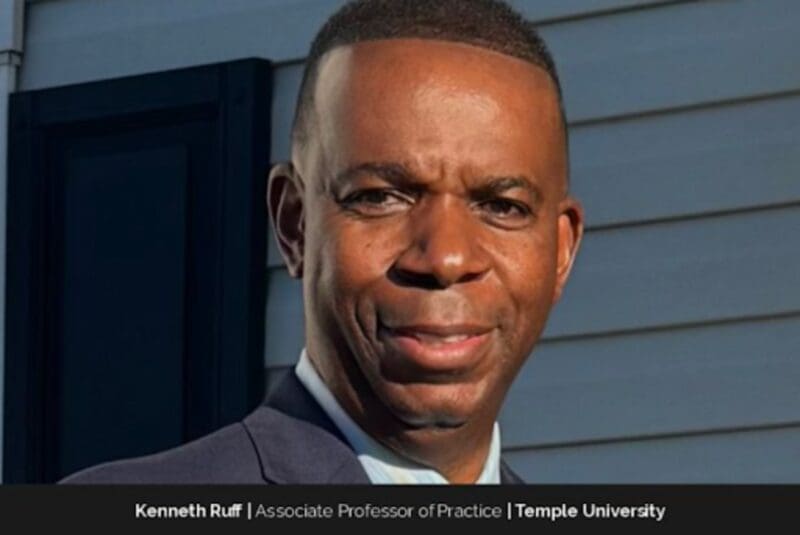
Dr. Kenneth Ruff has built a distinguished career around service, education, and leadership. From his early years as a New Jersey State Trooper to his current position as an Associate Professor of Practice at Temple University, his professional journey reflects a lasting commitment to helping individuals and communities achieve their full potential.
With a background in Criminal Justice and Law Enforcement, Dr. Ruff initially entered a profession focused on public safety and community protection. However, his experiences gradually revealed another powerful way to serve society: education. This realization became the foundation of a career dedicated to student development, academic achievement, and educational leadership.
While pursuing his Master of Arts in Criminal Justice at John Jay College, Dr. Ruff began instructing fellow service members and supporting training initiatives involving more than 600 law enforcement agencies across New Jersey. His growing interest in teaching ultimately inspired him to obtain professional teaching certification, opening new opportunities in public schools and higher education.
His dedication to public service received early recognition in April 1987, when Newark Mayor Sharpe James presented him with a Distinguished Citizen’s Award for Community Service. This recognition reflected the values that continue to guide his work today: responsibility, leadership, and a genuine desire to make a meaningful difference.
Advancing STEM Education and Student Success
Throughout his career, Dr. Ruff has maintained a clear vision of education as a pathway to opportunity. As an educator and academic leader, he believes students should receive more than classroom instruction. They need mentorship, practical guidance, and the academic foundation required to succeed in an increasingly competitive world.
His work at Temple University focuses on supporting students pursuing degrees in Education and Science, Technology, Engineering, and Mathematics (STEM). Through teaching, advising, and professional mentorship, he encourages students to develop the knowledge, discipline, and confidence necessary to achieve their educational and career goals.
Dr. Ruff’s experience across different educational settings gives him a broad understanding of the challenges students face when transitioning between institutions and progressing toward graduation. After earning a Master of Science in Professional Education from Saint Joseph’s University in Pennsylvania, he expanded his professional experience through roles as a mathematics teacher, assistant principal, principal, and director of college pipeline programming.
These responsibilities have helped him understand the educational journey from multiple perspectives, including classroom instruction, school administration, college preparation, and student retention.
Building Stronger Pathways to Graduation
One of Dr. Ruff’s central priorities is improving student persistence and degree completion. He believes educational institutions must look beyond enrollment numbers and focus on whether students have the academic preparation and institutional support needed to graduate successfully.
Admitting students without providing appropriate academic pathways can create significant challenges, including extended degree timelines, increased financial pressure, and higher dropout rates. For Dr. Ruff, addressing these concerns requires collaboration among faculty, administrators, enrollment teams, and student support services.
He emphasizes that universities must maintain high academic standards while developing practical strategies to help students overcome barriers. This includes providing effective advising, strengthening foundational learning, modernizing curricula, and creating meaningful opportunities for academic engagement.
His philosophy is captured in a straightforward principle: “Problem-shifting is not problem solving.”
By encouraging shared accountability, Dr. Ruff advocates for an educational environment in which faculty members actively contribute to student success rather than treating retention and enrollment as responsibilities belonging exclusively to administrative departments.
Embracing Innovation and Responsible Artificial Intelligence
As technology continues to reshape education, Dr. Ruff believes educators must remain adaptable and committed to continuous learning. Artificial intelligence, in particular, presents both opportunities and challenges for institutions seeking to prepare students for the future.
He encourages educational leaders and teachers to develop practical AI knowledge, pursue relevant training, and explore responsible ways to integrate emerging technologies into teaching and learning.
However, adopting new technology requires careful consideration. Educators must understand how AI can support learning while addressing concerns surrounding accuracy, academic integrity, and the distinction between reliable information and misleading content.
For Dr. Ruff, innovation should not come at the expense of educational quality. Instead, technology should strengthen instruction, encourage critical thinking, and help students develop skills relevant to a rapidly changing professional landscape.
He believes institutions must regularly evaluate their curricula and teaching methods to ensure students receive an education that reflects current realities rather than outdated expectations.
Promoting Representation and Opportunity in STEM
Dr. Ruff also recognizes the importance of creating inclusive pathways into STEM fields. Students benefit from learning environments where they can access mentorship, encounter diverse professional perspectives, and envision themselves succeeding in disciplines where representation may remain limited.
Drawing on his own experiences, he advocates for practical initiatives that strengthen connections between educational institutions and the communities they serve. His approach emphasizes meaningful representation, effective teaching, and expanded opportunities for students from underrepresented backgrounds.
Rather than relying solely on broad statements about educational equity, Dr. Ruff encourages institutions to develop measurable strategies that support participation and achievement in the hard sciences.
His perspective reflects a broader belief that educational leadership should translate into tangible improvements in student experiences and long-term outcomes.
Learning from Mentors and Professional Experience
Mentorship has played an important role in Dr. Ruff’s professional development. Among the individuals who influenced his journey were Principal Leona Roberts of Willingboro Public Schools, John Gilbert Ridley of Bucks County Community College, and Professor Vivian Ikpa, his dissertation chair at Temple University.
He also credits former Associate Vice Provost for Undergraduate Studies Michele O’Connor at Temple University with helping shape his understanding of higher education.
Through his work with university committees, curriculum evaluation, transfer student programming, and institutional research initiatives, Dr. Ruff gained valuable experience across teaching, research, and student services.
These opportunities strengthened his ability to approach educational challenges from an institutional perspective while keeping students’ needs at the center of decision-making.
His academic accomplishments, including his doctoral studies and recognition for academic excellence, further reflect the importance he places on professional development and lifelong learning.
Extending Service Beyond the Classroom
Dr. Ruff’s commitment to service extends beyond his university responsibilities through EDU-Safe Community Solutions, his nonprofit initiative focused on educational services, youth mentorship, and community safety.
Combining his experience in law enforcement and education, the organization seeks to build constructive partnerships among local police departments, schools, faith communities, and residents. Its intended service areas include Middletown, Delaware, as well as neighboring communities such as Wilmington, New Castle, and Newark.
Through these collaborative efforts, Dr. Ruff aims to address community challenges by promoting education, encouraging positive youth development, and strengthening relationships between institutions and the people they serve.
His work reflects the conviction that lasting progress depends on cooperation, accountability, and measurable community impact.
A Leadership Philosophy Focused on Lasting Impact
Dr. Kenneth Ruff’s professional journey demonstrates how diverse experiences can contribute to a unified purpose. His transition from law enforcement to teaching and higher education illustrates the value of adaptability, continuous learning, and a willingness to pursue new opportunities for service.
As an Associate Professor of Practice at Temple University, he continues to emphasize student mentorship, academic accountability, STEM achievement, and responsible innovation. His perspective on educational leadership combines high expectations with a practical understanding of the support students need to succeed.
Recognition among The Top 10 Most Influential Leaders Transforming Education, 2026, as featured by CIO Views, provides an opportunity to highlight his contributions and share the principles that guide his work. His professional journey and achievements are also highlighted in the CIO Views cover story, Dr. Kenneth Ruff’s Impact in Service, STEM, and Leadership, which explores his transition from law enforcement to education and his continued commitment to STEM, mentorship, and community service
Ultimately, Dr. Ruff views leadership as an ongoing responsibility rather than a final achievement. By helping students recognize their strengths, establish meaningful goals, and prepare for future challenges, he seeks to create opportunities that extend beyond individual classrooms.
His enduring message is that education becomes most powerful when knowledge is combined with mentorship, accountability, and service. Through his work in STEM education, academic leadership, and community engagement, Dr. Kenneth Ruff continues to demonstrate how a commitment to people can help shape stronger institutions and a more promising future.
