


“No Internet, no modern life.” That’s the blunt conclusion of young South African, Godfrey Ngwenya.
He’s not wrong. South Africa has among the highest internet penetration rates on the continent, but a digital divide persists, leaving many young people like Godfrey and their families with no Internet access. They’re desperate to be connected, and to transform their lives.
Now, change is underway. With the rollout of the national broadband strategy, SA Connect, a “digital highway” to the future is extending from cities into rural areas.
Voices from the Unconnected
Godfrey lives in Diepsloot, Gauteng, a densely populated, underserved community made up of government-subsidized housing, self-built brick homes, and informal structures. With weak broadband infrastructure, most households—including Godfrey’s—remain unconnected.
“In brief moments, the internet has revealed to me glimpses of lives beyond the constricted space I live in,” says Godfrey. “The rest of the time, however, the poor connection here stops me from taking a further step out.”
As the family breadwinner, Godfrey works part-time and is set on becoming a barista. But it requires hours of online learning. His younger sister, about to enter high school, also often needs access to online educational resources. But without home broadband and with high mobile data costs, staying connected is difficult. Godfrey often switches his phone to airplane mode, drafts his job applications offline, and then walks 1.2 kilometers to the nearest mall for its one hour of free Wi-Fi. There, he sends out his daily batch of job applications, often missing short-notice video interviews from being offline. Godfrey’s story is echoed throughout many more communities still left behind by digital transformation.
Building South Africa’s Digital Highway
To bridge the digital divide, the South African government launched the SA Connect national broadband strategy, with the goal of bringing affordable, reliable, high-capacity broadband access to every South African by 2030.
As a state-owned enterprise, Broadband Infraco (BBI) is charged by the Department of Communications and Digital Technologies (DCDT) with expanding South Africa’s broadband infrastructure. In collaboration with Huawei, Broadband Infraco is building an intelligent all-optical backbone network, which will directly support the goals of SA Connect.
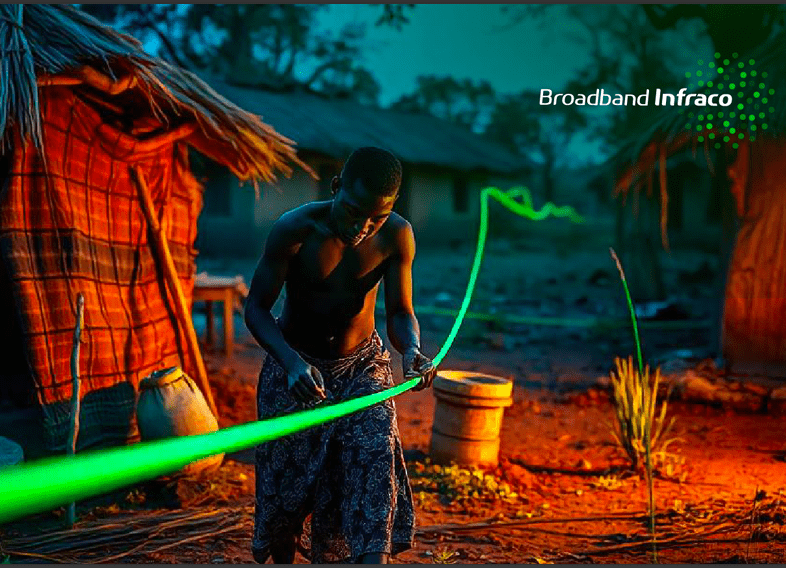
Gift Zowa, CEO of Broadband Infraco, said, “We are bridging the digital divide on two fronts, closing the digital inequality gap at home and narrowing the gap between South Africa and the world’s most industrialised nations. We are addressing one of SA Connect’s primary goals, the DCDT’s flagship broadband connectivity project, to make connectivity inclusive and bring stable, high-capacity broadband to all South African communities and government facilities by 2030.”
Broadband Infraco uses Huawei’s next-generation Optical Cross-Connect (OXC) technology to deliver 800G wavelengths across its network—a cutting-edge infrastructure leap that will support SA Connect’s ambitions for expansion of broadband access. It also enables massive volumes of data to be transferred between cities or data centers in real-time, powering applications in healthcare, education, e-commerce, and e-government, as well as fueling South Africa’s digital economy.
Peter Mafagana, Acting CTO of Broadband Infraco, added: “Technological innovation is the key to improving national network infrastructure. We are building an intelligent, highly reliable optical transmission network with Huawei’s ASON protection, 800G, OXC all-optical switching, Fiber Doctor, and other technologies. This will support the development of the e-government, inclusive connectivity, and smart cities, unlocking new potential for innovation.”
Julius Tsita, a network engineer at Broadband Infraco, agreed: “SA Connect is a government-led project aiming to provide disadvantaged and remote areas with broadband access and to close the digital divide. Huawei has installed 800G devices for us, delivering high-quality SLAs and massive bandwidth. These devices play a critical role as we progress SA Connect, connecting residents of remote communities to the outside world.“
Expanding Inclusive Connectivity with All-Optical Broadband
Through its intelligent all-optical backbone and partnerships with local service providers, BBI has connected over 13,000 public Wi-Fi hotspots and more than 2 million homes in underserved and rural areas nationwide, transforming network connectivity in these areas.
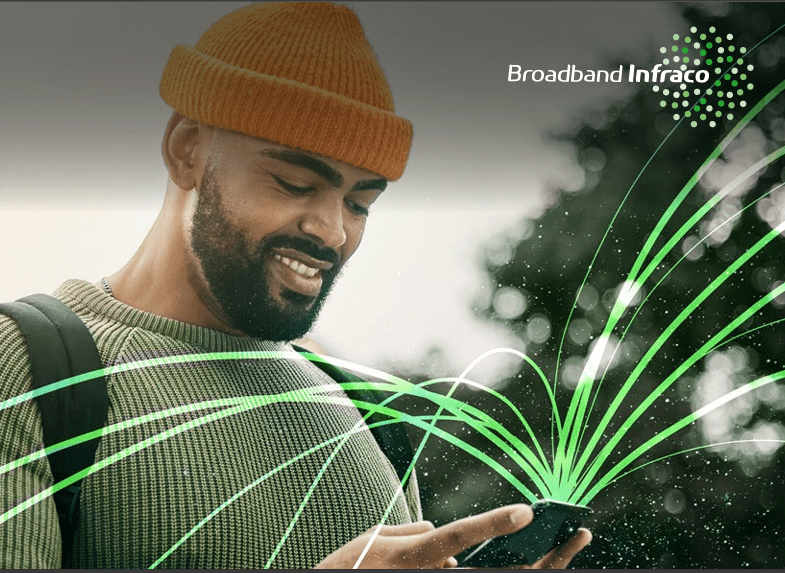
Nonku Dlamini, Chief Marketing and Sales Officer of Broadband Infraco,said: “The partnership as part of the BBI commercial model with the SMEs (Internet Service Providers (ISPs) and Access Network Providers (ANPs) enables inclusive economic transformation through the use of SMEs to be part of the total solution provision. This not only enables the SMEs to gain experience but also enables growth that contributes with regards to job creation, enabling employment in the communities as well.”
Nomso Kana, CEO of a local ISP, SimSciex, observed: “Improving Internet access is the key to driving economic growth. With the reliable network built by BBI, we have expanded rural and household network coverage with high-quality broadband, enabling remote work, boosting employment, and helping small- and medium-sized enterprises reach new markets. Together, we are advancing into the digital age.”
Despite the limited connectivity in his community, Godfrey is optimistic, knowing his area has been included in the SA Connect plans. With fiber and Wi-Fi coverage planned by the end of 2026 and more affordable packages for disadvantaged communities, SA Connect is bringing the digital world closer to remote areas. For many young people like Godfrey, a digital life is finally within reach, opening doors to brighter opportunities.
Realising the 2030 Vision
As the first 800G intelligent optical backbone network deployed by the government sector, the infrastructure will not only bring inclusive benefits to South Africa but also serve as a key driver of the digital economy. By 2030, the rapid growth of applications such as telemedicine, smart cities, and artificial intelligence will increase demand for capacity and services; the backbone network aims to lower connectivity costs and accelerate progress in sectors such as healthcare, education, e-commerce and e-government.
BBI has completed the construction of 100G/400G/800G backbone networks across Gauteng and various northern regions and plans to extend fiber connections from Johannesburg to the Kopfontein border, with the goal of strengthening high-speed cross-border connectivity across the SADC region. The full backbone will span all nine provinces and extend to the borders with Botswana, Lesotho, Mozambique, Namibia, Swaziland, and Zimbabwe, providing broad regional access.
Gift Zowa, CEO of Broadband Infraco, summarized the mission, “Africa is a continent full of vitality and innovation. We are collaborating with partners to build one of South Africa’s best national broadband infrastructure, focused on creating an inclusive, efficient, and sustainable digital ecosystem. This will guide South Africa toward its 2030 vision, where everyone can participate equally in the digital era.
https://www.huawei.com/en/media-center/multimedia/videos/2025/broadband-infraco

1 Comment
It’s great to see SA Connect and Broadband Infraco making real progress in getting high-speed internet to communities that need it most. Stories like Godfrey’s really show how access to reliable broadband can open doors—for education, work, and just connecting with the world. Exciting to see technology being used to make a real difference and bring more South Africans into the digital age!