


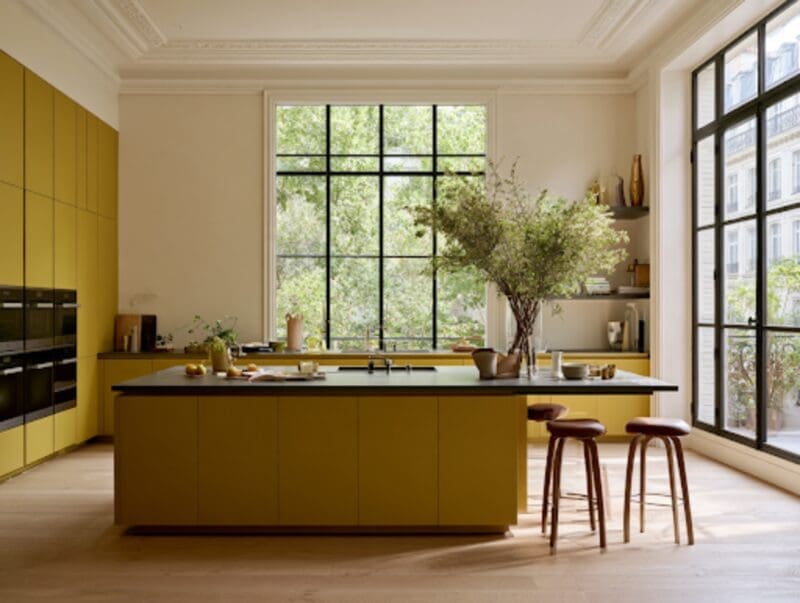
A few years ago, my neighbor Dave bought a full set of RTA kitchen cabinets online. The photos looked great. The price looked even better. He spent a weekend putting them together and was proud of the result.
Eighteen months later, the sink base had swelled up like a sponge, two drawer bottoms had dropped out, and one door hung crooked no matter how much he fiddled with the hinge.
Dave didn’t buy bad cabinets because he was careless. He bought them because nobody told him what to look for. The photos online all look the same. The real difference is hiding inside the box.
If you’re shopping for RTA kitchen cabinets, here are the nine construction details I’d check before spending a single dollar.
What “RTA” Really Means
RTA stands for “ready to assemble.” The cabinets arrive flat-packed in boxes, and you (or your installer) assemble them. Because the company saves on shipping and labor, you save money too. Often a lot of money.
Some RTA cabinets are built as well as anything you’d find at a custom shop. Others are basically furniture-store bookshelves with doors. The nine details below will help you tell them apart.
1. What the Cabinet Box Is Made Of
This is the big one. The “box” is the body of the cabinet: the sides, bottom, top, and back. You’ll usually see three materials.
Plywood is made from thin layers of real wood glued together with the grain going in different directions. It’s strong, holds screws well, and handles moisture better than the other options. Look for words like “furniture-grade plywood” or “cabinet-grade plywood.”
Particleboard is made from wood chips and glue pressed into sheets. It’s cheap and flat, but it hates water. Once it gets wet, it swells and crumbles. It also doesn’t grip screws very well over time.
MDF (medium-density fiberboard) is smoother and denser than particleboard. It’s great for painted doors, but it’s heavy and still not a fan of moisture.
For the box, especially under the sink, plywood is worth the extra cost. If a listing doesn’t say what the box is made of, assume it’s particleboard and ask.
2. How Thick the Panels Are
Two cabinets can both be “plywood” and still be very different. Thickness matters.
Here’s a rough guide:
- Side panels: 1/2 inch is common and decent. 5/8 or 3/4 inch is better.
- Bottom panels: Should be at least 1/2 inch. This panel holds your pots, pans, and dishes.
- Shelves: 3/4 inch is ideal. Thin shelves sag over time, especially in wide cabinets.
If the seller only lists thickness in millimeters, 12mm is about 1/2 inch, 16mm is about 5/8 inch, and 18mm is about 3/4 inch.
Thin panels might not seem like a big deal in the showroom. They become a big deal when your countertop is sitting on top of them.
3. The Face Frame (or Lack of One)
Stand in front of a cabinet. If you see a wooden “picture frame” around the opening that the doors attach to, that’s a face frame. If the doors attach right to the box sides, that’s a frameless (or European-style) cabinet.
Both styles can be good. Here’s what to check:
- Framed cabinets: The face frame should be solid hardwood, like birch, maple, or oak. Avoid face frames made of MDF or particleboard. The frame takes a beating from doors opening and closing for years.
- Frameless cabinets: The box edges should be covered with a solid edge banding that’s thick and well glued. Thin, papery edge banding peels off fast.
Framed cabinets tend to feel sturdier and are a little more forgiving during install. Frameless ones give you more storage space inside. Pick the style you like, just make sure it’s built right.
4. How the Pieces Join Together
This is where a lot of cheap RTA kitchen cabinets cut corners.
The weakest setup is a box held together only with cam locks, those little round metal fasteners you twist with a screwdriver. They’re common in flat-pack furniture. They can work loose over time, especially if the cabinet gets bumped or shifted.
Better RTA cabinets use some mix of:
- Dado joints, where one panel slides into a groove cut into another
- Wood dowels and glue
- Metal clips designed for cabinets, not bookshelves
- Corner braces at the top of base cabinets
Look at the assembly instructions before you buy. Most good companies post them online. If every joint is a cam lock and nothing gets glued, keep shopping.
5. The Drawer Boxes
Pull open a drawer in your current kitchen and look at the corners. That’s a quick way to judge quality.
The best drawers use dovetail joints, those interlocking “puzzle piece” corners. They’re strong and they last. Solid wood drawer boxes with dovetail joints are a sign that the company cares about quality.
Lower-end drawers are often made of particleboard or thin MDF with stapled corners. The bottom panel is usually thin hardboard just sitting in a slot. Load it with heavy cans or cast iron, and it can sag or pop out. That’s exactly what happened to Dave.
Also check the drawer bottom. A 1/4 inch plywood bottom is fine. A thin, flimsy bottom is not.
6. The Drawer Slides
The drawer box is only half the story. The slides (or glides) are the metal tracks that let the drawer move.
Here’s what to look for:
- Full extension: The drawer pulls all the way out so you can reach the back. Cheaper slides only open about three quarters of the way.
- Soft close: The drawer gently pulls itself shut at the end instead of slamming.
- Undermount slides: These sit under the drawer and stay hidden. They look cleaner and usually run smoother than side-mount slides.
- Weight rating: Good slides are rated for 75 to 100 pounds. If the seller doesn’t list it, ask.
Slides are something you touch every single day. Cheap ones get gritty, wobbly, and loud. Good ones feel smooth for years.
7. The Hinges
Like slides, hinges are small parts that make a big difference.
Most quality cabinets use concealed hinges, which are hidden inside the cabinet when the door is closed. Check for:
- Soft close built in, so doors don’t bang shut
- Adjustability, ideally in several directions (up, down, side to side, in and out). This lets you line up the doors perfectly after install.
- A known brand, like Blum or Hettich, or at least a solid steel build
Cheap hinges sag. Then the doors start rubbing or sitting crooked. Adjustable, well-made hinges let you fix that in a minute with a screwdriver.
8. The Back Panel and Hanging Rails
Most people never look at the back of a cabinet. You should.
Some budget cabinets use a super thin back, about 1/8 inch, that’s just tacked on. That’s a problem for wall cabinets, because the back is often part of what holds the cabinet to the wall.
Look for one of these:
- A thicker back panel, 1/4 inch at the very least, and ideally 1/2 inch on wall cabinets
- Hanging rails, which are solid strips of wood or plywood across the top and bottom of the back. You screw through these into the wall studs.
Think about it this way. A full wall cabinet loaded with plates and glasses can weigh well over 100 pounds. You want it hanging from something strong.
9. The Doors and the Finish
The doors are what everyone sees, so they get a lot of attention. Still, there’s more to them than color.
Door construction: The most common quality style is a “5-piece” door, which has a frame of four solid wood pieces around a center panel. Painted doors often use an MDF center panel, which is fine because MDF doesn’t crack at the joints the way solid wood can with paint. Be careful with doors that are thin vinyl wrap over particleboard. They can peel near heat sources, like next to an oven.
The finish: Ask how the finish is applied. A factory-applied, multi-coat finish holds up much better than a single thin coat. Some higher-end makers use a catalyzed finish, which is tougher and resists stains and moisture.
A quick test if you get a sample door: rub the edges with your thumb, run your fingernail lightly across the surface, and wipe it with a damp cloth. A good finish won’t feel rough, chip easily, or soak up water.
My Best Advice: Order a Sample First
Most good RTA cabinet companies will sell you a single sample door or even a full sample cabinet. Do it. It’s maybe $30 to $150, and it can save you thousands.
When the sample arrives, check it against this list:
- Is the box plywood?
- Are the panels thick enough?
- Is the face frame solid wood (or is the edge banding solid)?
- Does it use more than just cam locks?
- Are the drawers dovetailed?
- Are the slides full extension and soft close?
- Are the hinges adjustable and soft close?
- Is the back solid, with hanging rails?
- Does the door feel solid and does the finish hold up?
If a cabinet passes most of these, you’re probably looking at a solid product. If it fails half of them, the low price isn’t really a deal.
The Bottom Line
RTA kitchen cabinets can be one of the smartest ways to save money on a remodel. You get quality parts without paying for a showroom or a long factory wait. But “ready to assemble” doesn’t tell you anything about how well the cabinet is built.
Take a few minutes to look past the pretty photos. Read the specs, ask questions, and get a sample in your hands. Your kitchen should last 20 years or more, and these nine details are what decide that.
Dave learned the hard way. You don’t have to.


