EV Sales Surge 88% – But Are South Africans Finally Ready To Make The Switch?
Ultimately, electrification is about more than placing more EVs on South African roads. It has the potential to connect mobility to the same pursuit of energy resilience and cost efficiency that has helped drive South Africa's solar market.
As South Africa’s new energy vehicle (NEV) market continues its rapid growth, the next challenge may no longer be affordability, but consumer confidence in the long-term economics of ownership, according to Investec Sustainable Solutions.
South Africa’s NEV market has evolved from a niche category into a growing part of the automotive landscape. According to Naamsa, NEV sales in 2026 to date reached 16,289 units, an 88% increase compared with the corresponding period in 2025. This is already equivalent to 97.5% of total NEV sales recorded during all of 2025.
“When South Africans talk about electric vehicles, the conversation tends to return to availability of charging stations and upfront purchase price, and understandably so,” says De Wet Taljaard, Technical Advisor at Investec Sustainable Solutions.
“However, with more than 50% of Battery EVs sold in 2026 priced below R500,000 and the average price for plug-in hybrids (PHEV) fallen below R1 million, the important question for the next phase of adoption is not only ‘Can I afford this car?’ but ‘Will this actually work for me?’ An EV requires a different set of assumptions and questions, looking beyond the sticker price to the full cost of ownership, from charging and energy costs to financing, maintenance and increasingly, resale value. These are questions of assurance.”
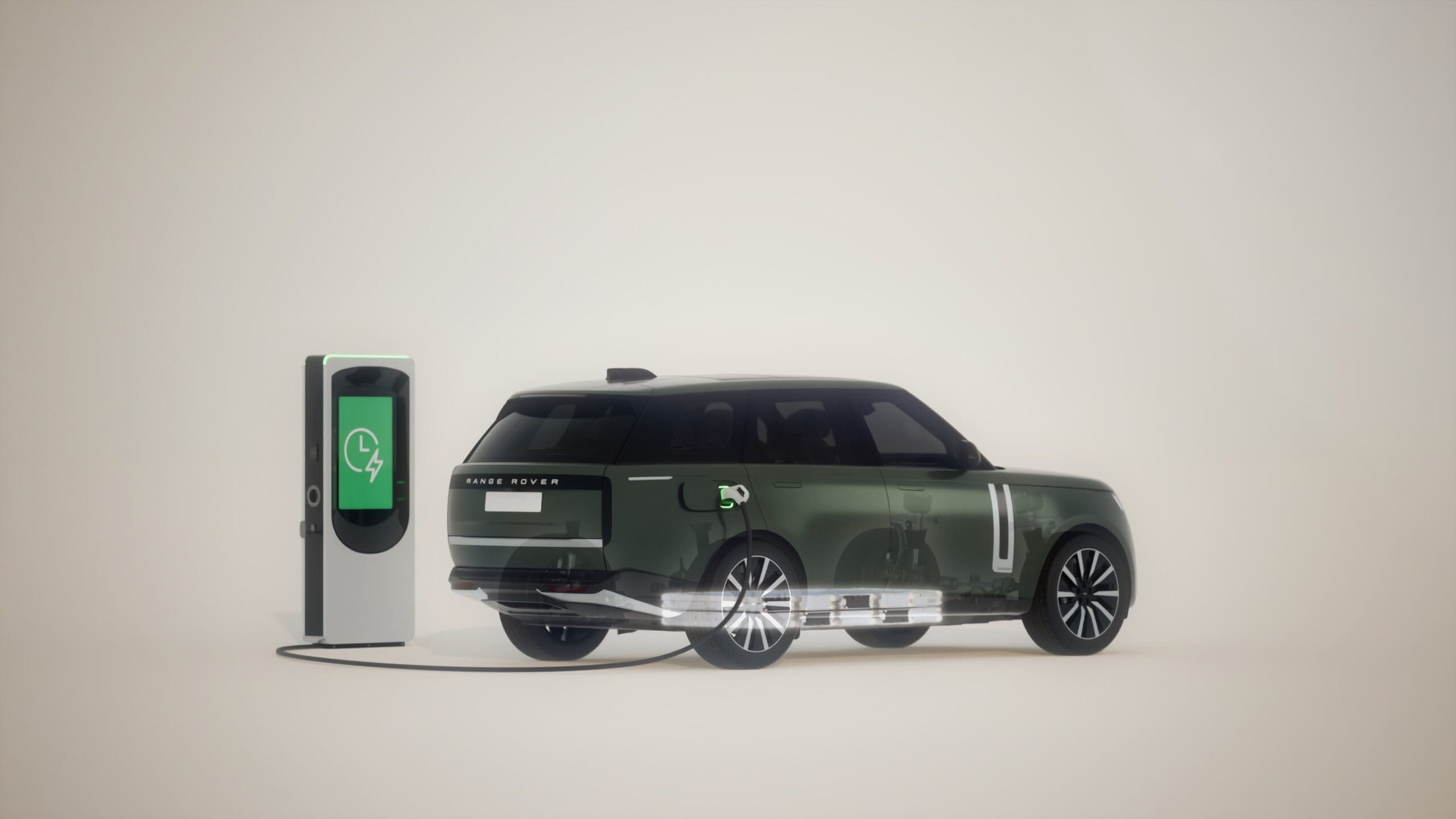
Range Rover Electric
That assurance appears to be growing among higher-income consumers.
Global electric car sales rose by 20% in 2025, surpassing 20 million vehicles and accounting for around one in every four new cars sold worldwide. Sales are expected to reach 23 million in 2026. Consumer interest is also growing. 48% of consumers are now considering plug-in hybrids, 40% hybrids and 30% fully electric vehicles. This compares with only 26% considering traditional petrol or diesel vehicles. Investec is seeing the same trend locally, with NEV adoption in its vehicle finance business increasing by 51% year-on-year for July 2026. NEV lending growth continues to outpace overall vehicle asset finance portfolio growth.
South Africa also currently has more than 550 public charging stations of which around 30% are DC fast charging stations. This excludes private charging points that are often integrated into a home solar and battery energy storage system. There is significant investment going into this part of the industry with the market steadily shifting toward higher-power DC infrastructure to support long-distance travel and fleet electrification.
The opportunity is therefore becoming less about awareness and more about helping consumers understand whether an EV makes financial sense over its lifetime.
The price of the car is only part of the equation
According to Taljaard, South Africa’s experience with solar offers an instructive comparison. Solar was once viewed primarily as an expensive household investment. Load shedding, rising electricity costs and the desire for greater energy independence changed that calculation, encouraging consumers to consider long-term value rather than upfront cost alone.
“There is a similar opportunity with electric mobility,” says Taljaard. “Once you stop looking at an EV as simply a car and start examining it as part of a household’s broader energy system, the economics become more interesting, and the decision becomes more tangible when it is connected to everyday use.”
An EV owner who can charge at home, particularly from an existing solar and battery system, can assess the vehicle against regular commuting, school runs and household energy use, rather than treating mobility and home energy as separate decisions. This raises a broader question for the financial services industry: should vehicle affordability continue to be judged primarily by the monthly instalment, or should the total cost of mobility be the deciding factor?
While vehicle finance remains important, consumers are increasingly weighing factors such as electricity rather than petrol costs, maintenance requirements, battery performance, residual values and, in some households, the ability to make use of self-generated solar power.
“The monthly instalment tells you what the car costs to finance, but it doesn’t necessarily tell you what it costs to own and operate,” says Ade Thomas, Founder, World EV Day.
“As vehicle technology changes, there is an opportunity to think differently about affordability and the total cost of mobility. EVs are now becoming increasingly part of an overall energy cost calculation.
“In some overseas markets, cars are even becoming energy storage assets, buying electricity when it’s cheap, and selling it back to the grid when it’s expensive. That is a total game changer. It is energy arbitrage and it’s revolutionary.”
The pre-owned market could be the real tipping point
The biggest test of South Africa’s EV future may not be the new vehicle market at all, but the emergence of a trusted pre-owned EV market.
South Africa’s transition is unlikely to be driven solely by new vehicle purchases because the country is fundamentally a pre-owned vehicle market. As new vehicle volumes grow, more EVs should enter the pre-owned market, creating a pathway to broader adoption.
Confidence in battery health, warranties, residual values, servicing and financing will be central to that shift.
“The real test of whether EVs have become mainstream won’t simply be how many new electric cars are sold,” says Taljaard.
“It will be whether a consumer who cannot afford a new EV can buy a three- or five-year-old one and feel confident about what they are getting.”
South Africa doesn’t need to copy another country’s EV model
According to Taljaard, there is an opportunity to build a transition model that reflects South Africa’s energy, infrastructure and mobility realities rather than copying other markets.
The current market mix suggests that a distinct South African pathway is already emerging. To sustain this momentum, transport and energy need to be considered together, including readiness for charging, appropriate installation and maintenance skills, wider infrastructure and finance solutions that recognise the economics of electric ownership.
It also requires acknowledging that adoption will not happen at the same pace for everyone, and that fleets, businesses and the pre-owned market may be just as important as new passenger vehicle sales.
“Ultimately, electrification is about more than placing more EVs on South African roads. It has the potential to connect mobility to the same pursuit of energy resilience and cost efficiency that has helped drive South Africa’s solar market.
“Once consumers, businesses and lenders start looking at that total cost of mobility, the economics of electric transport in South Africa will start to look very different and I am sure that we’ll see South Africa leapfrog into taking rapid advantage of these super exciting new technologies,” concludes Thomas.