





There is a quiet architect in South Africa’s corporate landscape who is methodically constructing something that looks eerily familiar.
His name is Christopher “Chris” Seabrooke, and if you haven’t been paying attention, you might miss the empire rising beneath your feet.
Seabrooke founded Sabvest in 1987, listing it on the Johannesburg Stock Exchange a year later.
Since then, he has delivered a staggering 54-times return on capital over three decades.
His net asset value has grown at a compound annual rate of 20.2% over twenty years.
Yet, he remains something of an enigma, a billionaire who operates in plain sight, quietly stitching together a portfolio that increasingly resembles another South African giant that changed the world.
The Koos Bekker Story

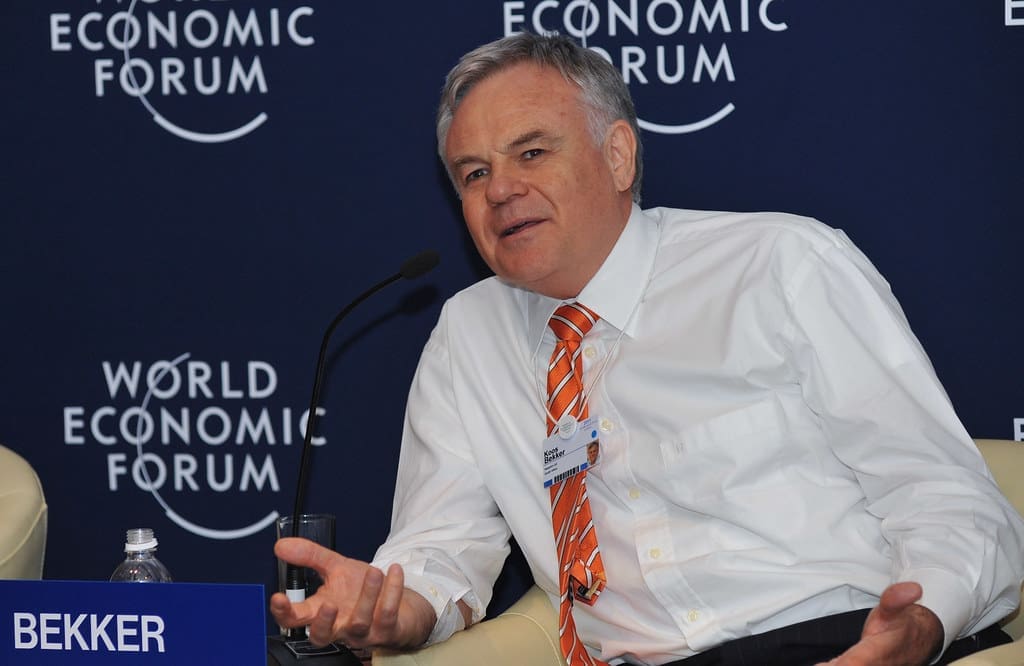
Let us rewind to understand what we are witnessing.
Koos Bekker was not always the titan of African technology.
He began as a lawyer, traded his gown for an MBA at Columbia, and wrote a thesis on pay-TV that would become the blueprint for M-Net. In 1984, he pitched this vision to a struggling Naspers, then merely the publisher of an Afrikaans newspaper, bleeding ad revenue to free-to-air television. Naspers took a 26% stake in M-Net, and by 1986, the venture was profitable.
But Bekker’s true genius emerged when he gave up his salary, bonus, and perks in 1999, choosing stock options over certainty. His confidence was rewarded in 2001 when he pushed a $32 million bet on a loss-making Chinese internet company called Tencent. The management was sceptical. They had seen Chinese investments fail before. Bekker did not blink.
Today, that stake is worth tens of billions of dollars, forming the backbone of Naspers’ empire and transforming a newspaper publisher into a global technology powerhouse.
The Seabrooke Parallels: Quietly Building the Blueprint
Now look at Seabrooke’s Sabvest.
Like Bekker, Seabrooke operates with a long-term, family-controlled vision. His family holds 59% of voting rights.
He has said pubiicly, “I started Sabvest and it contains my family’s wealth.” This alignment, your own fortune on the line, is the same discipline Bekker displayed when he took stock options over salary.
And like Bekker’s Naspers, Sabvest is an investment holding company, building large minority and joint-controlling stakes in listed and unlisted assets. Its portfolio spans Transaction Capital, Metrofile, Brait, and offshore technology investments in Alibaba, Alphabet, and Amazon.
But the real question is: Is Seabrooke about to find his Tencent moment?


The Broadband Bet: A Genius in the Making?
One wonders if Seabrooke’s recent move into the broadband industry might be his defining play.
In a deal designed to reshape South Africa’s digital industry, Frogfoot, Vox, and Hypa have secured a capital injection that values the combined entities at a staggering R14.4 billion. The strategic investment aims to accelerate fibre access across the country, specifically targeting underserved and lower-income township communities.
The shareholder structure is a powerhouse consortium: the DNI Consortium, which includes DNI 4PL Contracts, JSE-listed Sabvest Capital (Sabcap), Masimong Group Holdings, and Draper Gain International.
Sabvest is part of this consortium.
Will Seabrooke use the future dividends from this Frogfoot deal to build a bigger Sabvest, one with tentacles in almost every strategic sector of the economy?
Let us linger on this question because it is the most important one. Bekker used the Tencent windfall to expand globally, into Mail.ru, Flipkart, and beyond.
If Sabvest’s fibre bet pays off, Seabrooke will have a war chest to mimic that expansion. And he is already laying the groundwork.


The Media Web: A Familiar Move
Here is another echo of Bekker’s strategy: media ownership.
Naspers began as a print publisher.
Sabvest, through Apex Publishing Enterprises (where Sabvest Capital holds a major stake), acquired Currency News and Miningmx in February 2026, merging them under Financial Mail Group.
Last year, Apex purchased a 70% stake in Financial Mail from Arena Holdings, effectively saving it from closure.
Bekker built influence through media.
Seabrooke appears to be doing the same, consolidating financial journalism in South Africa.


The Mobile Connection: A Value Chain in Motion
Then there is the mobile space. Through its partnership with Cell C, Sabvest is part of a value chain that runs through DNI-4PL Contracts, the largest wholesale distributor of Cell C’s starter packs and prepaid airtime.
DNI does not directly own Cell C equity, but it operates as the primary route-to-market partner, distributing mobile subscriber starter packs and airtime across South Africa. Cell C also partners with DNI-affiliated entities like 3G Mobile for device sourcing and logistics.
DNI was founded in 2006 as a procurement business, evolved into a diversified investment company operating in 32 countries globally, and now has a blue-chip shareholder base.
It is not ownership, it is influence. It is strategic placement. It is exactly the kind of ecosystem building that Bekker pioneered.
The Big Question: Is Seabrooke the Modern-Day Bekker?
Here is where we must step back.
Bekker’s Naspers achieved greatness through a two-part strategy: building a profitable pay-TV empire and then making a single, transformative investment in Tencent. The first gave him credibility. The second gave him immortality.
Seabrooke has built a profitable investment empire.
He is now making a series of bold, interconnected bets, fibre infrastructure, media consolidation, and mobile distribution.
But does he have his Tencent moment waiting in the wings?
The Frogfoot deal could be his M-Net, a foundational, cash-generating asset.
But what comes next?
What transformative technology is Seabrooke eyeing? Is there a Chinese internet company, a fintech disrupter in Africa, or an AI pioneer waiting for his capital?
We do not know. And that is what makes this story so compelling.
The Thriller
Seabrooke has defended Sabvest’s dual-share structure, stating it protects the company from takeovers and allows for a consistent, long-term investment strategy. It is the same control that allowed Bekker to push through the Tencent deal over sceptical management.
So here we are, watching a man who has already built extraordinary wealth for his shareholders, quietly assembling the pieces of a modern empire.
He has the track record, the control, (now) the business media influence, the infrastructure bets, and the global technology exposure.
Is Christopher Seabrooke about to become the Koos Bekker of our time?
Or are we simply seeing a skilled capital allocator, mistaking disciplined investing for the kind of transformative genius that happens once in a generation?
The answer will not come today. It will come in five years, ten years, or when Seabrooke finds his Tencent.
Until then, one thing is certain: Sabvest is a company worth watching. Because if Seabrooke is indeed building a Naspers for our time, we are witnessing history in the making, whether we realise it or not.


