


The logistics sector is entering a defining era where digitalisation is essential for survival, not just a competitive edge. As global supply chains grow more complex, unpredictable, and interconnected, operators are turning to digital tools not just to enhance existing processes but to redesign how the sector functions fundamentally. From IoT-enabled visibility to predictive decision-making and autonomous mobility, logistics is undergoing a rapid transformation, one that rewards agility, foresight, and collaboration. While logistics companies are driving much of this innovation, third-party IT partners are increasingly stepping into a crucial enabling role, helping organisations integrate and scale the sophisticated digital ecosystems that modern supply chains demand.
From data points to intelligent decisions
Opportunities for digitalisation now span every corner of the logistics value chain. Telematics and the Internet of Things (IoT) are reshaping how fleets and cargo are monitored. Embedded sensors convert trucks, containers, and warehouse equipment into real-time information nodes, offering insights into location, load conditions, asset performance, and emerging risks. This level of visibility empowers operators to anticipate disruptions rather than react after the fact.
When paired with Artificial Intelligence (AI) and predictive analytics, this data becomes a source of real strategic advantage. AI-powered route optimisation adjusts delivery paths automatically based on traffic or weather. Predictive maintenance models flag issues before vehicles break down. Forecasting tools help companies plan capacity with far greater accuracy. These capabilities not only reduce costs but also enhance reliability – a feature increasingly valued by both B2B and B2C customers.


Automation: the quiet engine behind faster, smarter logistics
Automation and robotics are also expanding their footprint across warehouses and ports. Autonomous mobile robots streamline picking and sorting processes, while robotic arms handle repetitive loading tasks faster and with greater precision than human labour alone. This creates safer environments, reduces errors, and increases throughput.
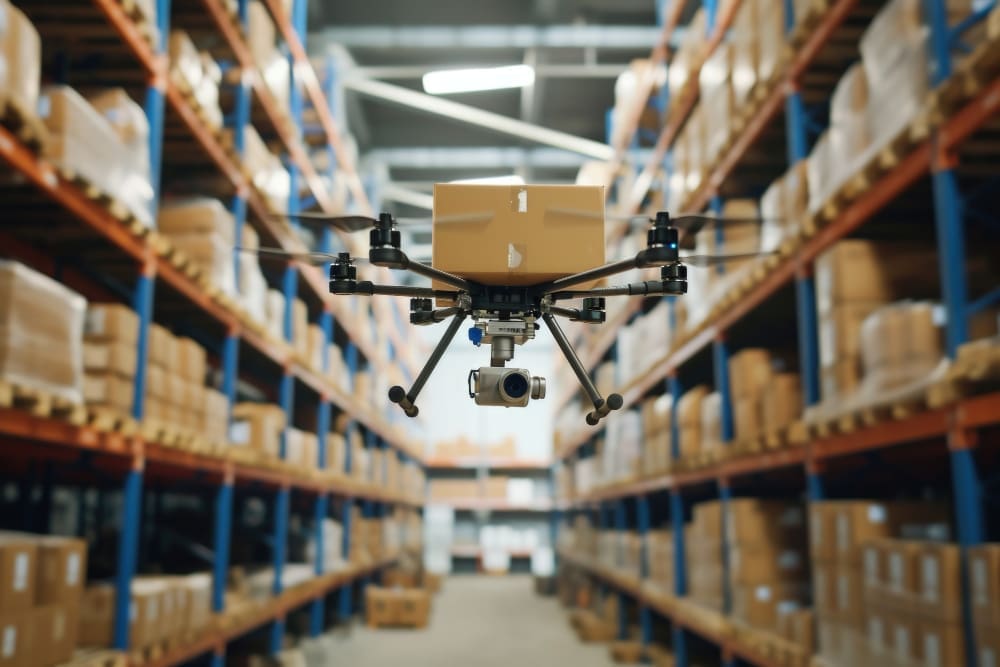
Beyond the warehouse floor, blockchain technology is quietly transforming the administrative backbone of logistics. Smart contracts, traceability mechanisms, and tamper-proof documentation reduce disputes, speed up transactions, and build trust among partners in a supply chain that’s often fragmented. Add to this the rise of autonomous vehicles and drones – which are beginning to reshape last-mile delivery – and a picture emerges of a sector steadily embracing automation to boost efficiency and scalability.


Why digital ecosystems win market share
As digitalisation accelerates, market share is no longer won purely through fleet size or geographic reach. The real differentiator today is digital agility. Logistics leaders are increasingly building platforms that connect shippers, carriers, depots, and customers into seamless digital networks. These platforms enable real-time tracking, instant documentation, smart scheduling, and responsive issue resolution, turning logistics from a transactional service into a value-driven partnership.
Companies that diversify into integrated, end-to-end supply chain solutions are seeing the greatest returns. Startups are innovating rapidly by targeting hyper-specific inefficiencies, while more established players are modernising legacy operations with platform-driven interoperability. The organisations achieving the most success are those that can scale digital networks quickly, integrate partners smoothly, and maintain trust through data-driven transparency.
Platforms that power the modern supply chain
To achieve this, the industry is adopting a wide range of digital platforms designed to unify previously siloed operations. End-to-end supply chain management systems now consolidate planning, warehousing, transportation, and analytics, enabling a single version of operational truth. IoT- and AI-driven platforms improve fleet performance, predict maintenance needs, and offer real-time visibility, but integrating them with older infrastructure remains a common challenge.
Meanwhile, blockchain-based platforms show real potential for secure, transparent transactions, though governance concerns slow widespread adoption. Across the board, the platforms enjoying the greatest success are those that enhance visibility and reduce operational costs, while the biggest hurdles revolve around scalability and integration.
Where third-party IT specialists create real competitive advantage
This is where third-party IT specialists have become indispensable. For many logistics organisations, the challenge is not identifying the right technologies but integrating and scaling them across sprawling, often global operations. The technical expertise required – whether in deploying IoT sensors, developing AI models, migrating from legacy systems, or maintaining cybersecurity – is vast.
Third-party IT partners help organisations navigate this complexity, offering the architectural, operational, and ongoing support required to keep digital ecosystems running seamlessly. They enable logistics players to adopt cutting-edge technology without diverting focus from core operations, effectively bridging the gap between innovation and execution.
As logistics becomes increasingly digital, long-term success will depend on the ability to orchestrate technology strategically rather than adopt it piecemeal. The most forward-thinking players will be those who invest in scalable platforms, embrace cross-industry partnerships, and cultivate the digital skills required for continuous innovation. In this new era, logistics is no longer just about moving goods; it’s about moving data, decisions, and value at the speed global commerce now demands.
- CG Selva Ganesh, VP, CEO South Africa at In2IT Technologies


