

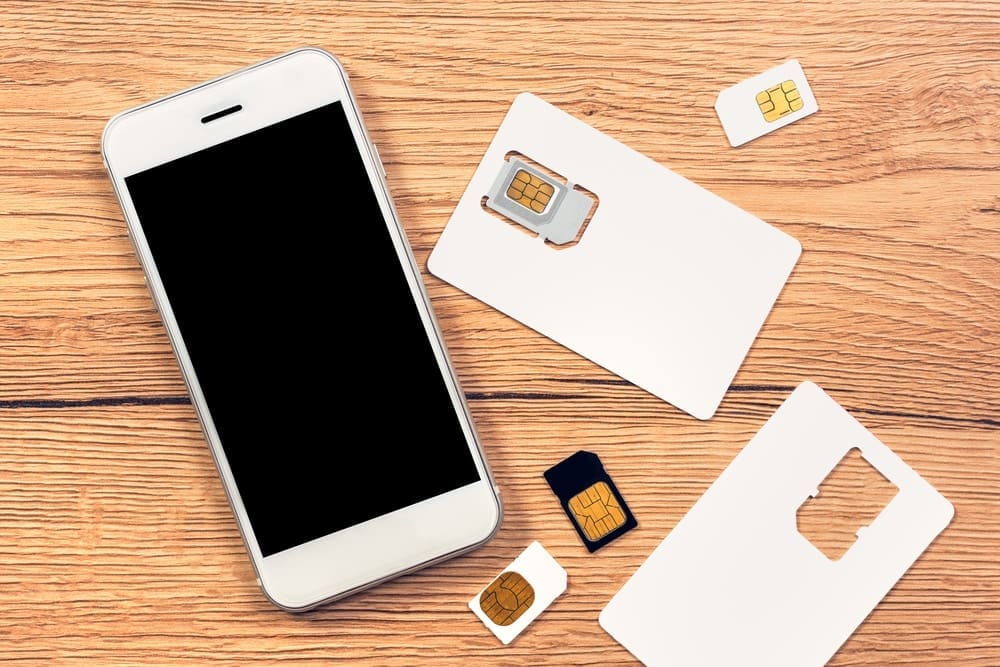
Securi-Tech Pty Ltd is concerned over the lack of enforcement of the Regulation of Interception of Communications and Provision of Communication-Related Information Act (RICA). This concern is heightened even further by the new revelation that unregistered SIM cards are used in almost two-thirds of extortion attempts. This alarming statistic was disclosed recently in a parliamentary response by the Minister of Police Senzo Mchunu to Democratic Alliance MP Kabelo Kgobisa-Ngcaba.
The RICA Act was established to ensure that all SIM cards are registered to their users, making it easier for law enforcement to trace criminal activity and protect law-abiding citizens. However, it appears that the implementation of this law is failing, with up to 60 million prepaid SIM cards being incorrectly registered each year.
Securi-Tech takes note that there is currently a lack of data on the extent to which unregistered SIM cards are used in other serious crimes such as the planning of kidnapping and murder. This raises further concerns about the broader implications of non-compliance with RICA.
Securi-Tech will be formally writing to the chairperson of the parliamentary portfolio committee on Justice, Xola Nqola to request a thorough examination of RICA’s enforcement and the loopholes allowing SIM cards to remain unregistered. The organisation also proposes the introduction of tamper-proof packaging for SIM cards to prevent mass SIM card registration by third-party providers, a practice that currently undermines the effectiveness of RICA.
Many countries, including Nigeria, the UAE, the Philippines, Sweden and India, have implemented stricter measures to ensure proper SIM card registration. Some countries use biometric verification, which links SIM cards directly to a user’s physical identity, thereby reducing anonymity for criminals and improving law enforcement capabilities.
The growing role of mobile phones in banking, cross money transfers, and financial services further highlights the need for robust identity verification processes to prevent the use of phones in money laundering or illicit financial flows. Fraudsters are more able to exploit gaps in SIM card registration to commit financial crimes, reinforcing the urgent need for stricter enforcement of existing regulations.
We note the recent arrests in Newcastle during the last week of January, where at least 29 individuals were taken into custody for illegally registering SIM cards. Law enforcement also confiscated equipment, including computers and registration machines, and thousands of SIM cards.
Immediate action is required to close these regulatory gaps and ensure that South Africa’s telecommunications infrastructure is not exploited for criminal activities. Securi-Tech urges the government and stakeholders to prioritise the enforcement of RICA and implement measures, such as tamper proof packaging, that will enhance public safety and improve police investigation capability.



When was the last time you made a voice call? For most consumers, voice calls have taken a backseat as data usage and Whatsapp calls surge. With traditional revenue streams shrinking, telecommunication companies are capitalising on their vast networks and customer bases to tap into the growing demand for digital payments and financial transactions as they diversify into financial and other services.
Telecos are becoming increasingly client oriented and by loaning money, offering money transfers, selling insurance products, airtime and electricity and making e-commerce payments seamless, they are acting like banks. In some cases, banks will view telecos as competitors.
Therefore, as mobile devices act as a gateway to financial services, telecommunications firms should be held to the same regulatory standards as financial institutions
For instance, banks are subject to stringent “Know Your Customer” (KYC) regulations under the Financial Intelligence Centre Act (FICA), ensuring that they can identify and verify the identities of their clients. Such regulations aim to prevent money laundering and the financing of illegal activities. By contrast, the telecommunications industry—despite providing the infrastructure for mobile banking and money transfers—does not face the same level of scrutiny. Specifically, SIM cards, a critical component of mobile communication and payment verification, often bypass these rigorous standards.
Consumers can easily access SIM cards that are not linked to them, offering anonymity for financial transactions in certain instances.
One troubling practice is the pre-registration, or “pre-RICAing,” of SIM cards. In South Africa, the Regulation of Interception of Communications and Provision of Communication-Related Information Act (RICA) mandates that SIM cards must be registered with valid user identification including their identity book and proof of address. SIM card registration, however, is not linked to the Department of Home Affairs database. SIM cards are often distributed in an unsecured form.
Instead, SIM cards, especially prepaid cards, are mass registered by third party distributors often to incorrect or non-existent users, making it easier for consumers in the informal economy to easily access cards without registration documents. Distributors earn commission on airtime that is linked to the SIM cards they sell and are thus incentivised to distribute them widely and with ease.
There is a loophole in the RICA act that allows the mass registering of SIM cards.
