

BY Alexander Claus Winkler, Rhodes University
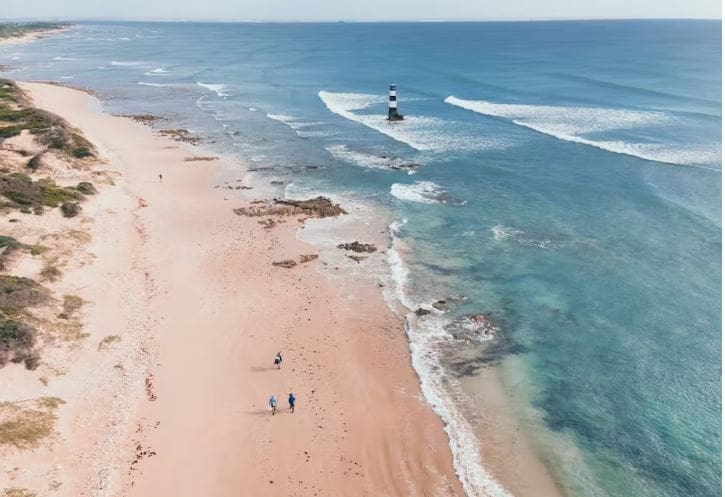
“Drone fishing” is a relatively recent innovation in the use of unmanned aerial vehicles. Some recreational anglers are using personal drones to fly baited lines into hard-to-reach areas of water, or to look for good fishing areas.
Recreational fishing is a popular sport and hobby in South Africa, which has a 2,850km shoreline. The most recent estimate of the number of marine shore based anglers is about 400,000.
The group of researchers I’m part of, who study linefish (fish caught using hook and line) became aware over the past 10 years or so of the increased practice of drone fishing. This was in part thanks to recreational fishers approaching us with their concerns.
One of the concerns is that increases in the numbers of enthusiastic anglers and their ability to catch fish might have significant effects on fish stocks and other animals (such as birds) in coastal zones. Another is that drone fishing might intensify conflict between fisher groups competing for the same species. Aside from recreation, linefishing provides the primary source of protein and income for about 2,730 commercial fishers, 2,400 small-scale boat fishers and 30,000 small-scale shore-based fishers in South Africa.
We agreed the practice should be investigated, but faced a challenge: there was very little monitoring going on to provide data.
So we took an unconventional approach to our study. We used publicly available online monitoring to estimate the growing interest, global extent and catch composition of drone fishing. This showed us that there had been a big (357%) spike in interest in drone fishing in 2016. There were also worrying indications of a threat to species of conservation concern in South Africa.
We then consulted commercial drone operators, legal researchers and others to get a more holistic view. Drone fishing has economic, political, legal, ecological and physiological implications. Based on this we made some recommendations for further research and monitoring, and shared them with fishing authorities.
The South African Department of Forestry, Fisheries and the Environment then released a public notice warning recreational anglers that the use of drones and other electronic devices is deemed illegal under the South African Marine Living Resources Act.
The fishing drone companies that had already emerged are now struggling to survive. They have taken the department to court seeking clarity on the legality of using drones in fishing. The judgement on this case, which is currently in the appeal court, will no doubt pave the way for how drone fishing is managed in South Africa in the future.
Innovative research methods
Largely because we were house-bound during the 2020-2021 COVID-19 pandemic we gathered most of our data via the internet. We surveyed social media platforms for drone-fishing dedicated groups and used Google Trends to track internet searches for “drone fishing”.
Results indicated a 357% spike in interest in 2016, after the release of a popular YouTube video of an angler catching a large longfin tuna from an Australian beach using a drone. The search volume increased to about 3,600 monthly searches from an average of about 1,400 before the peak. “Drone fishing” Facebook groups had over 17,000 members and 38,700 videos with titles including the term “drone fishing” had been uploaded.
The online interest was mostly in three countries: New Zealand, South Africa and Australia.
To get an idea of which fish species were targeted, we then watched 100 YouTube videos posted by drone fishers in those three countries. In both New Zealand and Australia, the most frequently observed catch was red snapper, which is not a species of direct conservation concern. In South Africa, though, sharks made up the majority (97%) of viewed catches, many of which are of severe conservation concern, such as the dusky shark.
Impacts of drone fishing
Having established interest in and the presence of drone fishing in South Africa, we sought to consider the issue holistically – its impact on:
- targeted fish and their habitats
- other animals in the coastal zone
- other people using the coastal zone.
Drones with cameras allow anglers to identify ideal fishing habitats far from the shore. Areas that anglers couldn’t reach before are now open to exploitation. Even fish that are released are less likely to survive when caught further offshore. A large fish hooked hundreds of metres offshore is likely to experience extreme exhaustion and physiological disturbance and may be consumed by other predators.
The potential loss of fishing tackle by drone anglers is also a concern. It is common to lose tackle, either when it gets stuck in rocky habitats or while fighting large fish such as sharks. Both scenarios may result in hundreds of metres of fishing line remaining in the ocean. In addition to polluting the marine environment, such debris threatens to entangle birds, marine mammals and turtles.
In South Africa, drone fishing is only accessible to affluent anglers. Their increased catches might lead to conflict with fishers who depend on their catch for food or income.
It’s also possible that sharing live information on fishing conditions via the internet could add to concerns about the privacy of other public beach users.
Our 2021 paper noted that at the time, there were no specific regulations relating to drone fishing in any country, including South Africa. We drew attention to legislation that could be used indirectly to regulate the practice.
Regulation and management of fisheries
Three of the paper’s co-authors were part of a working group for the South African Department of Forestry, Fisheries and the Environment. We shared the paper with the department and in 2022, it took concrete action on this issue for the first time.
The department released a public notice which explicitly prohibits drones and other remotely operated vehicles for angling.
Companies that custom build fishing drones were granted leave to appeal the original court ruling on their application to unban drone fishing. The appeal has not yet been heard.
We hope the end result will be better monitoring and management of South African recreational fishery, so that resources are available to those who need them the most.
Alexander Claus Winkler, Research Associate, Rhodes University
This article is republished from The Conversation under a Creative Commons license. Read the original article.
