
Close Menu
  • Homepage
  • News
  • Cloud & AI
  • ECommerce
  • Entertainment
  • Finance
  • Opinion
  • Podcast
  • Contact

Subscribe to Updates

Get the latest technology news from TechFinancials News about FinTech, Tech, Business, Telecoms and Connected Life.

What's Hot

Digitap ($TAP) Crushes NexChain with Real Banking Utility: Best Crypto to Buy in 2026

2026-02-07

Football Fans Can Share Their ‘Super Bowl Spread’  With The Chance To Win an NFL Jersey

2026-02-07

Why Traditional Banks Need Mobile Money Solutions to Survive the Next 5 Years

2026-02-07
Facebook X (Twitter) Instagram
Trending
  • Digitap ($TAP) Crushes NexChain with Real Banking Utility: Best Crypto to Buy in 2026
Facebook X (Twitter) Instagram YouTube LinkedIn WhatsApp RSS
TechFinancials
  • Homepage
  • News
  • Cloud & AI
  • ECommerce
  • Entertainment
  • Finance
  • Opinion
  • Podcast
  • Contact
TechFinancials
Home»Opinion»Virtual Reality Has Negative Side Effects – New Research Shows That Can Be A Problem In The Workplace
Opinion

Virtual Reality Has Negative Side Effects – New Research Shows That Can Be A Problem In The Workplace

The ConversationBy The Conversation2023-08-09No Comments3 Mins Read
Share Facebook Twitter Pinterest LinkedIn Tumblr Email
virtual reality
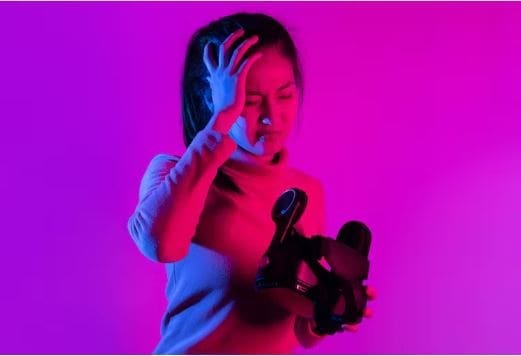
Using virtual reality headsets can have negative side effects, like dizziness, headaches and nausea. Charnsitr/iStock via Getty Images
Share
Facebook Twitter LinkedIn Pinterest Email Copy Link

by Alexis Souchet, University of Southern California

Some employers are excited about swapping out computer monitors for virtual reality headsets, but the side effects of using VR are not completely understood. In a recent study, my colleagues and I propose 90 factors that could influence VR side effects in the workplace. In another study, we suggest guidelines to reduce these negative symptoms.

Our analysis considers over 350 studies to identify a range of VR side effects. Some negative symptoms of VR use – like headaches, tiredness, eyestrain and neck and shoulder pain –are familiar to those workers who sit at a computer all day.

But the nature of VR introduces new avenues for discomfort, such as disorientation, dizziness, nausea and increased muscle fatigue. Users can be overwhelmed with too much information, and sudden or intense sources of stress – like unexpected noises when talking in front of a virtual audience – can diminish attention and memory.

There are many factors that can affect the frequency and severity of these side effects. Some of these characteristics relate to the virtual environment content – for example, how complicated the scene is or the way VR reproduces user movements. Others have more to do with the user, such as age or how long they’re immersed in the VR simulation.

Although more research is needed to identify the exact relationship between side effects and their contributing factors, our study suggests several guidelines to mitigate side effects. Each individual’s risk level is unique, but there are basic things anyone can do, like taking regular breaks, not using VR for more than 30 minutes at a time, and stopping use immediately when any symptoms start.

Why it matters

Studies have found that 80% of VR users report mild to severe short-term side effects. Symptoms can make it harder to efficiently do basic tasks like reading and writing emails.

Nonetheless, several tech giants, like Meta and Microsoft, are promoting VR technology as the future of the workplace. But to safeguard workers, employers need a better understanding of the negative side effects of VR.

What’s next

Some government organizations, both in the U.S. and abroad, have already begun to identify safety concerns and propose guidelines for mitigating the side effects of VR. While in line with our study’s findings, these safety guidelines are often very broad, and some have yet to be finalized.

More research is needed to improve the quality of evidence. One way to gather more data is to use physiological sensors and machine learning models to detect VR side effects and better link each factor to a given effect.

Although researchers can identify influential factors, we don’t yet fully understand which ones are linked to specific side effects – or how strong those connections are. Researchers believe that some characteristics are connected to several VR side effects, but there’s some redundancy when looking at the list of symptoms.

At best, following suggested guidelines could reduce the risks of using VR. With the current level of evidence, it’s difficult to assess how high these risks are. Most assessments about VR side effects are short term. Long-term studies are just starting to be launched or published. Additional research is crucial to ensuring that VR helps workers rather than harming them.The Conversation

Alexis Souchet, Postdoctoral Researcher in Cognitive Ergonomics, University of Southern California

This article is republished from The Conversation under a Creative Commons license. Read the original article.

New research side effects Virtual Reality VR Workplace
Share. Facebook Twitter Pinterest LinkedIn Tumblr Email
The Conversation
  • Website

Related Posts

Private Credit Rating Agencies Shape Africa’s Access To Debt. Better Oversight Is Needed

2026-02-03

Why South Africa Cannot Afford To Wait For Healthcare Reform

2026-02-02

SA Auto Industry At Crossroads: Cheap Imports Threaten Future

2026-02-02

Stablecoins: The Quiet Revolution South Africa Can’t Ignore

2026-02-02

South Africa Could Unlock SME Growth By Exploiting AI’s Potential Through Corporate ESD Funds

2026-01-28

How Local Leaders Can Shift Their Trajectory In 2026

2026-01-23

Why Legal Businesses Must Lead Digital Transformation Rather Than Chase It

2026-01-23

Directing The Dual Workforce In The Age of AI Agents

2026-01-22

The Productivity Myth That’s Costing South Africa Talent

2026-01-21
Leave A Reply Cancel Reply

DON'T MISS
Breaking News

Digitap ($TAP) Crushes NexChain with Real Banking Utility: Best Crypto to Buy in 2026

The crypto presale market in 2026 has seen dozens of projects compete for investor attention.…

Dutch Entrepreneurial Development Bank FMO Invests R340M In Lula To Expand SME funding In SA

2026-02-03

Paarl Mall Gets R270M Mega Upgrade

2026-02-02

Huawei Says The Next Wave Of Infrastructure Investment Must Include People, Not Only Platforms

2026-01-21
Stay In Touch
  • Facebook
  • Twitter
  • YouTube
  • LinkedIn
OUR PICKS

Vodacom Reports Robust Q3 Growth, Driven By Diversification And Strategic Moves

2026-02-04

South Africa’s First Institutional Rand Stablecoin, ZARU, Launches

2026-02-03

The EX60 Cross Country: Built For The “Go Anywhere” Attitude

2026-01-23

Mettus Launches Splendi App To Help Young South Africans Manage Their Credit Health

2026-01-22

Subscribe to Updates

Get the latest tech news from TechFinancials about telecoms, fintech and connected life.

About Us

TechFinancials delivers in-depth analysis of tech, digital revolution, fintech, e-commerce, digital banking and breaking tech news.

Facebook X (Twitter) Instagram YouTube LinkedIn WhatsApp Reddit RSS
Our Picks

Digitap ($TAP) Crushes NexChain with Real Banking Utility: Best Crypto to Buy in 2026

2026-02-07

Football Fans Can Share Their ‘Super Bowl Spread’  With The Chance To Win an NFL Jersey

2026-02-07

Why Traditional Banks Need Mobile Money Solutions to Survive the Next 5 Years

2026-02-07
Recent Posts
  • Digitap ($TAP) Crushes NexChain with Real Banking Utility: Best Crypto to Buy in 2026
  • Football Fans Can Share Their ‘Super Bowl Spread’  With The Chance To Win an NFL Jersey
  • Why Traditional Banks Need Mobile Money Solutions to Survive the Next 5 Years
  • Spotify Brings Audiobooks to South Africa
  • Anjouan Corporate Services Reshapes Cross-Border Brokerage Licensing Strategy for UAE-Focused Firms
TechFinancials
RSS Facebook X (Twitter) LinkedIn YouTube WhatsApp
  • Homepage
  • Newsletter
  • Contact
  • Advertise
  • Privacy Policy
  • About
© 2026 TechFinancials. Designed by TFS Media. TechFinancials brings you trusted, around-the-clock news on African tech, crypto, and finance. Our goal is to keep you informed in this fast-moving digital world. Now, the serious part (please read this): Trading is Risky: Buying and selling things like cryptocurrencies and CFDs is very risky. Because of leverage, you can lose your money much faster than you might expect. We Are Not Advisors: We are a news website. We do not provide investment, legal, or financial advice. Our content is for information and education only. Do Your Own Research: Never rely on a single source. Always conduct your own research before making any financial decision. A link to another company is not our stamp of approval. You Are Responsible: Your investments are your own. You could lose some or all of your money. Past performance does not predict future results. In short: We report the news. You make the decisions, and you take the risks. Please be careful.

Type above and press Enter to search. Press Esc to cancel.

Ad Blocker Enabled!
Ad Blocker Enabled!
Our website is made possible by displaying online advertisements to our visitors. Please support us by disabling your Ad Blocker.