By 2029, there will be 3.6 million computing jobs in the U.S., but there will only be enough college graduates with computing degrees to fill 24% of these jobs. For decades, the U.S. has poured resources into improving gender representation in the tech industry. However, the numbers are not improving proportionately. Instead, they have remained stagnant, and initiatives are failing.
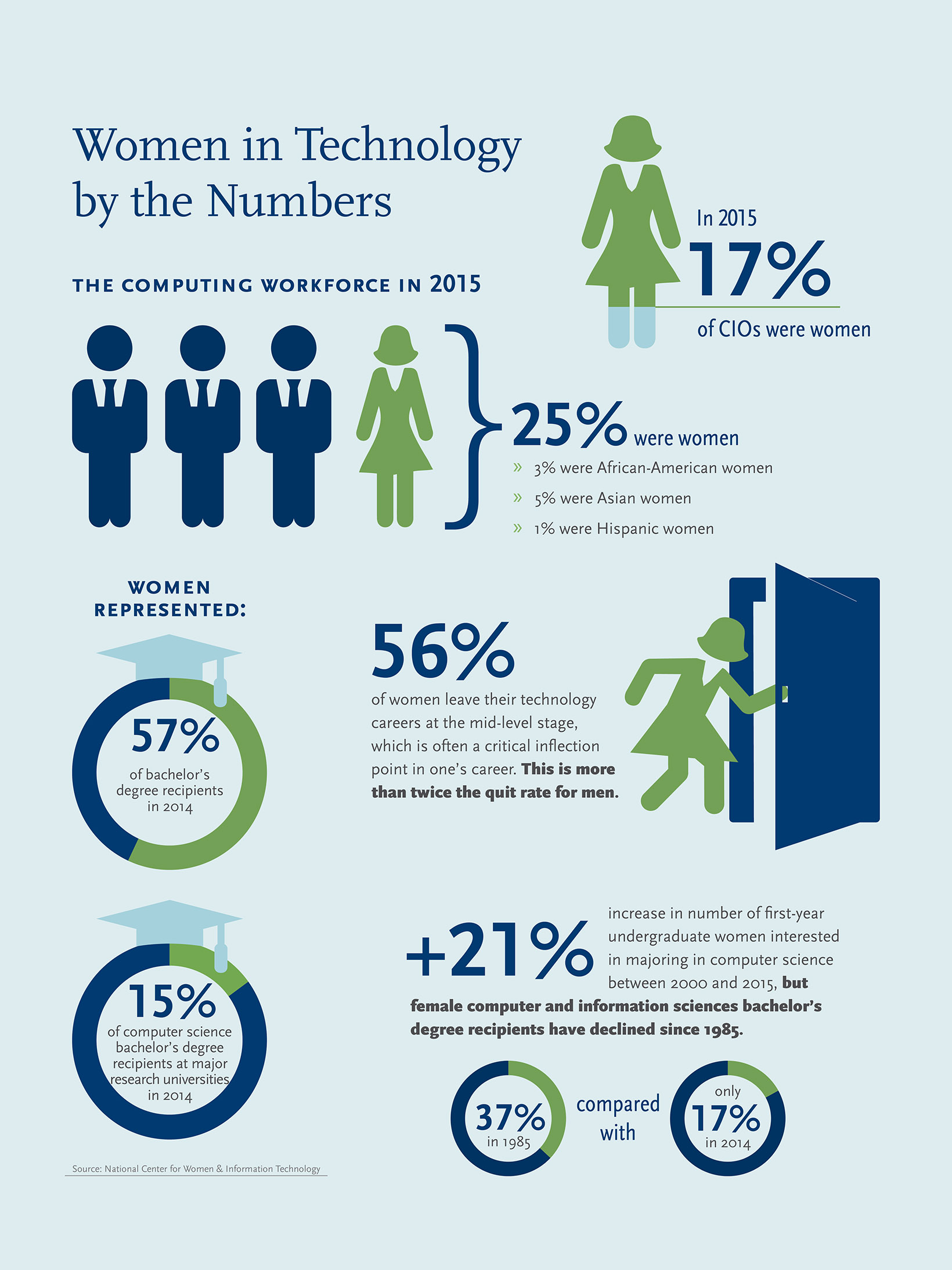
Women make up 57% of the overall workforce. Comparatively, women make up only 27% of the workforce in the technology industry. Of the 27% that join the technology industry, more than 50% are likely to quit before the age of 35, and 56% are likely to quit by midcareer.
So, questions arise: Why does the technology industry have a retention problem? Why are women who are employed by the technology industry quitting in such high volumes? What factors contribute to this low retention of women in the technology industry, and what kind of support do women need to stay and succeed in it?
I’m an information science researcher who studies gender and information technology, women in STEM – science, technology, engineering and math – online communities and open source software. My team at the University of Tennessee conducted research to address these questions. We found that retention plays a large role in the gender disparity in the tech field and that online and physical spaces that support women can boost retention.
Women quitting the tech industry
Research shows that women face many challenges in the tech industry. The gender pay gap is severe. Women do not get the same opportunities as men; for example, only 18% of the chief information officers/chief technology officers are women. And women receive unfair treatment.
My research team focused on the experiences of women in the tech industry with a particular focus on the treatment they receive in the workplace and the nature of support systems for women who succeed. We studied open-source software communities because open-source software communities are an extreme example of gender inequity. Seventy percent of all the software that supports technology infrastructure is open source, which makes open-source software integral to the future of the tech workforce. Yet women make up only 9.8% of the people who contribute to open-source software projects.

Maskot via Getty Images
In seeking answers to this retention problem of the tech industry, our research found that women’s negative experiences range from minor to severe harassment, sexism, discrimination and misogyny to explicit death threats. Their expertise is challenged, their contributions are not well-received and their roles are diminished. They face constant harassment and deal with normalized abuse, often hearing that “guys will be guys,” and they deal with isolation because they are often severely outnumbered by men.
The impact of these negative experiences shows evidence of multiple levels of harm. For example, the individual harm that a woman faces leads to incidental harm of other women being discouraged from participation, resulting in further collective harm for the open-source software community in the form of fewer women participating. Overall, these negative experiences are detrimental to the retention of women in open-source software and the tech industry in general.
The culture problem
Mainstream media often reports on open-source software’s toxic “tech bro” culture. In recent years, high-profile leaders in open-source software have been exposed for their abusive behavior.
Open-source software icon Linus Torvalds stepped aside from the Linux kernel after his toxic, abusive emails to other developers were highlighted in the media. His decision to step down came as a result of questions about his abusive behavior in discouraging women from working as Linux kernel programmers.
Another towering figure in this field, Richard Stallman, was pushed into resigning from the Free Software Foundation and MIT after a very successful career in open-source software because of his views on pedophilia, as well as a multitude of sexual harassment cases from students and faculty at MIT over the course of 30 years. These types of public incidents of unprofessional behavior from tech industry leaders have a chilling effect on the participation of women and perpetuate toxic behavior.
Support systems for women
In our research about the support systems for women in tech, we observed and documented the value of online spaces that focus on women in the form of social, emotional, technical and networking support. Based on our results, key to supporting women in open-source software are online spaces that are focused on female participants and are readily accessible through the websites of open-source software organizations. The spaces help because they provide a sense of community for women working in open-source software.
These spaces are mainly but not exclusively for women. Examples include Fedora Women and Debian Women. When women face discrimination and misogyny, these spaces allow them to reach out to other women and seek social and emotional support. Women guide and mentor each other to navigate the toxicity of the tech industry and find avenues to advocate for gender equality.
Additionally, we found that women flourish when supported by community guidelines, such as the codes of conduct for online spaces, in-person events and professional organizations. We found that codes of conduct often become advocacy tools for women’s equal treatment in open-source software online communities. They serve as tools for women and allies alike.
When women are supported by mentors and allies and can network in their communities, and when they see role models who look like them succeeding in tech communities, they are less likely to quit. The retention problem can be addressed by tackling the gender disparities of the technology industry with online and physical spaces that focus on women, policies and practices to ensure equal treatment of women, and female mentors and role models.
Vandana Singh, Professor of Information Science, University of Tennessee
This article is republished from The Conversation under a Creative Commons license. Read the original article.