
Close Menu
  • Homepage
  • News
  • Cloud & AI
  • ECommerce
  • Entertainment
  • Finance
  • Opinion
  • Podcast
  • Contact

Subscribe to Updates

Get the latest technology news from TechFinancials News about FinTech, Tech, Business, Telecoms and Connected Life.

What's Hot

Resolv Secures $500,000 Pre-Seed To Build The Recovery Layer For Stolen Crypto

2026-01-21

Huawei Says The Next Wave Of Infrastructure Investment Must Include People, Not Only Platforms

2026-01-21

The Productivity Myth That’s Costing South Africa Talent

2026-01-21
Facebook X (Twitter) Instagram
Trending
  • Resolv Secures $500,000 Pre-Seed To Build The Recovery Layer For Stolen Crypto
Facebook X (Twitter) Instagram YouTube LinkedIn WhatsApp RSS
TechFinancials
  • Homepage
  • News
  • Cloud & AI
  • ECommerce
  • Entertainment
  • Finance
  • Opinion
  • Podcast
  • Contact
TechFinancials
Home»Opinion»Machine Learning Is Helping Police Work Out What People On The Run Now Look Like
Opinion

Machine Learning Is Helping Police Work Out What People On The Run Now Look Like

The ConversationBy The Conversation2023-02-21No Comments5 Mins Read
Share Facebook Twitter Pinterest LinkedIn Tumblr Email
Matteo Messina Denaro
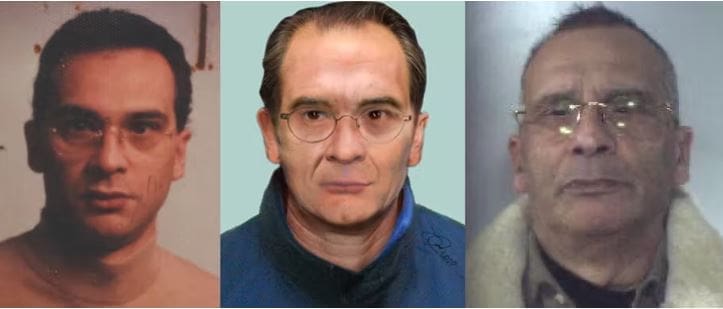
Matteo Messina Denaro: on the left is a picture taken when he was about 30; in the centre is an age-progressed image made before his arrest; on the right, a photo of Denaro following his arrest this year. EPA
Share
Facebook Twitter LinkedIn Pinterest Email Copy Link

The Italian police recently arrested Matteo Messina Denaro, the alleged leader of the Sicilian Mafia who has been on the run since 1993. To aid in the search, the Carabinieri issued an artificially aged image to show what he might look like now.

Artists have traditionally made these images by altering old photos of the suspect – adding wrinkles, hair loss and other common aspects of ageing. But in recent years there has been a move towards using computer systems that employ machine learning, a much more sophisticated and formalised way of changing people’s faces.

We can’t predict with certainty how a person will look years after their last available photo, but these images can still help police. Here’s how the technology has developed.

An evolving skill

The first computerised method, which has now been superseded, used the difference between two average images. Photographs of a number of people (perhaps 30) who matched the target for age, sex and general colouration were combined to make an average “young” image.

Another older set produced the average “older” face. The computer calculated the difference between the two images – greying hair, wrinkles and other characteristics – and applied that difference to the young face image, producing one that looked older.

Whether or not it did actually look like the subject as an older person is another matter, but when one of us (Peter Hancock) tried it, it produced an image that did look very like his father, just without the NHS spectacles.

Renowned US psychologist Alice O’Toole from the University of Texas at Dallas, accidentally discovered another aspect of computerised ageing. She was attempting to produce automatic caricatures of people in 3D, by emphasising any differences between an individual face and an average of other people’s faces at the same age. She found that the caricatures looked older.

It seems that, as a rule, people get more distinctive with age – thin people become gaunt, and big noses become bigger. This highlights an important aspect of ageing – we all do it differently.

Two things affect how we age: our genetics and our environment. Working outdoors can cause the skin to age. Smoking and diet can also have strong effects. An artist attempting to produce an aged image may refer to pictures of relatives to see how age has affected them. Some computerised methods also attempt to do this.

The influence of nature and nurture can make it tricky to accurately predict how someone may look in the future. Our research with US psychologists Jim Lampinen at the University of Arkansas and Blake Erickson at Texas A&M University-San Antonio indicates that there are large differences in how artists prepare an age progression.

We found that averaging age progressions from different artists were as good as the single best image. Since it is unknown in advance which will be the best image, this seems like a good way to improve accuracy.

Making several different images of a person, with a few possible ways in which they could have aged, could be a promising alternative. For example, it could show them with different levels of hair loss.

The idea takes its cue from the way that facial composites of a suspect are created. These composites are computerised likenesses based on eyewitness accounts. This is done in the hope that someone will be able to name the face to the police, providing an investigation with a lead (that may or may not be correct).

Software packages such as E-Fit and EvoFit (which we developed) can generate different versions of the offender’s image with and without a beard, with headwear and other common disguises. They also have the ability to change age, weight, health and other age-related aspects of appearance.

New ways forward

Current computerised systems for ageing suspects based on old photos deploy deep neural networks, of the sort that are transforming the field of artificial intelligence. These are advanced computer systems that can be used for complex tasks and incorporate the ability to improve by learning from examples.

The networks are trained with, or shown, a large sample of pictures in pairs, showing the same person at two different ages, and then learn to do the mapping – producing an older image when they have been given the young one.

While such a system might just learn the average transformation of a face in terms of age, it is also capable of learning much more detail – for example, whether a certain sort of face will age in a particular way.

The results can be compared with known samples of faces and different researchers compete to minimise the differences between the predictions and the reality. The technology is easily deployed – there are even phone apps that will age your face, if you so wish.

Returning to the aged image of Matteo Messina Denaro, it’s intriguing to note that – in our analysis – a computer face recognition system (another type of deep neural networks) matched the arrest photo to the 30-year-old picture, but not to the artificially aged image.

Since a key role for computer face recognition – if society decides to accept it – could be to look for long-wanted people, it suggests that more research may be needed to establish the best way to do so.The Conversation

Peter Hancock, Professor of Psychology, University of Stirling and Charlie Frowd, Professor of Forensic Psychology, University of Central Lancashire

This article is republished from The Conversation under a Creative Commons license. Read the original article.

Aartificial intelligence Ageing Crime Machine learning missing person Police
Share. Facebook Twitter Pinterest LinkedIn Tumblr Email
The Conversation
  • Website

Related Posts

The Productivity Myth That’s Costing South Africa Talent

2026-01-21

The Boardroom Challenge: Governing AI, Data And Digital

2026-01-20

Ransomware: What It Is And Why It’s Your Problem

2026-01-19

Can Taxpayers Lose By Challenging SARS?

2026-01-16

Science Is Best Communicated Through Identity And Culture – How Researchers Are Ensuring STEM Serves Their Communities

2026-01-16

Trust Is The New Currency Of The Digital Economy

2026-01-12

Why Financial Crime Risk Demands Regulation And How Africa Is Leading The Way

2026-01-12

South Africa: Best Starting Point In Years, With 3 Clear Priorities Ahead

2026-01-12

The Future Of Work – Skills, Not Fear – South Africa’s Path To An AI-Ready Workforce

2026-01-07
Leave A Reply Cancel Reply

DON'T MISS
Breaking News

Huawei Says The Next Wave Of Infrastructure Investment Must Include People, Not Only Platforms

As countries push ahead with digital transformation, infrastructure planning is evolving. It is no longer…

Cartesian Capital Expands Investor Toolkits With JSE Listings

2026-01-20

South Africa: Best Starting Point In Years, With 3 Clear Priorities Ahead

2026-01-12

How SA’s Largest Wholesale Network is Paving the Way for a Connected, Agile Future

2025-12-02
Stay In Touch
  • Facebook
  • Twitter
  • YouTube
  • LinkedIn
OUR PICKS

The EX60: A Volvo That Talks Back

2026-01-20

Could ChatGPT Convince You To Buy Something?

2026-01-15

Over R270M In Phuthuma Nathi Dividends Remain Unclaimed

2025-11-27

Africa’s Next Voice Revolution, When 5G Meets AI

2025-11-21

Subscribe to Updates

Get the latest tech news from TechFinancials about telecoms, fintech and connected life.

About Us

TechFinancials delivers in-depth analysis of tech, digital revolution, fintech, e-commerce, digital banking and breaking tech news.

Facebook X (Twitter) Instagram YouTube LinkedIn WhatsApp Reddit RSS
Our Picks

Resolv Secures $500,000 Pre-Seed To Build The Recovery Layer For Stolen Crypto

2026-01-21

Huawei Says The Next Wave Of Infrastructure Investment Must Include People, Not Only Platforms

2026-01-21

The Productivity Myth That’s Costing South Africa Talent

2026-01-21
Recent Posts
  • Resolv Secures $500,000 Pre-Seed To Build The Recovery Layer For Stolen Crypto
  • Huawei Says The Next Wave Of Infrastructure Investment Must Include People, Not Only Platforms
  • The Productivity Myth That’s Costing South Africa Talent
  • Bitcoin Hyper Falls Short Where Remittix Delivers, How Is RTX Reshaping The PayFi Narrative As Platform Goes Live Feb 9th
  • Solana Price Prediction: SOL Is On-Track To Regain $250 This Year but the Question Is When? Is Meme-Mania Truly Over?
TechFinancials
RSS Facebook X (Twitter) LinkedIn YouTube WhatsApp
  • Homepage
  • Newsletter
  • Contact
  • Advertise
  • Privacy Policy
  • About
© 2026 TechFinancials. Designed by TFS Media. TechFinancials brings you trusted, around-the-clock news on African tech, crypto, and finance. Our goal is to keep you informed in this fast-moving digital world. Now, the serious part (please read this): Trading is Risky: Buying and selling things like cryptocurrencies and CFDs is very risky. Because of leverage, you can lose your money much faster than you might expect. We Are Not Advisors: We are a news website. We do not provide investment, legal, or financial advice. Our content is for information and education only. Do Your Own Research: Never rely on a single source. Always conduct your own research before making any financial decision. A link to another company is not our stamp of approval. You Are Responsible: Your investments are your own. You could lose some or all of your money. Past performance does not predict future results. In short: We report the news. You make the decisions, and you take the risks. Please be careful.

Type above and press Enter to search. Press Esc to cancel.

Ad Blocker Enabled!
Ad Blocker Enabled!
Our website is made possible by displaying online advertisements to our visitors. Please support us by disabling your Ad Blocker.