

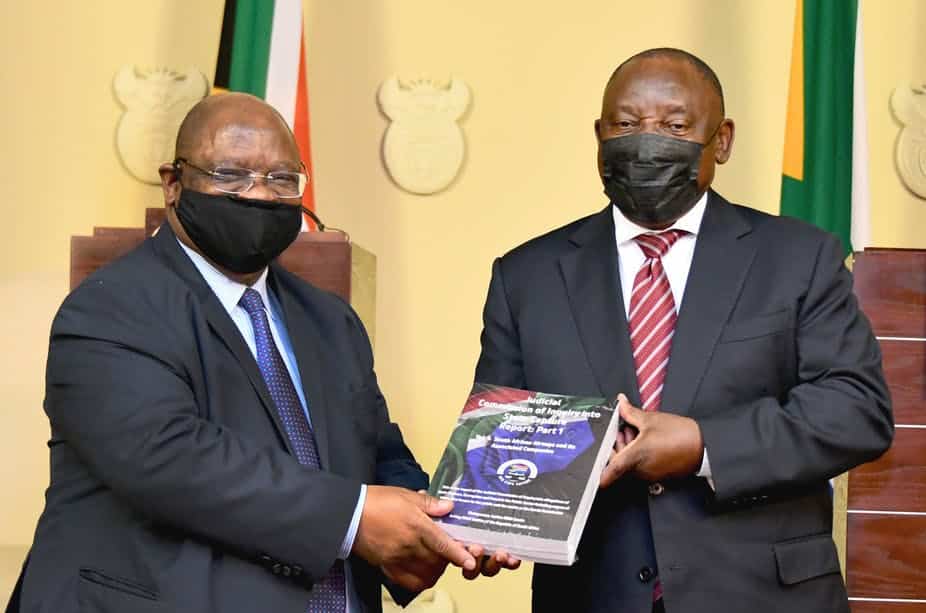

The importance of whistleblowers was highlighted again recently in South Africa. In one of the reports released by Judge Raymond Zondo, who has headed up a commission of inquiry into state capture, he recommended that whistleblowers should be protected. He also recommended that they should be given an incentive to make disclosures – a monetary reward based on a percentage of the proceeds recovered on the strength of such information.
Academics, myself among them, have called for similar treatment of tax whistleblowers.
The logic of these calls is that whistleblowers play a role in exposing corruption. In addition, they can expose those who evade paying their fair share of taxes.
In the 2020/2021 fiscal year South Africa’s tax revenue collections declined by 7.8%. This was due to a number of factors, including tax evasion. Exposing tax evaders would be welcomed as it could lead to more tax revenue collections.
In turn, the additional tax revenue can be used by government to realise the socio-economic rights of the people in South Africa.
But can a monetary incentive for a tax whistleblower programme work?
I believe that it can, but South Africa needs to sharpen its laws and regulations. At the moment the country merely makes provision for reporting suspicious tax activity via a link.
I would argue that South Africa should learn from the US’s experience and introduce monetary incentives for tax whistleblowing. In particular, recent developments in the US provide some valuable insights into what South Africa could be doing to improve the current system.
The US approach
The US has established a monetary incentive for tax whistleblowers.
Under its system a whistleblower must be awarded between 15% and 30% of the proceeds collected from information they have provided that has led to enforcement action being taken by the Secretary of the Internal Revenue Service.
The percentage of the award is determined by factors such as:
- whether the whistleblower acted promptly in disclosing the non-compliance,
- if the disclosed information brought an issue previously unknown by the IRS to the fore, and
- whether the whistleblower profited from the non-compliance but did not initiate the non-compliance actions to determine the percentage of the award in the specified range.
These mandatory rewards only apply to disputes exceeding $2 million. The Whistleblower Office has a discretion to make a reward for amounts less than this. There is no minimum statutory award percentage for the discretionary awards.
From 2018 to 2020, the US Whistleblower Office collected over $2.5 billion based on information received from whistleblowers. It made 567 awards amounting to $519 131 900. No statistics are available about the administrative costs associated with this programme. But Theo Nyreröd, a PhD student and Ginarcarlo Spagnolo, a professor of Economics, make a valid point about administrative costs. They reason that one should consider the costs associated with alternatives ways to obtain the same information. Generally, the “social enforcement” by way of whistleblowing for an incentive is more cost-effective than the typical enforcement methods.
However, the actual design and implementation of the programme plays a significant role in how cost-effective the programme is.
In addition to collecting more taxes, non-compliant taxpayers are brought into the tax system through the whistleblowing programme. In subsequent years, the IRS will have the information for these taxpayers and can ensure that they remain tax compliant.
South Africa’s framework
South Africa has numerous pieces of legislation that deal with whistleblowers. These include:
- the Protected Disclosure Act 25 of 2006,
- the Labour Relations Act 66 of 1995, and
- the Companies Act 71 of 2008.
All create a general whistleblowing framework. As there is no specific whistleblowing framework for tax, the general framework should be relied on to protect tax whistleblowers against possible reprisals.
So what needs to be put in place in South Africa to have a tax whistleblowing programme similar to the US programme?
The US made at least three fundamental changes to its old IRS reward programme to create its current system.
Firstly, the IRS created a national whistleblowing office to manage claims and provide centralised administration.
Secondly, it implemented mandatory awards at fixed percentages.
And finally it gave whistleblowers the right to appeal the IRS award determinations.
The IRS Whistleblower Program Improvement Act of 2021 also suggested improvements. These included creating a presumption of anonymity in the Tax Court, having interest accrue if the IRS has not paid the award one year after collecting the taxes due to the disclosure, and allowing the IRS to retain 3% of the collected proceeds (limited to $10 million) to plough back into the whistleblowing programme.
Furthermore, in a recent paper Law Professor Monray Marsellus Botha and I argue that an effective whistle blowing framework for South Africa should include these principles:
- confidentiality regarding the whistleblower’s information is paramount
- the information must be previously undiscovered and unlikely to have been discovered without the whistleblower information
- the disclosure is made in the public interest; and
- the monetary incentive should be linked to the tax that is collected based on the information provided by the whistleblower.
In addition, in my view, the corruption scandals in South Africa make it essential to have proper checks and balances in place for any whistleblowing programme otherwise it could simply be used as another avenue for corrupt officials.
Carika Fritz, Associate Professor of Tax Law, University of the Witwatersrand
This article is republished from The Conversation under a Creative Commons license. Read the original article.the c
