
Close Menu
  • Homepage
  • News
  • Cloud & AI
  • ECommerce
  • Entertainment
  • Finance
  • Opinion
  • Podcast
  • Contact

Subscribe to Updates

Get the latest technology news from TechFinancials News about FinTech, Tech, Business, Telecoms and Connected Life.

What's Hot

Digitap ($TAP) Crushes NexChain with Real Banking Utility: Best Crypto to Buy in 2026

2026-02-07

Football Fans Can Share Their ‘Super Bowl Spread’  With The Chance To Win an NFL Jersey

2026-02-07

Why Traditional Banks Need Mobile Money Solutions to Survive the Next 5 Years

2026-02-07
Facebook X (Twitter) Instagram
Trending
  • Digitap ($TAP) Crushes NexChain with Real Banking Utility: Best Crypto to Buy in 2026
Facebook X (Twitter) Instagram YouTube LinkedIn WhatsApp RSS
TechFinancials
  • Homepage
  • News
  • Cloud & AI
  • ECommerce
  • Entertainment
  • Finance
  • Opinion
  • Podcast
  • Contact
TechFinancials
Home»Opinion»Technology Is Revolutionising How Intelligence Is Gathered And Analyzed
Opinion

Technology Is Revolutionising How Intelligence Is Gathered And Analyzed

The ConversationBy The Conversation2022-02-15No Comments5 Mins Read
Share Facebook Twitter Pinterest LinkedIn Tumblr Email
TECHNOLOGY
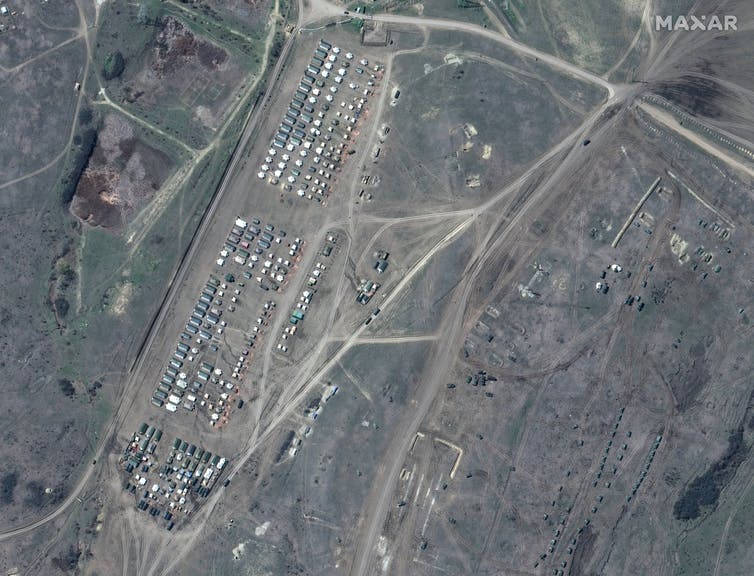
Commercial satellite companies provide views once reserved for governments, like this image of a Russian military training facility in Crimea. Satellite image (c) 2021 Maxar Technologies via Getty Images
Share
Facebook Twitter LinkedIn Pinterest Email Copy Link

The U.S. has been warning for weeks about the possibility of Russia invading Ukraine, and threatening retaliation if it does. Just eight years after Russia’s incursion into eastern Ukraine and invasion of Crimea, Russian forces are once again mobilizing along Ukraine’s borders.

As the U.S. and other NATO member governments monitor Russia’s activities and determine appropriate policy responses, the timely intelligence they rely on no longer comes solely from multimillion-dollar spy satellites and spies on the ground.

Social media, big data, smartphones and low-cost satellites have taken center stage, and scraping Twitter has become as important as anything else in the intelligence analyst toolkit. These technologies have also allowed news organizations and armchair sleuths to follow the action and contribute analysis.

Governments still carry out sensitive intelligence-gathering operations with the help of extensive resources like the U.S. intelligence budget. But massive amounts of valuable information are publicly available, and not all of it is collected by governments. Satellites and drones are much cheaper than they were even a decade ago, allowing private companies to operate them, and nearly everyone has a smartphone with advanced photo and video capabilities.

As an intelligence and information operations scholar, I study how technology is producing massive amounts of intelligence data and helping sift out the valuable information.

Open-source intelligence

Through information captured by commercial companies and individuals, the realities of Russia’s military posturing are accessible to anyone via internet search or news feed. Commercial imaging companies are posting up-to-the-minute, geographically precise images of Russia’s military forces. Several news agencies are regularly monitoring and reporting on the situation. TikTok users are posting video of Russian military equipment on rail cars allegedly on their way to augment forces already in position around Ukraine. And internet sleuths are tracking this flow of information.

Play
Popular social media platforms like TikTok have become valuable sources of intelligence.

This democratization of intelligence collection in most cases is a boon for intelligence professionals. Government analysts are filling the need for intelligence assessments using information sourced from across the internet instead of primarily relying on classified systems or expensive sensors high in the sky or arrayed on the planet.

However, sifting through terabytes of publicly available data for relevant information is difficult. Knowing that much of the data could be intentionally manipulated to deceive complicates the task.

Enter the practice of open-source intelligence. The U.S. director of national intelligence defines Open-Source Intelligence, or OSINT, as the collection, evaluation and analysis of publicly available information. The information sources include news reports, social media posts, YouTube videos and satellite imagery from commercial satellite operators.

OSINT communities and government agencies have developed best practices for OSINT, and there are numerous free tools. Analysts can use the tools to develop network charts of, for example, criminal organizations by scouring publicly available financial records for criminal activity.

Private investigators are using OSINT methods to support law enforcement, corporate and government needs. Armchair sleuths have used OSINT to expose corruption and criminal activity to authorities. In short, the majority of intelligence needs can be met through OSINT.

Machine learning for intelligence

Even with OSINT best practices and tools, OSINT contributes to the information overload intelligence analysts have to contend with. The intelligence analyst is typically in a reactive mode trying to make sense of a constant stream of ambiguous raw data and information.

Machine learning, a set of techniques that allows computers to identify patterns in large amounts of data, is proving invaluable for processing OSINT information, particularly photos and videos. Computers are much faster at sifting through large datasets, so adopting machine learning tools and techniques to optimize the OSINT process is a necessity.

Identifying patterns makes it possible for computers to evaluate information for deception and credibility and predict future trends. For example, machine learning can be used to help determine whether information was produced by a human or by a bot or other computer program and whether a piece of data is authentic or fraudulent.

And while machine learning is by no means a crystal ball, it can be used – if it’s trained with the right data and has enough current information – to assess the probabilities of certain outcomes. No one is going to be able to use the combination of OSINT and machine learning to read Russian President Vladimir Putin’s mind, but the tools could help analysts assess how, for example, a Russian invasion of Ukraine might play out.

Technology has produced a flood of intelligence data, but technology is also making it easier to extract meaningful information from the data to help human intelligence analysts put together the big picture.

[The Conversation’s science, health and technology editors pick their favorite stories. Weekly on Wednesdays.]The Conversation

Craig Nazareth, Assistant Professor of Practice of Intelligence & Information Operations, University of Arizona

This article is republished from The Conversation under a Creative Commons license. Read the original article.THE C

Intelligence technology Twitter
Share. Facebook Twitter Pinterest LinkedIn Tumblr Email
The Conversation
  • Website

Related Posts

Private Credit Rating Agencies Shape Africa’s Access To Debt. Better Oversight Is Needed

2026-02-03

Why South Africa Cannot Afford To Wait For Healthcare Reform

2026-02-02

How is Technology Used in Cricket?

2026-02-02

SA Auto Industry At Crossroads: Cheap Imports Threaten Future

2026-02-02

Stablecoins: The Quiet Revolution South Africa Can’t Ignore

2026-02-02

South Africa Could Unlock SME Growth By Exploiting AI’s Potential Through Corporate ESD Funds

2026-01-28

How Local Leaders Can Shift Their Trajectory In 2026

2026-01-23

Why Legal Businesses Must Lead Digital Transformation Rather Than Chase It

2026-01-23

Directing The Dual Workforce In The Age of AI Agents

2026-01-22
Leave A Reply Cancel Reply

DON'T MISS
Breaking News

Digitap ($TAP) Crushes NexChain with Real Banking Utility: Best Crypto to Buy in 2026

The crypto presale market in 2026 has seen dozens of projects compete for investor attention.…

Dutch Entrepreneurial Development Bank FMO Invests R340M In Lula To Expand SME funding In SA

2026-02-03

Paarl Mall Gets R270M Mega Upgrade

2026-02-02

Huawei Says The Next Wave Of Infrastructure Investment Must Include People, Not Only Platforms

2026-01-21
Stay In Touch
  • Facebook
  • Twitter
  • YouTube
  • LinkedIn
OUR PICKS

Vodacom Reports Robust Q3 Growth, Driven By Diversification And Strategic Moves

2026-02-04

South Africa’s First Institutional Rand Stablecoin, ZARU, Launches

2026-02-03

The EX60 Cross Country: Built For The “Go Anywhere” Attitude

2026-01-23

Mettus Launches Splendi App To Help Young South Africans Manage Their Credit Health

2026-01-22

Subscribe to Updates

Get the latest tech news from TechFinancials about telecoms, fintech and connected life.

About Us

TechFinancials delivers in-depth analysis of tech, digital revolution, fintech, e-commerce, digital banking and breaking tech news.

Facebook X (Twitter) Instagram YouTube LinkedIn WhatsApp Reddit RSS
Our Picks

Digitap ($TAP) Crushes NexChain with Real Banking Utility: Best Crypto to Buy in 2026

2026-02-07

Football Fans Can Share Their ‘Super Bowl Spread’  With The Chance To Win an NFL Jersey

2026-02-07

Why Traditional Banks Need Mobile Money Solutions to Survive the Next 5 Years

2026-02-07
Recent Posts
  • Digitap ($TAP) Crushes NexChain with Real Banking Utility: Best Crypto to Buy in 2026
  • Football Fans Can Share Their ‘Super Bowl Spread’  With The Chance To Win an NFL Jersey
  • Why Traditional Banks Need Mobile Money Solutions to Survive the Next 5 Years
  • Spotify Brings Audiobooks to South Africa
  • Anjouan Corporate Services Reshapes Cross-Border Brokerage Licensing Strategy for UAE-Focused Firms
TechFinancials
RSS Facebook X (Twitter) LinkedIn YouTube WhatsApp
  • Homepage
  • Newsletter
  • Contact
  • Advertise
  • Privacy Policy
  • About
© 2026 TechFinancials. Designed by TFS Media. TechFinancials brings you trusted, around-the-clock news on African tech, crypto, and finance. Our goal is to keep you informed in this fast-moving digital world. Now, the serious part (please read this): Trading is Risky: Buying and selling things like cryptocurrencies and CFDs is very risky. Because of leverage, you can lose your money much faster than you might expect. We Are Not Advisors: We are a news website. We do not provide investment, legal, or financial advice. Our content is for information and education only. Do Your Own Research: Never rely on a single source. Always conduct your own research before making any financial decision. A link to another company is not our stamp of approval. You Are Responsible: Your investments are your own. You could lose some or all of your money. Past performance does not predict future results. In short: We report the news. You make the decisions, and you take the risks. Please be careful.

Type above and press Enter to search. Press Esc to cancel.

Ad Blocker Enabled!
Ad Blocker Enabled!
Our website is made possible by displaying online advertisements to our visitors. Please support us by disabling your Ad Blocker.