

Close Menu
  • Homepage
  • News
  • Cloud & AI
  • ECommerce
  • Entertainment
  • Finance
  • Opinion
  • Podcast
  • Contact

Subscribe to Updates

Get the latest technology news from TechFinancials News about FinTech, Tech, Business, Telecoms and Connected Life.

What's Hot

Salesforce Appoints Nick Christodoulou As Area VP Of Sales For Africa

2026-02-02

Why South Africa Cannot Afford To Wait For Healthcare Reform

2026-02-02

How is Technology Used in Cricket?

2026-02-02
Facebook X (Twitter) Instagram
Trending
  • Salesforce Appoints Nick Christodoulou As Area VP Of Sales For Africa
Facebook X (Twitter) Instagram YouTube LinkedIn WhatsApp RSS
TechFinancials
  • Homepage
  • News
  • Cloud & AI
  • ECommerce
  • Entertainment
  • Finance
  • Opinion
  • Podcast
  • Contact
TechFinancials
Home»Opinion»How The Move To Online Shopping Could Shake Up Retail Employment
Opinion

How The Move To Online Shopping Could Shake Up Retail Employment

Rosalind DaveyBy Rosalind Davey2021-04-22No Comments4 Mins Read
Share Facebook Twitter Pinterest LinkedIn Tumblr Email
Retail
Rosalind Davey
Share
Facebook Twitter LinkedIn Pinterest Email Copy Link

Motorcycle drivers delivering goods ranging from groceries to clothing have become ubiquitous on South Africa’s roads, especially since the start of the COVID-19 pandemic. The question that arises is: are these drivers part of the wholesale and retail sector, or are they part of the road freight and logistics industry?

The answer could have important implications for wholesale and retail employers in terms of salary costs. It even raises the possibility of certain employees bringing equal-pay-for-equal work claims.

While some bargaining council agents argue that drivers in general fall into the road freight and logistics industry – where minimum wages tend to be higher than in the wholesale and retail sector – this is an oversimplification.

There is significant overlap between the two industries, specifically in the areas of warehousing and distribution. However, the classification of employees into one sector or the other would depend on the business model of the employer.

You need to look at what the primary business is and what business is ancillary. You also need to look at who owns the goods being transported. Are you storing and distributing your own goods in your own facilities, or are you storing and distributing someone else’s goods for reward?

Using the example of drivers delivering your online shopping, she says they would in all likelihood fall under the wholesale and retail industry if directly employed by the retail business.
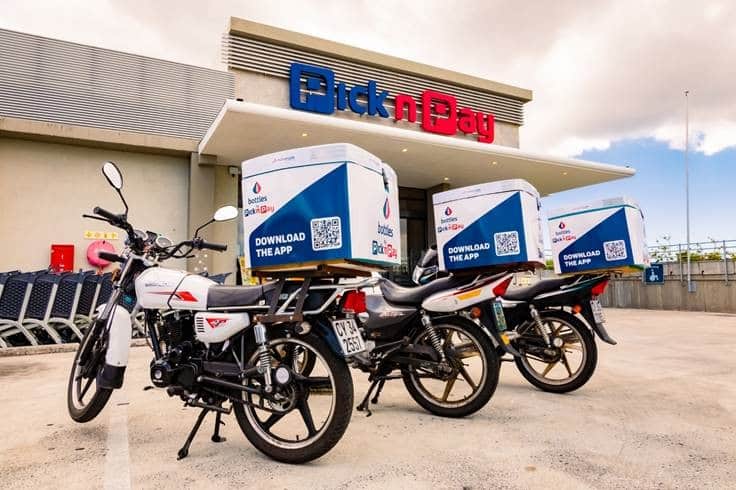
Bottles
Pick N Pay Bottles

But if the retail business outsources its deliveries, the drivers will in all likelihood fall under the road freight and logistics industry because the service provider would be providing the delivery service for reward.

The cost implications could be substantial. The minimum wages in the road freight and logistics industry are different from those in the wholesale and retail sector, so the wage bill could go up quite significantly if a retail business which employed its own drivers subsequently outsourced the distribution function to a service provider.

A scenario that could present particular complications for employers is insourcing a service that had previously been outsourced.

When the service is outsourced, the employees are no longer part of the wholesale and retail industry and become part of the road freight industry. But when the service is insourced again, the employees do not suddenly become wholesale and retail industry employees. They remain covered by the main collective agreement that was reached during the outsourcing process, specifically where there was a 197 transfer under the Labour Relations Act.

The reason is that collective agreements are transferred with the employees. Even after the collective agreement has expired, employees who were transferred to the new employer would continue to enjoy those terms and conditions. It would be tricky to change those terms and conditions if this resulted in the employees being worse off after the transfer.

This means an employer may find itself paying the same employees considerably more than the rate it was paying them before the service was outsourced.

It also begs the question of how easy it is to ring-fence those employees and whether it opens the employer to equal-pay-for-equal work claims from ordinary retail employees who are governed by the wholesale and retail sectoral determination.

These possible consequences illustrate how important it is for companies to look ahead when making decisions that affect their business models. It is very important to look at your long-term strategy to ensure you avoid greater difficulty in realigning your employees down the line.

In the meantime, drivers are on the move, whether in wholesale and retail or as part of the road freight and logistics industry, as online shopping continues to gain momentum in South Africa.

  • Rosalind Davey is partner in the Employment and Benefits Practice of African law firm, Bowmans.

COVID-19 e-commerce Motorcycle drivers online shopping Retail Employment
Share. Facebook Twitter Pinterest LinkedIn Tumblr Email
Rosalind Davey

Related Posts

Why South Africa Cannot Afford To Wait For Healthcare Reform

2026-02-02

Stablecoins: The Quiet Revolution South Africa Can’t Ignore

2026-02-02

South Africa Could Unlock SME Growth By Exploiting AI’s Potential Through Corporate ESD Funds

2026-01-28

How Local Leaders Can Shift Their Trajectory In 2026

2026-01-23

Why Legal Businesses Must Lead Digital Transformation Rather Than Chase It

2026-01-23

Directing The Dual Workforce In The Age of AI Agents

2026-01-22

The Productivity Myth That’s Costing South Africa Talent

2026-01-21

The Boardroom Challenge: Governing AI, Data And Digital

2026-01-20

Ransomware: What It Is And Why It’s Your Problem

2026-01-19
Leave A Reply Cancel Reply

DON'T MISS
Breaking News

SA Auto Industry At Crossroads: Cheap Imports Threaten Future

Government must urgently finalise new energy vehicles policy, refine tariffs and deploy anti-dumping measures to…

Paarl Mall Gets R270M Mega Upgrad

2026-02-02

Huawei Says The Next Wave Of Infrastructure Investment Must Include People, Not Only Platforms

2026-01-21

South Africa: Best Starting Point In Years, With 3 Clear Priorities Ahead

2026-01-12
Stay In Touch
  • Facebook
  • Twitter
  • YouTube
  • LinkedIn
OUR PICKS

What’s Stopping Sunny South Africa’s Solar Industry?

2026-02-02

How a Major Hotel Group Is Electrifying South Africa’s Travel

2026-01-29

The EX60 Cross Country: Built For The “Go Anywhere” Attitude

2026-01-23

Mettus Launches Splendi App To Help Young South Africans Manage Their Credit Health

2026-01-22

Subscribe to Updates

Get the latest tech news from TechFinancials about telecoms, fintech and connected life.

About Us

TechFinancials delivers in-depth analysis of tech, digital revolution, fintech, e-commerce, digital banking and breaking tech news.

Facebook X (Twitter) Instagram YouTube LinkedIn WhatsApp Reddit RSS
Our Picks

Salesforce Appoints Nick Christodoulou As Area VP Of Sales For Africa

2026-02-02

Why South Africa Cannot Afford To Wait For Healthcare Reform

2026-02-02

How is Technology Used in Cricket?

2026-02-02
Recent Posts
  • Salesforce Appoints Nick Christodoulou As Area VP Of Sales For Africa
  • Why South Africa Cannot Afford To Wait For Healthcare Reform
  • How is Technology Used in Cricket?
  • SA Auto Industry At Crossroads: Cheap Imports Threaten Future
  • Stablecoins: The Quiet Revolution South Africa Can’t Ignore
TechFinancials
RSS Facebook X (Twitter) LinkedIn YouTube WhatsApp
  • Homepage
  • Newsletter
  • Contact
  • Advertise
  • Privacy Policy
  • About
© 2026 TechFinancials. Designed by TFS Media. TechFinancials brings you trusted, around-the-clock news on African tech, crypto, and finance. Our goal is to keep you informed in this fast-moving digital world. Now, the serious part (please read this): Trading is Risky: Buying and selling things like cryptocurrencies and CFDs is very risky. Because of leverage, you can lose your money much faster than you might expect. We Are Not Advisors: We are a news website. We do not provide investment, legal, or financial advice. Our content is for information and education only. Do Your Own Research: Never rely on a single source. Always conduct your own research before making any financial decision. A link to another company is not our stamp of approval. You Are Responsible: Your investments are your own. You could lose some or all of your money. Past performance does not predict future results. In short: We report the news. You make the decisions, and you take the risks. Please be careful.

Type above and press Enter to search. Press Esc to cancel.

Ad Blocker Enabled!
Ad Blocker Enabled!
Our website is made possible by displaying online advertisements to our visitors. Please support us by disabling your Ad Blocker.