

by Nicklaus Kruger
The Zenzeleni Project has reimagined how internet services could be provided to rural South Africa by rural South Africans, giving the community access to affordable solar-powered, Wi-Fi telecommunication networks – and changing lives along the way.
In the rural Mankosi community, data really has fallen, thanks to Zenzeleni Networks putting network power in the hands of the people – as Minister of Higher Education, Science and Technology, Dr Blade Nzimande discovered in a visit on 5 March 2020.
“South Africa has one of the lowest levels of household internet access in the world,” noted Prof Shaun Pather, Professor and Chair of Information Systems at the University of the Western Cape (UWC), and former member of the Department of Telecommunications and Postal Services (DTPS’) National Information and communications technology (ICT) Policy Review panel.
“But the digital divide is about more than just universal access –, especially in rural South Africa. The digital divide is also about how ICTs facilitate social and economic outcomes amongst the poor. As such our goal in the Zenzeleni project is to catalyse the rural Digital Ecosystem.”
Mankosi is a tiny cluster of villages in Ward 26 of the Nyandeni Municipality of the Eastern Cape with around 3500 people, low access to services, low income (avg. R388/month) and low levels of education (13% of people with completed matric). Most homes in the villages were not connected to the electricity grid, and residents charged their cellphones at a local shop or shebeen. And prohibitive data costs meant that 15% of the population reported they sacrificed on basic food to use mobile phone services in 2012.
But that was before the launch of the award-winning Zenzeleni Project.
“The question we’ve really had to grapple with is how to facilitate, within a community, the social issues that enable and/or prohibit uptake,” said UWC’s Prof. Bill Tucker of the Bridging Applications Network Gaps (BANG) Group.
“That is still a major challenge, and offers fertile ground for further research.”
Zenzeleni is a multi-stakeholder project between UWC, the Zenzeleni Networks not-for-profit company, the Association of Progressive Communications, Ellipsis Regulatory and rural community cooperatives in the remote Eastern Cape that enables connectivity through low-cost WiFi networks in rural areas.
There are now two community-run ISPs in the area, the first in Mankosi community, and a second in nearby Zithulele community; demonstrating that the model can grow, and transfer from community to community.
“The most incredible thing that came out of this was how we learned to build bridges between the research community and the rural community to a point where the idea of Zenzeleni became less academic and more real,” Tucker added.
“Hopefully this knowledge and this business model will spread from community to community, and contribute in making access to internet services more freely available to rural communities.”
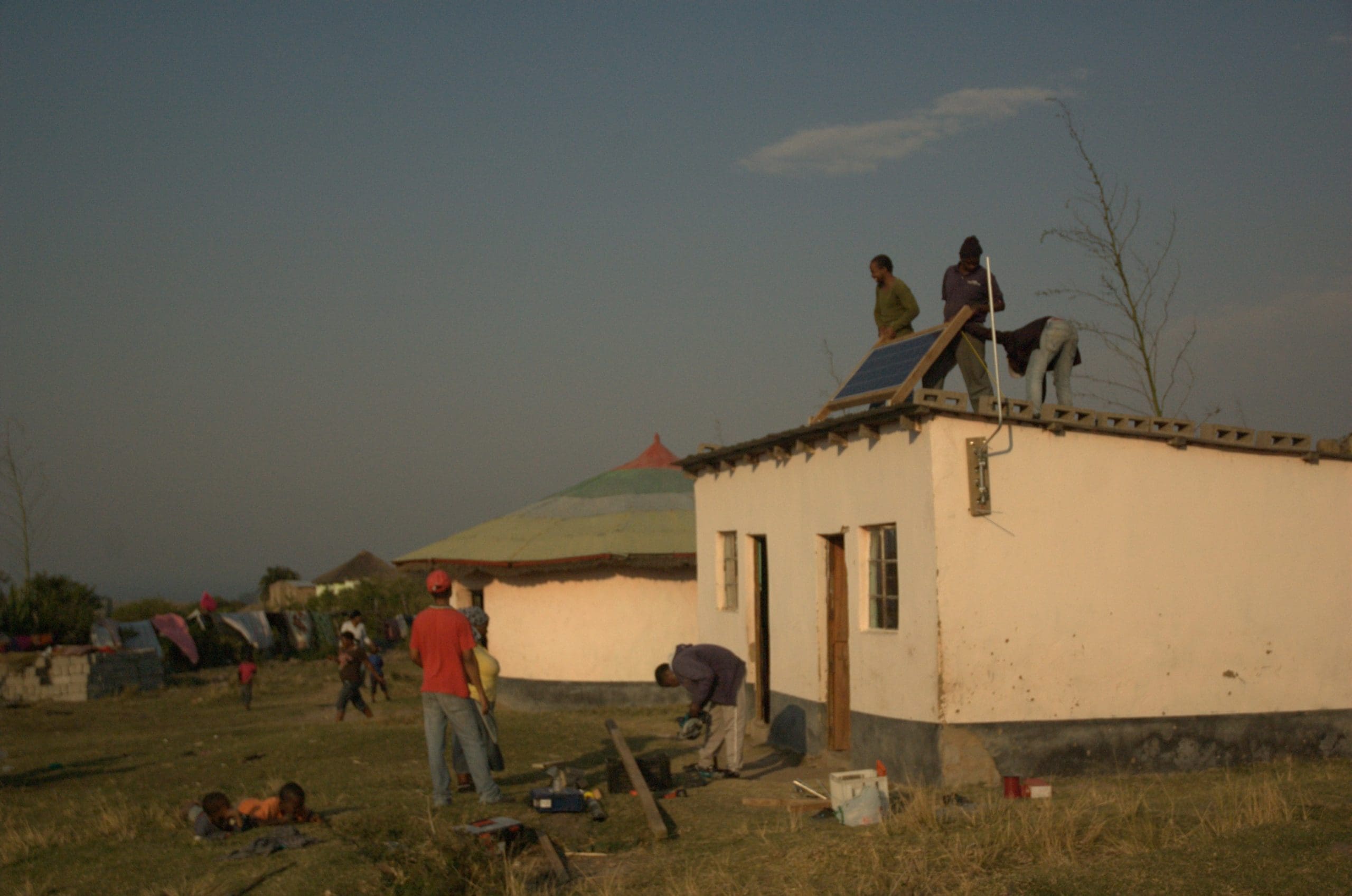
In Mankosi, Zenzeleni Networks has connected three schools, three businesses, two non-government organisations and over 3 000 users. For R25 a user can enjoy unlimited Wi-Fi data valid for 32 days, with a download speed of 2Mbps. All the network points are backed up with solar panels, trickle chargers and 12v deep cycle batteries!
The project is currently supported by the Department of Science and Innovation (DSI) in partnership with UWC, and implemented by the Technology Innovation Agency (TIA).
“Through this project we have ensured that we provide the Mankosi community with technical and related skills, including support to install and operate their own communication services and infrastructure, allowing communities to access a more reliable network at a cheaper price than the current market offerings,” said Minister Nzimande.
The Department will invest a further R2 million in the project in the next financial year.
Communities Doing It For Themselves
“The Zenzeleni project is about developing an innovative bottom-up community ownership model to address the ‘true access gap’ in rural South Africa – because normal market forces have not addressed the rural divide,” Prof Pather says. “As such we have been playing a very active advocacy role in terms of influencing policy reform in the South African telecommunications landscape”.
Zenzeleni (“Do it yourself” in isiXhosa) was born through a friendship between a UWC doctoral student doing action research in the area and a local community activist.
“The project was a way for the community to take responsibility for their own telecommunications, and reduce costs quite consistently,” said Dr Carlos Rey-Moreno, ex UWC Post-doctoral fellow, who led the co-founding of Zenzeleni alongside teacher Masibulele Siya.
“We wanted people to feel empowered, to organise themselves, to make their own choices – to be able to make a difference in their own lives.”
Zenzeleni’s case shows how economically marginalised communities that otherwise depend on government grants and remittances can, through a community network, both access and own high-value services in South Africa.
This model, Minister Nzimande noted, could be replicated in other rural communities.
“By providing affordable connectivity in areas where there was none, or where it is not feasible for large telecommunications companies, community networks contribute to the empowerment of marginalised population by fostering the local economy, creating local employment and small, micro and medium enterprises, and contributing to the social cohesion of the community they serve.”
It’s about empowering the community – for example, through a training programme where young local people were guided to use the internet to apply (successfully) for national tertiary education grants. It was a massive achievement in an area where completing secondary education is rare.
“Let us not only hear of the Fourth Industrial Revolution only in developed areas,” said Nkosi Dudumayo, traditional leader and member of the cooperative in Zithulele.
“This project has really shown that rural areas such as ours can also benefit from such. This means that our children no longer need to travel to urban areas to access information that will benefit their future – they can build their futures right here.”
