
Close Menu
  • Homepage
  • News
  • Cloud & AI
  • ECommerce
  • Entertainment
  • Finance
  • Opinion
  • Podcast
  • Contact

Subscribe to Updates

Get the latest technology news from TechFinancials News about FinTech, Tech, Business, Telecoms and Connected Life.

What's Hot

The Fintech Resilience Gap: Why Africa’s Next Decade Depends On Structural Integrity

2026-01-22

Resolv Secures $500,000 Pre-Seed To Build The Recovery Layer For Stolen Crypto

2026-01-21

Huawei Says The Next Wave Of Infrastructure Investment Must Include People, Not Only Platforms

2026-01-21
Facebook X (Twitter) Instagram
Trending
  • The Fintech Resilience Gap: Why Africa’s Next Decade Depends On Structural Integrity
Facebook X (Twitter) Instagram YouTube LinkedIn WhatsApp RSS
TechFinancials
  • Homepage
  • News
  • Cloud & AI
  • ECommerce
  • Entertainment
  • Finance
  • Opinion
  • Podcast
  • Contact
TechFinancials
Home»Opinion»Where Next For Wearables?
Opinion

Where Next For Wearables?

ContributorBy Contributor2019-12-17Updated:2019-12-17No Comments5 Mins Read
Share Facebook Twitter Pinterest LinkedIn Tumblr Email
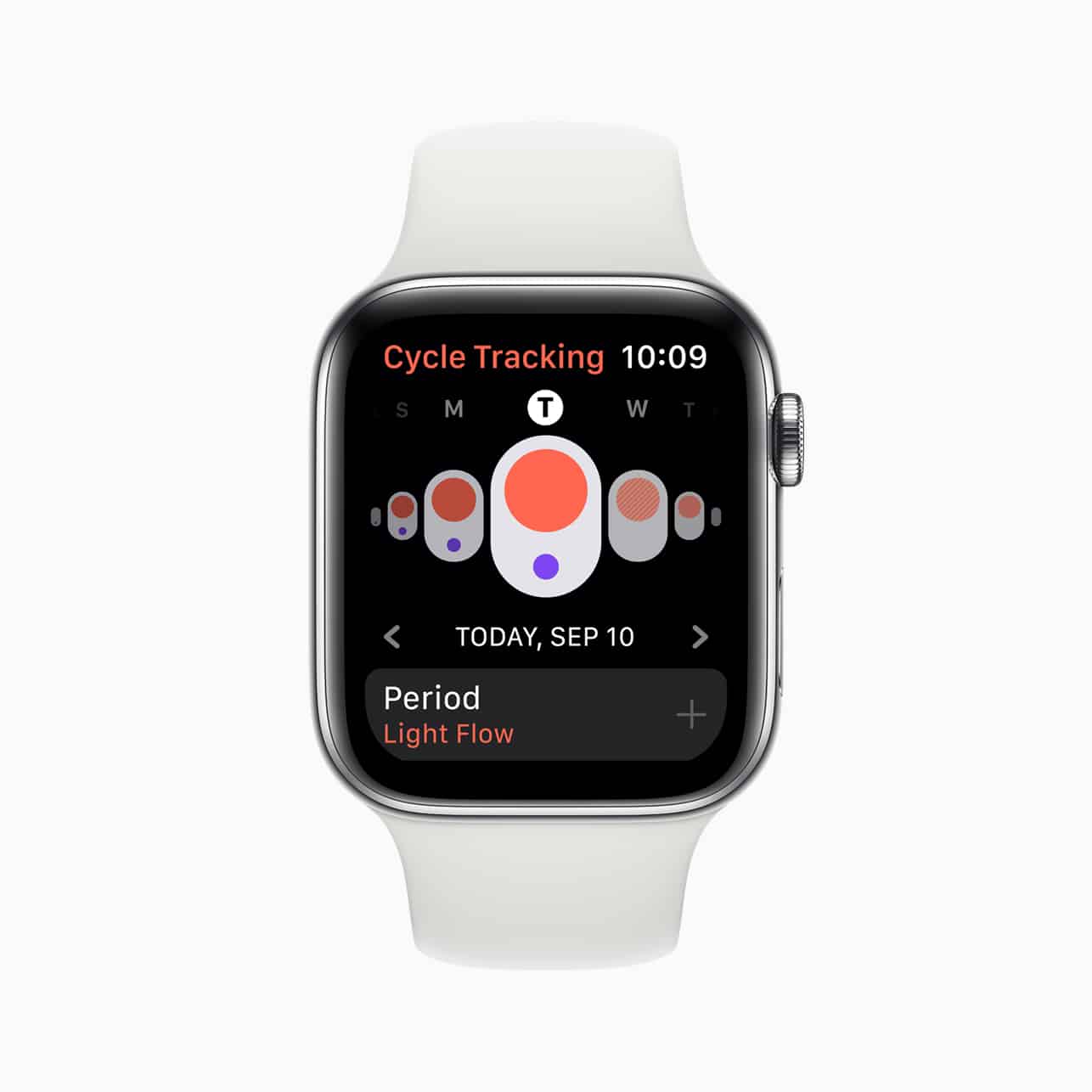
Apple unveils Apple Watch Series 5
Share
Facebook Twitter LinkedIn Pinterest Email Copy Link

by Basebone

What time is it? Time for something interesting to happen in the smartwatch market.

Yes, just a few days ago Google bought the smartwatch and fitness tracker maker, Fitbit. This was very unexpected news. Why? Because most people thought Google had given up on the wearables market. The company’s operating system – Wear OS – had been a flop. Google hardly ever talked about the platform any more.

But here it was, spending a huge $2.1 billion on the world’s second biggest wearables company.

https://blog.google/products/hardware/agreement-with-fitbit

What’s going on?

Before we dig into that, let’s re-cap how the wearables market got started.

It’s hard to pinpoint exactly when this happened. But there was one landmark moment in 2012.

That was when a small company called Allerta launched a Kickstarter campaign was for a smartwatch called Pebble. There was such demand that Allerta raised more than $10m.

https://www.theverge.com/2012/4/17/2954187/kickstarter-record-3-3-million-pebble-smartwatch

The success of the campaign suggested the public was finally ready for wearables. Why ‘finally’? Because the concept was not new. In fact, Microsoft tried to introduce it nearly a decade earlier. In 2004, it launched a project called SPOT, or Smart Personal Object Technology. It charged a yearly subscription to get info sent over the air to small connected devices, including smartwatches.

https://gigaom.com/2013/09/03/what-microsoft-got-right-with-its-smartwatch-nearly-a-decade-ago-more-than-you-think/

Microsoft was too early. But by 2012, things were different. iPhone and Android had been around for four or five years. 3G was well-established. People were getting used to portable, connected devices.

Pebble was a big success – for a while. It wasn’t the only one. Jawbone and Fitbit and Withings and more all grew fast. Meanwhile, ‘conventional’ watchmakers such as Tag and Fossil also experimented with smart tech.

Then, in 2014, came another big change. This was when Apple entered the market with its Watch. Apple had big plans for its first wearable. It wanted the Watch to be more than something that pinged whenever you got an email. It wanted it to be more like an ‘iPhone for the wrist’.

At launch, Tim Cook, Apple’s CEO, said: “Apple Watch begins a new chapter in the way we relate to technology…We can’t wait for people to start wearing Apple Watch to easily access information that matters, to interact with the world, and to live a better day.”

https://www.apple.com/newsroom/2015/03/09Apple-Watch-Available-in-Nine-Countries-on-April-24/

At around the same time, Google unveiled Android Wear (later re-named Wear OS). It believed it could repeat the Android model for phones in the wearables space. In other words, make free software that other companies could use to quickly build watches.

Neither Apple Watch or Android Wear went as planned.

Wear OS was the bigger failure. The watches weren’t very good. They didn’t sell well. And Google seemed to lose interest in the platform. By 2017, it had stopped talking about Wear OS at its annual developer events. Meanwhile, companies such as Samsung abandoned Wear OS in favour of their own platforms.

https://www.forbes.com/sites/jeanbaptiste/2018/03/17/google-renames-android-wear-as-wear-os-in-desperate-move-to-revive-dying-smartwatch-platform/#48c3b4c56bb6

As for Apple, people simply didn’t use the Watch as some kind of ‘remote control’ for life. They used it as a fitness tracker like all the other wearables on the market. As a consequence, in 2017, Apple quietly changed its strategy and began promoting the Watch as a sports and fitness aid.

https://www.apple.com/uk/newsroom/2017/06/watchos-4-brings-more-intelligence-and-fitness-features-to-apple-watch/

Even though Apple backtracked, and certainly didn’t sell as many Watches as it hoped, it still dominated the opposition.

According to Strategy Analytics, Apple shipped 22.5 million Apple Watch units during 2018. That was around half of all the smartwatches sold (Fitbit sold 5.5 million units, Samsung sold 5.3 million and Garmin 3.2 million).

Strategy Analytics: Apple Watch accounted for half of all smartwatch sales in 2018

Apple’s dominance put pressure on competitors. So did cheap Chinese alternatives. Xiaomi’s MiBand, launched in 2014, cost just $15. As a result, Jawbone closed in 2017 while Pebble shut down in 2018.

https://www.theverge.com/2018/1/24/16928792/fitbit-smartwatch-pebble-end-support-date-june

https://www.inc.com/emily-canal/jawbone-going-out-of-business.html

By the time 2019 rolled by, the smartwatch market was looking pretty uninteresting. Then came that Google/Fitbit deal.

https://www.cnet.com/news/googles-40m-purchase-of-fossil-tech-was-for-hybrid-smartwatches-report-says/

So, to get back to the main point. What is Google planning?

The obvious answer is to make its own watch. Google has established Pixel as a successful phone and laptop brand. But until now, no wearable. Surely a Pixel watch is next.

Then there’s data. Google is hardly a search engine any more. It’s a machine learning company.

Its systems analyse data to enhance various Google services: to make better maps, speed up language translations and improve ad targeting. With access to Fitbit’s 28 million users – and millions more future users – Google will have access to petabytes of bodily data too.

This might raise privacy concerns. But if Google can overcome them, this is powerful data with which to develop new healthcare expertise/products.

https://techcrunch.com/2019/01/24/alphabets-healthcare-subsidiary-verily-is-expanding-its-startup-investment-program/

The last reason is to prepare for the future. Some experts think that the successor to the smartphone will not be one product. It will be a family of products working together – a watch, bluetooth earphones, maybe eyewear – all controlled by speech.

If this happens – and it’s a big if – Google needs to be ready. If not, well Fitbit only cost $2.1 billion. Google can easily afford that.

connected devices smartwatch wearables
Share. Facebook Twitter Pinterest LinkedIn Tumblr Email
Contributor

Related Posts

The Productivity Myth That’s Costing South Africa Talent

2026-01-21

The Boardroom Challenge: Governing AI, Data And Digital

2026-01-20

Ransomware: What It Is And Why It’s Your Problem

2026-01-19

Can Taxpayers Lose By Challenging SARS?

2026-01-16

Science Is Best Communicated Through Identity And Culture – How Researchers Are Ensuring STEM Serves Their Communities

2026-01-16

Trust Is The New Currency Of The Digital Economy

2026-01-12

Why Financial Crime Risk Demands Regulation And How Africa Is Leading The Way

2026-01-12

South Africa: Best Starting Point In Years, With 3 Clear Priorities Ahead

2026-01-12

The Future Of Work – Skills, Not Fear – South Africa’s Path To An AI-Ready Workforce

2026-01-07
Leave A Reply Cancel Reply

DON'T MISS
Breaking News

Huawei Says The Next Wave Of Infrastructure Investment Must Include People, Not Only Platforms

As countries push ahead with digital transformation, infrastructure planning is evolving. It is no longer…

Cartesian Capital Expands Investor Toolkits With JSE Listings

2026-01-20

South Africa: Best Starting Point In Years, With 3 Clear Priorities Ahead

2026-01-12

How SA’s Largest Wholesale Network is Paving the Way for a Connected, Agile Future

2025-12-02
Stay In Touch
  • Facebook
  • Twitter
  • YouTube
  • LinkedIn
OUR PICKS

The EX60: A Volvo That Talks Back

2026-01-20

Could ChatGPT Convince You To Buy Something?

2026-01-15

Over R270M In Phuthuma Nathi Dividends Remain Unclaimed

2025-11-27

Africa’s Next Voice Revolution, When 5G Meets AI

2025-11-21

Subscribe to Updates

Get the latest tech news from TechFinancials about telecoms, fintech and connected life.

About Us

TechFinancials delivers in-depth analysis of tech, digital revolution, fintech, e-commerce, digital banking and breaking tech news.

Facebook X (Twitter) Instagram YouTube LinkedIn WhatsApp Reddit RSS
Our Picks

The Fintech Resilience Gap: Why Africa’s Next Decade Depends On Structural Integrity

2026-01-22

Resolv Secures $500,000 Pre-Seed To Build The Recovery Layer For Stolen Crypto

2026-01-21

Huawei Says The Next Wave Of Infrastructure Investment Must Include People, Not Only Platforms

2026-01-21
Recent Posts
  • The Fintech Resilience Gap: Why Africa’s Next Decade Depends On Structural Integrity
  • Resolv Secures $500,000 Pre-Seed To Build The Recovery Layer For Stolen Crypto
  • Huawei Says The Next Wave Of Infrastructure Investment Must Include People, Not Only Platforms
  • The Productivity Myth That’s Costing South Africa Talent
  • Bitcoin Hyper Falls Short Where Remittix Delivers, How Is RTX Reshaping The PayFi Narrative As Platform Goes Live Feb 9th
TechFinancials
RSS Facebook X (Twitter) LinkedIn YouTube WhatsApp
  • Homepage
  • Newsletter
  • Contact
  • Advertise
  • Privacy Policy
  • About
© 2026 TechFinancials. Designed by TFS Media. TechFinancials brings you trusted, around-the-clock news on African tech, crypto, and finance. Our goal is to keep you informed in this fast-moving digital world. Now, the serious part (please read this): Trading is Risky: Buying and selling things like cryptocurrencies and CFDs is very risky. Because of leverage, you can lose your money much faster than you might expect. We Are Not Advisors: We are a news website. We do not provide investment, legal, or financial advice. Our content is for information and education only. Do Your Own Research: Never rely on a single source. Always conduct your own research before making any financial decision. A link to another company is not our stamp of approval. You Are Responsible: Your investments are your own. You could lose some or all of your money. Past performance does not predict future results. In short: We report the news. You make the decisions, and you take the risks. Please be careful.

Type above and press Enter to search. Press Esc to cancel.

Ad Blocker Enabled!
Ad Blocker Enabled!
Our website is made possible by displaying online advertisements to our visitors. Please support us by disabling your Ad Blocker.