
Close Menu
  • Homepage
  • News
  • Cloud & AI
  • ECommerce
  • Entertainment
  • Finance
  • Opinion
  • Podcast
  • Contact

Subscribe to Updates

Get the latest technology news from TechFinancials News about FinTech, Tech, Business, Telecoms and Connected Life.

What's Hot

Digitap ($TAP) Crushes NexChain with Real Banking Utility: Best Crypto to Buy in 2026

2026-02-07

Football Fans Can Share Their ‘Super Bowl Spread’  With The Chance To Win an NFL Jersey

2026-02-07

Why Traditional Banks Need Mobile Money Solutions to Survive the Next 5 Years

2026-02-07
Facebook X (Twitter) Instagram
Trending
  • Digitap ($TAP) Crushes NexChain with Real Banking Utility: Best Crypto to Buy in 2026
Facebook X (Twitter) Instagram YouTube LinkedIn WhatsApp RSS
TechFinancials
  • Homepage
  • News
  • Cloud & AI
  • ECommerce
  • Entertainment
  • Finance
  • Opinion
  • Podcast
  • Contact
TechFinancials
Home»Opinion»AI: : Where’s it Going and Where it’s not
Opinion

AI: : Where’s it Going and Where it’s not

ContributorBy Contributor2019-07-18No Comments4 Mins Read
Share Facebook Twitter Pinterest LinkedIn Tumblr Email
AI
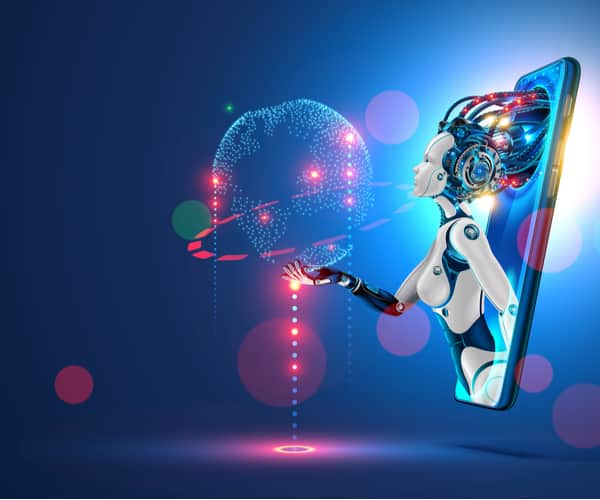
Artificial intelligence. Andrey Suslov / Shutterstock.Com
Share
Facebook Twitter LinkedIn Pinterest Email Copy Link
by Ayanna Howard, Ph.D
The Singularity (with a capital S) is a doomsday vision that has cast artificial intelligence (AI) and its robot sister-in-crime as evil villains bent on the irreversible and immeasurable disaster to the human condition.
Whether we need to worry about the big S or not really isn’t the issue, rather the primary concern today should focus on how do we capitalize on the impact of AI in the now and the foreseeable future.
Yes, there are challenges with the deployment of AI in various applications and industries, but there are also amazing opportunities as well. Following are two areas where AI shows a lot of promise.


AI and wearables

Today, the pervasiveness of wearables, powered by AI, continues to flourish as tools to enhance our quality of life. Whether it’s a smartphone that pops up directions as you start on your daily drive or an exercise ring that prompts you to stand at least once an hour, these devices are just that—pervasive, i.e. a persistent and powerful entity in our lives.

Wearables, devices that are seamlessly integrated into clothing, worn on the body, or even implanted in the body, are continuously being utilized for enhancing our quality of life and our productivity.

In the home environment, they can help us keep track of healthy habits, remind us about our medication doses or daily tasks, and even keep us honest about those pesky birthdays.

In the work environment, wearables can enhance productivity by using data to nudge workers toward good behavior in order to increase their happiness or monitoring their keystrokesto enhance computer security. In fact, a number of companies are even using wearables to track fatigue on the job.

Wearables though aren’t just for adults – they also have the potential to help parents check on the safety of their children, especially during sleep time. There are a number of companies already exploring the use of these wearable applications for children. Prior research, including ours, have even designed wearables for pre-term and at-risk infants in order to track their kicking movement patterns to enable early detection of a disability.

Although the use of AI in the domain of wearables continues to gain momentum, one challenge that the industry is still struggling with is security. Wearables, a form of IOT (Internet of Things), which are physical devices connected to the Internet, are known to have security vulnerabilities. Wearables collect a massive amount of data in order to enable the AI algorithms to personalize the interaction with users. This same information can also enable tracking and access to the user’s connected profile – whether a banking account, a home security system, or their physical location. And most wearable applications, although optimized for personalization, are not optimized for privacy or safety.

Emotional AI

Another exciting AI technology is the emergence of AI systems that can not only recognize human emotions, but also emote in an equivalent, socially appropriate, manner.  Emotional AI, also known as affective computing, attempts to sense, understand, and react to human emotions.

Whether it’s a customer service chatbot, a virtual therapist, or a math tutor, advancements in facial analysis, language understanding, voice recognition, and sentiment analysis have provided AI the ability to decode human emotions at a level that is uncanny. Based on analyzing large amounts of data, AI is very good at recognizing whether slight voice inflections are concealing signs of stress or whether facial micro expressions are masking a customer’s exasperation.

By carefully deciphering the human’s emotional state, AI can enhance the interaction in order to keep users engaged in the task at hand. Of course, given that these AI systems are learning from human data, the challenge is to develop appropriate techniques to mitigate algorithmic biases that might be hidden in the system.

There are many other opportunities for using AI in our daily activities. The two aforementioned technologies represent only a small segment of the possibilities. As AI continues to operate in our human-centered world, adapting to our nuances, it can positively enhance our lives, as long as we also address its challenges, including resolving issues of privacy, security, and bias, to name a few.

Ayanna Howard, Ph.D. is the Linda J. and Mark C. Smith Professor and Chair of the School of Interactive Computing at the Georgia Institute of Technology. She is also the Chief Technology Officer of Zyrobotics. Dr. Howard’s career focus is on intelligent technologies that must adapt to and function within a human-centered world. Her work encompasses advancements in artificial intelligence (AI), assistive technologies, and robotics. Dr. Howard recently spoke at the IEEE Vision, Innovation, and Challenges Summit on ethics in AI.

  • This article was originally published on Tech Talks. Read the original article here.

AI Artificial intelligence Emotional AI Singularity wearables
Share. Facebook Twitter Pinterest LinkedIn Tumblr Email
Contributor

Related Posts

Private Credit Rating Agencies Shape Africa’s Access To Debt. Better Oversight Is Needed

2026-02-03

Why South Africa Cannot Afford To Wait For Healthcare Reform

2026-02-02

SA Auto Industry At Crossroads: Cheap Imports Threaten Future

2026-02-02

Stablecoins: The Quiet Revolution South Africa Can’t Ignore

2026-02-02

South Africa Could Unlock SME Growth By Exploiting AI’s Potential Through Corporate ESD Funds

2026-01-28

How Local Leaders Can Shift Their Trajectory In 2026

2026-01-23

Why Legal Businesses Must Lead Digital Transformation Rather Than Chase It

2026-01-23

Directing The Dual Workforce In The Age of AI Agents

2026-01-22

The Productivity Myth That’s Costing South Africa Talent

2026-01-21
Leave A Reply Cancel Reply

DON'T MISS
Breaking News

Digitap ($TAP) Crushes NexChain with Real Banking Utility: Best Crypto to Buy in 2026

The crypto presale market in 2026 has seen dozens of projects compete for investor attention.…

Dutch Entrepreneurial Development Bank FMO Invests R340M In Lula To Expand SME funding In SA

2026-02-03

Paarl Mall Gets R270M Mega Upgrade

2026-02-02

Huawei Says The Next Wave Of Infrastructure Investment Must Include People, Not Only Platforms

2026-01-21
Stay In Touch
  • Facebook
  • Twitter
  • YouTube
  • LinkedIn
OUR PICKS

Vodacom Reports Robust Q3 Growth, Driven By Diversification And Strategic Moves

2026-02-04

South Africa’s First Institutional Rand Stablecoin, ZARU, Launches

2026-02-03

The EX60 Cross Country: Built For The “Go Anywhere” Attitude

2026-01-23

Mettus Launches Splendi App To Help Young South Africans Manage Their Credit Health

2026-01-22

Subscribe to Updates

Get the latest tech news from TechFinancials about telecoms, fintech and connected life.

About Us

TechFinancials delivers in-depth analysis of tech, digital revolution, fintech, e-commerce, digital banking and breaking tech news.

Facebook X (Twitter) Instagram YouTube LinkedIn WhatsApp Reddit RSS
Our Picks

Digitap ($TAP) Crushes NexChain with Real Banking Utility: Best Crypto to Buy in 2026

2026-02-07

Football Fans Can Share Their ‘Super Bowl Spread’  With The Chance To Win an NFL Jersey

2026-02-07

Why Traditional Banks Need Mobile Money Solutions to Survive the Next 5 Years

2026-02-07
Recent Posts
  • Digitap ($TAP) Crushes NexChain with Real Banking Utility: Best Crypto to Buy in 2026
  • Football Fans Can Share Their ‘Super Bowl Spread’  With The Chance To Win an NFL Jersey
  • Why Traditional Banks Need Mobile Money Solutions to Survive the Next 5 Years
  • Spotify Brings Audiobooks to South Africa
  • Anjouan Corporate Services Reshapes Cross-Border Brokerage Licensing Strategy for UAE-Focused Firms
TechFinancials
RSS Facebook X (Twitter) LinkedIn YouTube WhatsApp
  • Homepage
  • Newsletter
  • Contact
  • Advertise
  • Privacy Policy
  • About
© 2026 TechFinancials. Designed by TFS Media. TechFinancials brings you trusted, around-the-clock news on African tech, crypto, and finance. Our goal is to keep you informed in this fast-moving digital world. Now, the serious part (please read this): Trading is Risky: Buying and selling things like cryptocurrencies and CFDs is very risky. Because of leverage, you can lose your money much faster than you might expect. We Are Not Advisors: We are a news website. We do not provide investment, legal, or financial advice. Our content is for information and education only. Do Your Own Research: Never rely on a single source. Always conduct your own research before making any financial decision. A link to another company is not our stamp of approval. You Are Responsible: Your investments are your own. You could lose some or all of your money. Past performance does not predict future results. In short: We report the news. You make the decisions, and you take the risks. Please be careful.

Type above and press Enter to search. Press Esc to cancel.

Ad Blocker Enabled!
Ad Blocker Enabled!
Our website is made possible by displaying online advertisements to our visitors. Please support us by disabling your Ad Blocker.