



When Tandoor Morni built its first clay tandoor in 1992, the customers were mostly a handful of Indian restaurant owners who needed an oven and had very few places to find one. More than three decades later, the company is supplying restaurants, hotels, caterers, food trucks and home cooks across the United States and Canada, and it is marking the milestone by pointing to the thing it says matters most to today’s buyers: its ovens are built to recognized safety standards.
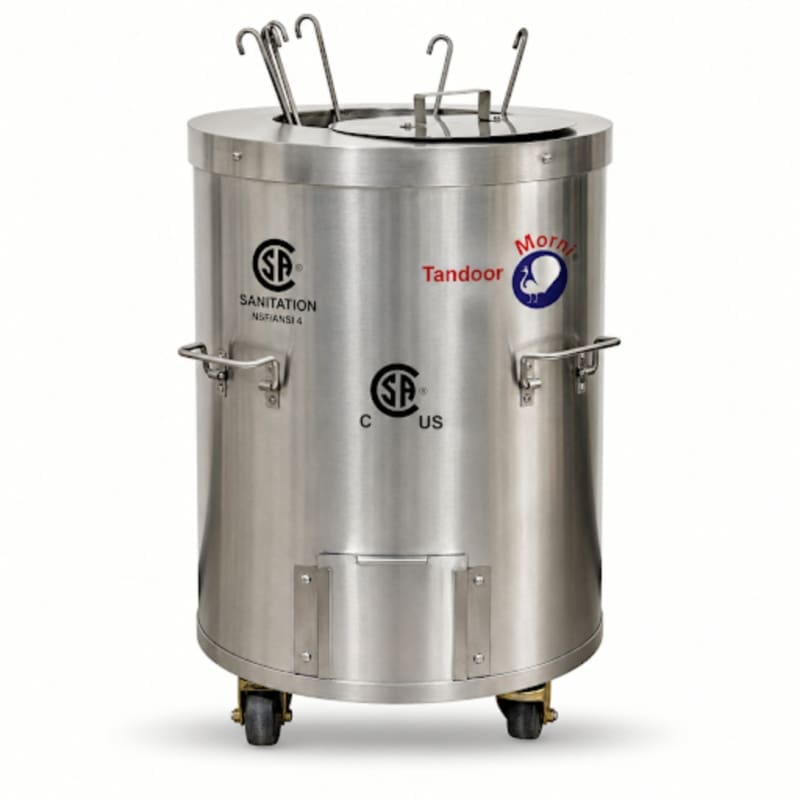
Tandoor Morni’s ovens carry CSA Sanitation NSF/ANSI 4 certification, the recognized sanitation standard for commercial food-service equipment. The company states that it is the only tandoor oven manufacturer in North America to hold both that sanitation certification and CSA Z83.11 certification for gas-fired commercial equipment. For a business that still forms and finishes its clay by hand, it is a combination that sums up how the company has grown: old craft on the inside, modern standards on the outside.
From a Small Workshop to a North American Manufacturer
The story of Tandoor Morni follows the story of South Asian food in North America. In the early 1990s, Indian restaurants were concentrated in a few immigrant neighborhoods, and owners who wanted a proper clay oven often had to ship one from overseas, wait months for it to arrive, and hope the clay survived the journey. Locally built alternatives were frequently improvised by contractors who had never cooked in a tandoor.
Tandoor Morni started as a small family workshop trying to solve that problem closer to home. The goal was simple to describe and hard to do: build a clay oven that cooked exactly like the ones in the restaurants and villages of Punjab, and deliver it to North American kitchens without the long waits, cracked liners and missing parts that came with imports.
As Indian, Pakistani, Afghan and Middle Eastern cuisine moved into the North American mainstream, demand followed. Restaurants opened in suburbs, food halls and small cities. Caterers began serving South Asian weddings in the tens of thousands. Fast-casual concepts built menus around tandoori chicken and naan. Over three decades, the workshop grew into a manufacturer with showrooms across the United States and Canada, including its California location in Manteca.
What Hasn’t Changed: The Clay
Ask anyone at Tandoor Morni what has stayed the same since 1992 and the answer is immediate: the clay.
A tandoor is a thick-walled clay cylinder, open at the top and heated from below. The clay walls soak up heat and radiate it back at temperatures of 800 to 900 degrees Fahrenheit, while the flame underneath adds live fire and smoke. Bread is pressed directly onto the hot wall, where it blisters and chars in under a minute. Meat, paneer and vegetables cook vertically on long skewers, searing on the outside while their juices baste them from within. The result is the smoky, slightly charred flavor diners recognize the moment a tandoori dish reaches the table.
None of that works without the right clay. Tandoor Morni builds its ovens around authentic clay that is free from chemicals, with no synthetic binders or additives sitting against food at extreme heat. The clay chambers are still shaped and finished by hand, the way tandoor makers have worked for generations. The company sees this as non-negotiable, because the clay touches every piece of bread baked in the oven, every night, for years.
“We have changed almost everything around the clay, and almost nothing about the clay itself,” said Parvinder Aulakh, spokesperson for Tandoor Morni. “That’s the whole idea. A chef should get the same oven a craftsman would have built a hundred years ago, and it should pass every inspection a modern kitchen faces.”
What Has Changed: Everything Around It
The modern Tandoor Morni oven looks nothing like a village tandoor from the outside. The clay chamber sits inside a food-grade stainless steel body, with insulation packed between the two so the heat stays in the oven instead of cooking the person standing beside it. Gas models run on tested burners and controls, so the oven lights consistently and holds temperature through a long dinner service. Many units sit on wheels so they can be moved for cleaning, installation or events.
Those changes were not cosmetic. They were driven by the realities of commercial kitchens in North America, where every piece of cooking equipment has to satisfy a health inspector, a gas inspector and usually an insurer before a restaurant can open. Over the years, many owners learned the hard way that an uncertified oven could hold up an opening for weeks while they searched for paperwork that did not exist.
Why Dual Certification Matters
The two certifications Tandoor Morni highlights address two different concerns.
CSA Sanitation NSF/ANSI 4 deals with food safety. It looks at the materials that touch food, the seams and joints where grease and bacteria can collect, and whether every surface can be cleaned properly in a working kitchen. It answers the question a health inspector asks first.
CSA Z83.11 deals with gas safety. It covers how a gas-fired commercial cooking appliance burns, vents and is controlled, independently tested for safe operation in an enclosed kitchen. For an appliance that runs a live flame inside a clay chamber for ten or more hours a day, that testing addresses the risks of leaks, flare-ups and carbon monoxide. It answers the question the gas inspector and fire marshal ask.
Holding both means a restaurant owner can show inspectors a recognized certification for each of their concerns, rather than asking them to judge an unfamiliar clay appliance from scratch. The CSA mark with the “C” and “US” indicators also shows certification for both the Canadian and American markets, which helps restaurant groups and caterers working on both sides of the border.
Certification also shapes what comes out of the oven. An oven built to certified tolerances is built consistently, with even walls, controlled insulation and a burner that delivers the same flame at the same setting every night. Chefs describe the difference not as more heat but as heat they can trust: naan that rises the same way at nine o’clock as it did at six, and tandoori chicken that browns evenly instead of scorching in patches.
What Buyers Ask Now That They Didn’t in 1992
Thirty years ago, the conversation with a restaurant owner usually began and ended with size and price. Today, buyers arrive with a much longer list, and Tandoor Morni’s staff say the questions themselves show how far the market has matured.
The first question is almost always certification: which marks are on the oven, and will they satisfy the local health and gas inspectors. Next comes fuel, because the answer depends on whether the oven will sit inside a commercial kitchen with a gas line or outdoors on a patio or at an event. Buyers then ask about the clay itself, whether it is authentic and free of chemical binders, and about the stainless steel around it.
Finally, experienced operators ask about the future: who supplies the replacement clay liner in year six, where spare skewers and burner parts come from, and how quickly help arrives when something goes wrong before a fully booked weekend. Those are the questions of an industry that has learned, sometimes painfully, that the cheapest oven on the invoice is rarely the cheapest oven over its working life.
One Oven, Many Kitchens
Over three decades, the range of people buying tandoors has widened far beyond the traditional Indian restaurant, and Tandoor Morni’s lineup has grown to match. The company builds charcoal, wood-fired and gas tandoors across commercial, catering and home lines.
Gas models are the standard for indoor restaurant kitchens, where steady heat and code compliance decide the choice. Charcoal and wood-fired ovens are favored by caterers, patio programs and purists who want the deepest possible smoke, and they generally run outdoors, where that smoke is part of the appeal rather than a ventilation problem.
The menu these ovens support is broader than many people expect. Tandoors are used for both vegetarian and non-vegetarian tandoori dishes in almost equal measure. Paneer tikka, roasted cauliflower, stuffed peppers and the whole bread basket of naan, roti and kulcha come out of the same oven as tandoori chicken, seekh kebab, lamb chops, fish tikka and prawns. For restaurants and caterers serving large vegetarian communities, that range is a real advantage.
The Rise of Catering and Live Cooking
One of the fastest-growing parts of the business over the past decade has been catering. South Asian weddings, corporate events, festivals and private parties increasingly feature live tandoor stations, where guests can watch naan slapped onto the clay wall and skewers pulled from the fire.
The shift has been driven partly by guests themselves. A generation of diners who grew up on tandoori food now expects it at celebrations, and couples planning South Asian and fusion weddings increasingly ask for fresh naan and kebabs cooked on site rather than reheated from a kitchen across town. Corporate event planners have noticed the same appeal, booking live tandoor stations for company gatherings and product launches because few things draw a crowd like an open flame and the smell of charred spice.
For caterers, the oven does double duty. It produces food at volume, and it gives the event a centerpiece. A chef working a glowing tandoor draws a crowd in a way a row of chafing dishes never will, and the food goes straight from the oven to the plate while it is still at its best.
Portable models on heavy-duty wheels have made that possible on lawns, rooftops, banquet halls and backyard venues. Caterers looking at catering tandoor ovens for sale tend to weigh capacity, fuel and mobility together, often choosing several smaller ovens they can position wherever an event needs them rather than one large unit. Many start with one oven and add more as their event calendars fill up.
Showrooms, Service and the Long Life of a Tandoor
A tandoor is a long-term purchase, and Tandoor Morni has built its business around that. Its showrooms across the United States and Canada let restaurant owners, caterers and home cooks see the ovens in person, compare sizes and fuel types, and talk through ventilation and installation before they buy.
For a restaurant planning a build-out, that conversation often starts with kitchen drawings and ends with clear specifications for clearances and exhaust. For a home cook, it might be as simple as seeing which size fits a patio. Either way, the visit replaces guesswork with a decision made in front of the actual oven.
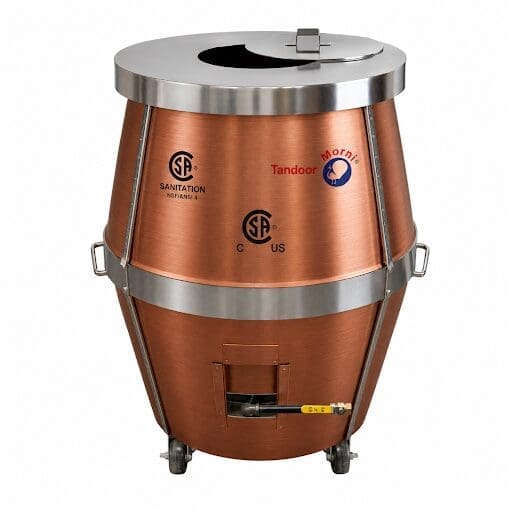
Support after the sale matters just as much. The clay liner inside a tandoor seasons with use and, after years of nightly heating and cooling, eventually needs repair or replacement. Skewers bend, covers go missing, burners need service. Keeping replacement clay, repair kits and accessories available on this continent means an oven bought in a restaurant’s first year can still be working in its tenth.
Bringing the Tandoor Home
The newest chapter in Tandoor Morni’s story is happening in backyards. The same enthusiasm that put pizza ovens and ceramic grills on North American patios has reached the tandoor, and the company now sells compact residential models to serious home cooks.
For many South Asian families, there is something personal in it. A clay oven on a suburban patio echoes the shared village tandoors their parents and grandparents grew up around, and it brings the family together around the fire on a weekend afternoon. For other home cooks, it is simply the best way to make real naan and tandoori chicken without leaving the house.
Home buyers ask many of the same questions restaurants do. They want to know what the clay is made of, whether the materials are food-safe, and what fuel suits their space. The same chemical-free clay and food-grade stainless steel go into the home range as into the commercial ovens.
Looking Ahead
As Tandoor Morni moves beyond its third decade, the company says its priorities are the same ones it started with: build the oven properly, stand behind it, and make it easier for cooks to get the real thing.
Demand shows little sign of slowing. South Asian cuisine keeps gaining ground in North America, new restaurants and food businesses keep opening, and diners who grew up on tandoori food keep expecting the genuine article. Every one of those kitchens needs an oven that cooks the traditional way and passes a modern inspection.
For restaurant owners, caterers and home cooks looking for a tandoor oven for sale that combines hand-finished clay with recognized safety certification, Tandoor Morni’s showrooms and website offer the full commercial, catering and home range across charcoal, wood-fired and gas models.
More than thirty years after its first oven left the workshop, the company’s measure of success has not changed much. It is still the moment a cook presses dough against hot clay, pulls out a blistered, smoky naan a minute later, and knows the oven did exactly what it was built to do.
Visit Tandoor Morni 2142 W Yosemite Ave, Manteca, CA 95337, Ph: 727-251-6924, https://tandoormorni.com/
