


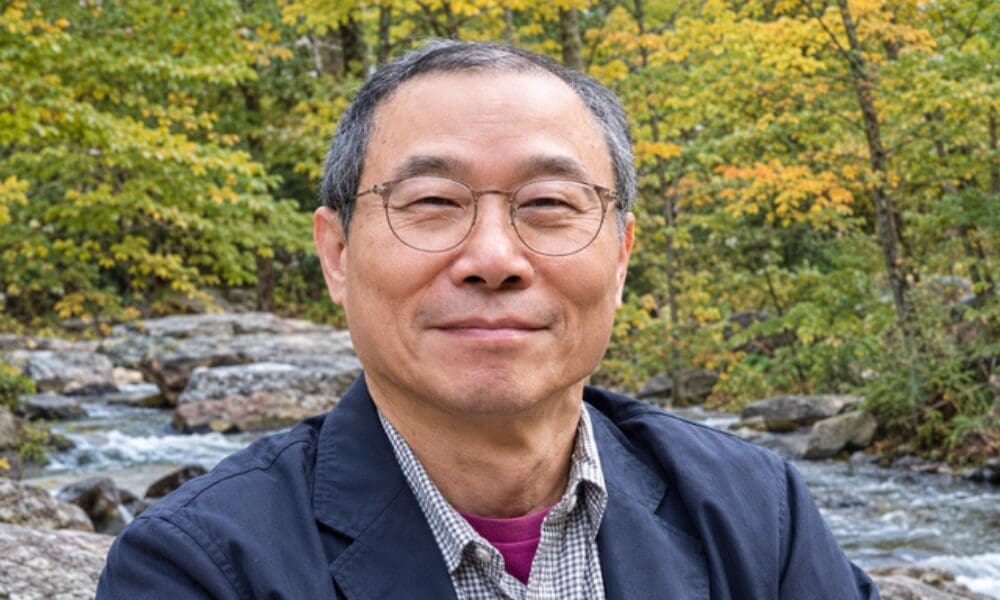
Individualism is a hallmark of modern society, yet acts of altruism are not uncommon. This paradox that humans often shift from selfish to cooperative behavior without warning and, apparently, without obvious reasons is a key topic explored by Yeonbo Jung in his new book, “The Superorganismic Human.” Jung’s explanation for the paradox introduces a new framework for understanding humans, their motivations, and the way they interact with each other.
“Humans are at their core social beings,” Jung says. “But simply describing them as such doesn’t explain our complexities. To truly understand our behaviors, including our moral contradictions and inner tensions, we must look beyond the view of humans as either mere individuals or social animals. Understanding comes from seeing human life as composed of imperfect superorganisms ― families, companies, communities, religious sects, and nations that operate collectively.”
Yeonbo Jung bridges biology and philosophy in “The Superorganismic Human”
Jung, who was born in Seoul, South Korea, in 1954, is a biologist and writer whose career bridges biology and philosophy. He also has a doctoral degree in Biology from the University of Rochester, NY, and has conducted postdoctoral research under Professor Charles C. Richardson at Harvard Medical School. After completing postdoctoral work, Jung served as an assistant professor at Paik Hospital of Inje University and later pioneered DNA fingerprinting technology in South Korea, including founding a startup that promoted DNA profiling technology.
Jung’s prior publications include “DNA Typing,” published in Korean in 1996, “Human Sociobiology,” published in Korean in 2004, and “The Truth of DNA,” published in Korean in 2008. “The Superorganismic Human” was published in Korean in 2017 and in English in 2025.
Yeonbo Jung reframes human existence in “The Superorganismic Human”
“The Superorganismic Human” offers a bold rethinking of human existence. Drawing on insights from evolutionary biology, neuroscience, sociobiology, and philosophy, the work reframes the self as a dynamic interplay of body, brain, and memory to reveal the evolutionary roots of abstract concepts such as freedom, value, and human rights.
The struggle to maintain morality in human society is one of the key themes of the book. Moral confusion arises, it explains, because morality evolved to function within ingroups, or superorganisms, while modern society rests on overlapping and shifting group boundaries. The book goes further, suggesting morality is a manifestation of desire positioned at the center of the human mind within a conceptual model called the “Backbone of the Mind.”
“The ‘Backbone of the Mind’ model is built upon the idea that animal instincts are inborn programs for action,” Jung says. “In humans, desires act as instincts. The mind follows a two-tiered linear pathway in which sensory input triggers desire, reasoning shapes possible actions, and a ‘pleasure gate’ selects the option promising the greatest reward and fitness. This model clarifies identity, free will, value, and freedom within a biologically grounded model of the human mind.”
Evolutionary compatibilism is another main theme covered in “The Superorganismic Human.” It explains that humans perceive determinism in their cultures because the present stems from prior causes. Yet, as Jung explains, the present also holds countless possibilities, giving rise to the human experience of freedom.
Yeonbo Jung explains persistent human paradoxes in “The Superorganismic Human”
“The Superorganismic Human” seeks to move beyond morality as a fixed rulebook — a position held by great thinkers of the past — and frame it as an adaptive strategy shaped by group life. In doing so, the book offers compelling explanations for persistent human paradoxes, such as why human behavior toward strangers is kind in some cases and hostile in others and why those having the same facts can embrace opposing moral views.
“The explanations for such paradoxes are not found in flawed reasoning or cultural decline,” Jung says, “but in the evolved structure of the human mind and its entanglement in multiple, competing superorganisms.”
While it covers at length the moral struggles humans face, “The Superorganismic Human” is not a book of moral prescriptions. Rather, it is a scientific-philosophical exploration of the architecture of human thought that delves into the roots of moral judgment and attempts to untangle the tension between individual autonomy and collective belonging. By weaving rigorous science with philosophical inquiry, “The Superorganismic Human” presents a vision of the self and morality as products of evolution, offering a perspective that enriches debates on why humans act as they do and why their nature is inherently paradoxical.
