


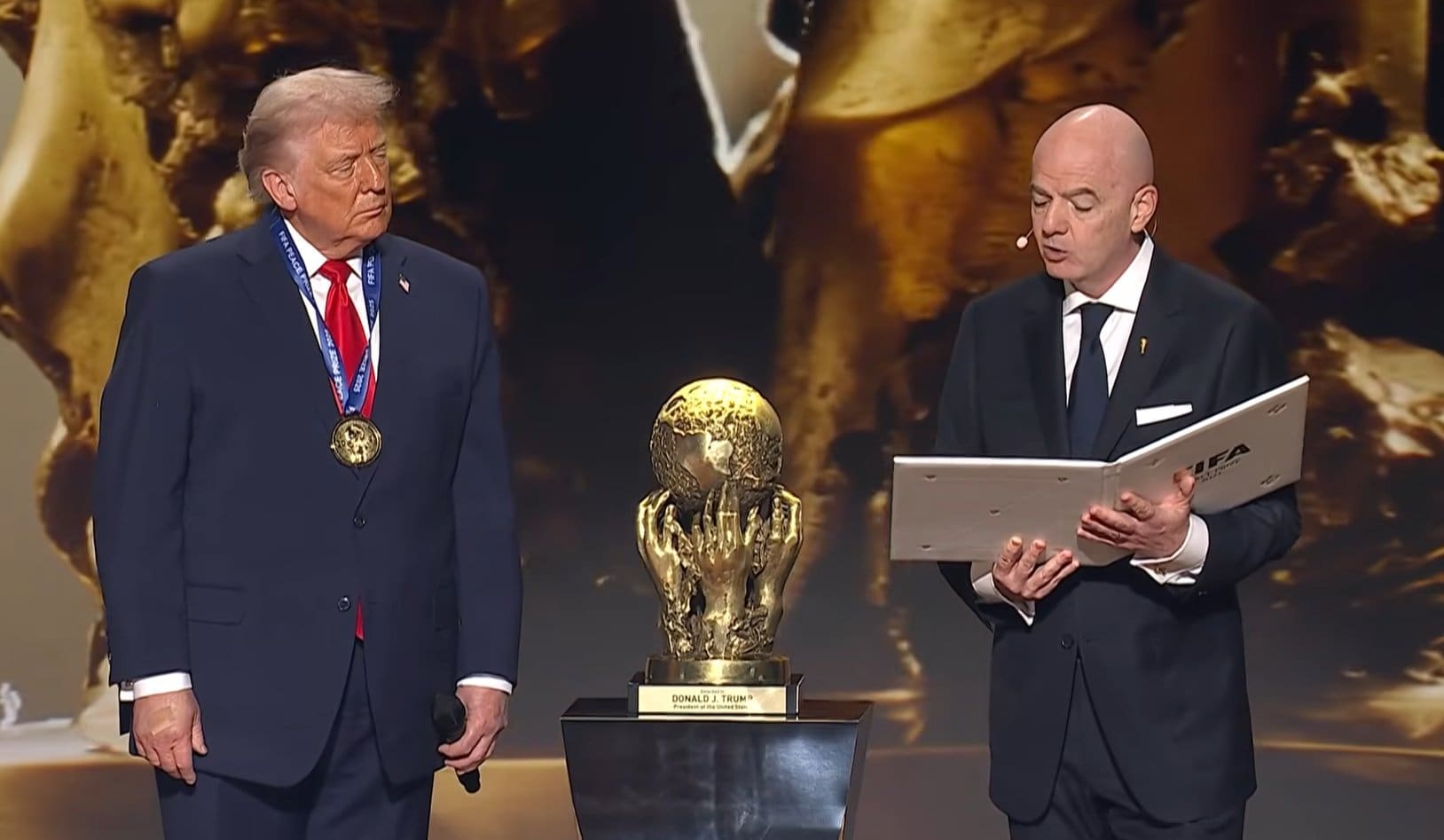
Geneva – FIFA’s announcement on Tuesday of a plan to create a $20 billion commercial subsidiary and sell minority stakes to private investors, including a firm linked to the family of U.S. President Donald Trump’s son-in-law, has ignited a fierce controversy in the world of football.
The move, aimed at unlocking billions more for global development, has been condemned by UEFA as crossing a “sacred boundary” by effectively putting the soul of the game up for sale.
(Source: reuters.com)
The proposal centers on FIFA Forward Enterprise (FFE), a new wholly-owned subsidiary that would consolidate commercial and event operations, including rights to the men’s and women’s World Cups, the Club World Cup, and other competitions.
FIFA intends to raise up to $4.2 billion by selling up to about 20-21% in non-controlling minority stakes, based on an initial $20 billion valuation. FIFA says it would retain full control over governance, sporting rules, the match calendar, and regulatory decisions.
(Source: reuters.com)
FIFA President Gianni Infantino framed the initiative as a way to “democratise football worldwide” and dramatically increase funding for its 211 member associations.
The capital raise would support a FIFA Fast-Forward Programme, providing member federations with one-off payments of up to $20 million initially for infrastructure, coaching, grassroots programs, women’s football, and national teams—rising to $24 million in later cycles.
This would boost overall development funding to more than $10 billion across cycles.
(Source: frontofficesports.com)
Why $20 Billion? FIFA, despite operating as a Swiss-based not-for-profit association, generates enormous revenue—recently around $9-13 billion from the 2026 World Cup cycle alone, largely from broadcasting, sponsorships, and hospitality.
As a non-profit, it cannot distribute profits to owners or shareholders; instead, surpluses are reinvested into the game, prize money, and development.
Critics argue the new structure allows FIFA to tap commercial markets more aggressively while maintaining its tax-advantaged, non-profit status for the core association.
The subsidiary would handle profit-oriented operations, with proceeds funneled back via development grants.
(Source: facebook.com)
Supporters see it as pragmatic: monetizing the World Cup’s massive global appeal to fund growth in emerging regions.
Detractors, including finance experts, call it a “money grab” that undermines the non-profit ethos.
“From the perspective of a not-for-profit organisation, theoretically raising money to make soccer available to everyone, this move is a farce,” said Richard Sheehan, a sports economics professor at the University of Notre Dame.
(Source: reuters.com)
Kushner Link and Trump Ties
A key investor group is expected to be led by Thrive Eternal, a permanent capital vehicle founded by Joshua Kushner of Thrive Capital.
Joshua is the brother of Jared Kushner, who is married to Ivanka Trump and served as a senior adviser to President Donald Trump.
While Jared Kushner is not directly involved, and Donald Trump himself has no reported stake or operational role in the bidding, the family connection has amplified political scrutiny—especially given Trump’s recent high-profile interactions with Infantino during the 2026 tournament hosted in the U.S., Canada, and Mexico.
(Source: abcnews.com)
FIFA is advised by JPMorgan, with additional input from figures like former Liberty Media CEO Greg Maffei.
Other potential backers include firms like Apollo Sports Capital. Investors would hold minority, non-controlling positions with no say over sporting matters.
(Source: nytimes.com)
UEFA and Global Football Associations’ Stance
UEFA, representing Europe’s 55 national associations, has led the opposition with a blistering statement: “The soul and governance of football are not assets to trade—especially with zero transparency as to who gains financially. None of us are the owners of football.
“It is not FIFA’s to sell.”
The body is organizing an emergency meeting this week and has not ruled out a European boycott of future World Cups.
(Source: espn.com)
European leaders, clubs, players, and even Britain’s new Prime Minister Andy Burnham have echoed concerns that the plan commodifies a cultural institution.
Relations between FIFA and UEFA were already strained, with UEFA President Aleksander Ceferin boycotting the 2026 final amid prior disputes.
(Source: reuters.com)
Stances from other confederations are less vocal so far, but FIFA must secure approval from its member associations and Council.
Many smaller federations in Africa, Asia, and elsewhere may welcome the extra funding, highlighting a familiar North-South divide in football governance.
Implications for Football
If approved, the deal could reshape the sport’s economics.
Proponents argue it professionalises commercial operations, attracts long-term institutional capital, and narrows the gap between rich European leagues and the rest of the world.
More money for grassroots and women’s football could accelerate global growth.
(Source: frontofficesports.com)
Critics warn of unintended consequences: potential pressure from profit-driven investors to expand the calendar (already a sore point), prioritize lucrative markets, or erode the tournament’s integrity.
Questions linger about long-term control—if stakes are sold, future influence could creep in despite safeguards. Transparency on investor identities and returns remains a flashpoint.
(Source: reuters.com)
The controversy arrives days after the record-breaking 2026 World Cup, underscoring tensions between football’s tradition as a public good and its hyper-commercial reality.
Infantino, seeking re-election next year, positions the plan as visionary leadership.
Opponents see it as a dangerous precedent that could erode trust in governing bodies.
FIFA insists “for FIFA, nothing changes” in terms of core control.
But as emergency meetings loom and stakeholders mobilise, the battle over who truly owns the world’s game is just beginning.
The outcome could define football’s direction for decades.
(Source: reuters.com)
Disclaimer: This article was compiled using the AI tool Grok on X and may contain inaccuracies
