


About one-third of the global population, around 3 billion people, don’t have access to the internet or have poor connections because of infrastructure limitations, economic disparities and geographic isolation.
Today’s satellites and ground-based networks leave communications gaps where, because of geography, setting up traditional ground-based communications equipment would be too expensive.
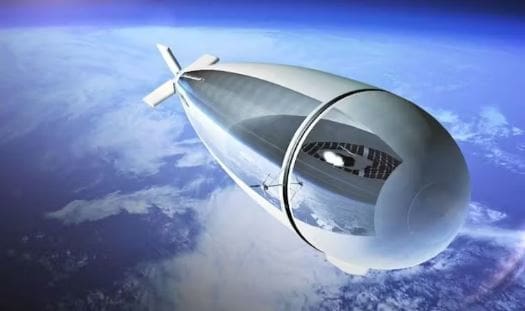
High-altitude platform stations – telecommunications equipment positioned high in the air, on uncrewed balloons, airships, gliders and airplanes – could increase social and economic equality by filling internet connectivity gaps in ground and satellite coverage. This could allow more people to participate fully in the digital age.
One of us, Mohamed-Slim Alouini, is an electrical engineer who contributed to an experiment that showed it is possible to provide high data rates and ubiquitous 5G coverage from the stratosphere. The stratosphere is the second lowest layer of the atmosphere, ranging from 4 to 30 miles above the Earth. Commercial planes usually fly in the lower part of the stratosphere. The experiment measured signals between platform stations and users on the ground in three scenarios: a person staying in one place, a person driving a car and a person operating a boat.
My colleagues measured how strong the signal is in relation to interference and background noise levels. This is one of the measures of network reliability. The results showed that the platform stations can support high-data-rate applications such as streaming 4K resolution videos and can cover 15 to 20 times the area of standard terrestrial towers.
Early attempts by Facebook and Google to commercially deploy platform stations were unsuccessful. But recent investments, technological improvements and interest from traditional aviation companies and specialized aerospace startups may change the equation.
The goal is global connectivity, a cause that brought the platform stations idea recognition in the World Economic Forum’s 2024 Top 10 Emerging Technologies report. The international industry initiative HAPS Alliance, which includes academic partners, is also pushing toward that goal.
Fast, cost effective, flexible
Platform stations would be faster, more cost effective and more flexible than satellite-based systems.
Because they keep communications equipment closer to Earth than satellites, the stations could offer stronger, higher-capacity signals. This would enable real-time communications speedy enough to communicate with standard smartphones, high-resolution capabilities for imaging tasks and greater sensitivity for sensing applications. They transmit data via free-space optics, or light beams, and large-scale antenna array systems, which can send large amounts of data quickly.
Satellites can be vulnerable to eavesdropping or jamming when their orbits bring them over adversarial countries. But platform stations remain within the airspace of a single country, which reduces that risk.
High-altitude platform stations are also easier to put in place than satellites, which have high launch and maintenance costs. And the regulatory requirements and compliance procedures required to secure spots in the stratosphere are likely to be simpler than the complex international laws governing satellite orbits. Platform stations are also easier to upgrade, so improvements could be deployed more quickly.
Platform stations are also potentially less polluting than satellite mega-constellations because satellites burn up upon reentry and can release harmful metals into the atmosphere, while platform stations can be powered by clean energy sources such as solar and green hydrogen.
The key challenges to practical platform stations are increasing the amount of time they can stay aloft to months at a time, boosting green onboard power and improving reliability – especially during automated takeoff and landing through the lower turbulent layers of the atmosphere.

Beyond satellites
Platform stations could play a critical role in emergency and humanitarian situations by supporting relief efforts when ground-based networks are damaged or inoperative.
The stations could also connect Internet of Things (IoT) devices and sensors in remote settings to better monitor the environment and manage resources.
In agriculture, the stations could use imaging and sensing technologies to help farmers monitor crop health, soil conditions and water resources.
Their capability for high-resolution imaging could also support navigation and mapping activities crucial for cartography, urban planning and disaster response.
The stations could also do double duty by carrying instruments for atmospheric monitoring, climate studies and remote sensing of Earth’s surface features, vegetation and oceans.
From balloons to airplanes
Platform stations could be based on different types of aircraft.
Balloons offer stable, long-duration operation at high altitudes and can be tethered or free-floating. Airships, also known as dirigibles or blimps, use lighter-than-air gases and are larger and more maneuverable than balloons. They’re especially well suited for surveillance, communications and research.
Gliders and powered aircraft can be controlled more precisely than balloons, which are sensitive to variations in wind speed. In addition, powered aircraft, which include drones and fixed-wing airplanes, can provide electricity to communication equipment, sensors and cameras.
Next-generation power
Platform stations could make use of diverse power sources, including increasingly lightweight and efficient solar cells, high-energy-density batteries, green hydrogen internal combustion engines, green hydrogen fuel cells, which are now at the testing stage, and eventually, laser beam powering from ground- or space-based solar stations.
The evolution of lightweight aircraft designs coupled with advancements in high-efficiency motors and propellers enable planes to fly longer and carry heavier payloads. These cutting-edge lightweight planes could lead to platform stations capable of maneuvering in the stratosphere for extended periods.
Meanwhile, improvements in stratospheric weather models and atmospheric models make it easier to predict and simulate the conditions under which the platform stations would operate.
Bridging the global digital divide
Commerical deployment of platform stations, at least for post-disaster or emergency situations, could be in place by the end of the decade. For instance, a consortium in Japan, a country with remote mountainous and island communities, has earmarked US$100 million for solar-powered, high-altitude platform stations.
Platform stations could bridge the digital divide by increasing access to critical services such as education and health care, providing new economic opportunities and improving emergency response and environmental monitoring. As advances in technology continue to drive their evolution, platform stations are set to play a crucial role in a more inclusive and resilient digital future.
- Mohamed-Slim Alouini, Distinguished Professor of Electrical and Computer Engineering, King Abdullah University of Science and Technology and Mariette DiChristina, Dean and Professor of the Practice in Journalism, College of Communication, Boston University
- This article is republished from The Conversation under a Creative Commons license. Read the original article.
