



Every year, talented young athletes go unnoticed. Some never get the chance to attend trials, others lack access to experienced coaches, and many simply don’t have the opportunities needed to demonstrate their ability.
For children playing cricket in local clubs and school nets, getting recognised can depend as much on where they live and who watches them as it does on their actual talent.
But advances in artificial intelligence (AI) are beginning to change how sporting ability can be identified and developed. By analysing player movement, technique and performance, AI offers coaches a new way to recognise potential, including in young athletes who might otherwise be overlooked.
The Challenges of Identifying Young Sporting Talent
Traditionally, talent identification has relied on coaches and scouts observing players during matches, training sessions and organised trials. While experienced coaches can recognise promising ability, judging a young athlete’s potential is rarely straightforward.
Children develop at different rates, both physically and technically. A player who excels at 12 may not necessarily be the strongest at 16, while another who initially struggles could develop into an exceptional athlete with the right coaching.
Performance can also vary considerably from one session to another. Nerves, confidence, playing conditions and unfamiliar environments can all influence how a young player performs.
For those outside established sporting pathways, the challenge is even greater. Without regular access to qualified coaching or competitive opportunities, talented children may struggle to progress beyond school or local club cricket.
This is where technology could make a difference. Rather than relying solely on occasional observations, coaches could use objective performance information to build a more complete picture of a player’s strengths and development over time.
How AI Can Recognise Sporting Potential
Computer vision is a form of AI that allows software to interpret images and video. In sport, it can be used to analyse body movements, track equipment such as cricket balls and identify patterns in athletic performance.
For cricket coaching, this creates opportunities to understand not just what happens during a delivery, but how a player achieves the result.
A young fast bowler, for example, might not generate the highest speeds but could demonstrate excellent balance, a consistent release point and accurate ball placement. These technical qualities can indicate promising foundations for future development.
Similarly, a young batter might show good footwork, strong body alignment and the ability to adjust their position when facing different deliveries.
By measuring these movements across repeated training sessions, AI could help coaches identify technical strengths that might otherwise be difficult to recognise consistently.
It also provides a useful way to monitor improvement. Rather than judging a player on a single performance, coaches can examine how their technique develops, where progress is being made and which areas need additional attention.
The aim isn’t to reduce sporting talent to a collection of numbers. It’s to give coaches more useful information when deciding how best to support individual players.
Bringing Performance Analysis to Grassroots Cricket
Detailed performance analysis has traditionally been associated with professional teams and specialist training facilities. Access to the technology, equipment and expertise required has often been limited outside elite sport.
However, developments in camera technology, computer vision and AI are making it possible to bring more advanced coaching tools into everyday sporting environments.
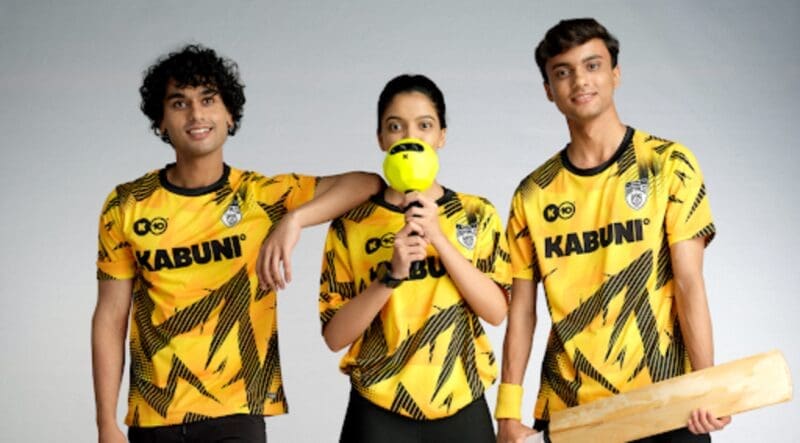
London-based Kabuni Sports is among the companies developing technology with this aim.
Its AI-powered coaching platform combines proprietary camera hardware with PlayOS software, designed to analyse player movement and ball tracking in real time.
The system is being developed to assess aspects of cricket technique, including balance, footwork, alignment and ball release, before providing personalised feedback through voice, video and visual guidance.
For schools and grassroots clubs, technology of this kind could offer new ways to support player development without requiring access to specialist facilities or professional coaching teams.
The company has also introduced grassroots initiatives in India, including the Kabuni Premier League (KPL), a schools cricket competition designed to encourage participation and create opportunities for young players.
Kabuni says its wider goal is to help more young cricketers be seen and supported, wherever they train.
By combining performance analysis with practical coaching guidance, the wider goal is to give more young cricketers the opportunity to develop their skills, regardless of their background or location.
Why Coaches Will Remain Essential
Although AI can provide valuable performance information, identifying sporting potential involves much more than measuring technique.
Confidence, determination, creativity and decision-making all contribute to a player’s development. These qualities can be difficult to measure and often become apparent only through regular coaching and competitive experience.
A young batter with an unconventional technique, for example, might still possess exceptional timing and an instinctive understanding of the game.
Physical maturity and previous coaching experience must also be considered when comparing young athletes. Performance data needs careful interpretation to avoid favouring children who have simply developed earlier or received better training.
AI is therefore best viewed as another tool available to coaches, rather than a replacement for their experience.
It can identify patterns, highlight strengths and suggest areas for improvement, while coaches provide the encouragement, judgement and personal understanding needed to turn potential into progress.
Creating More Opportunities for Young Athletes
Perhaps the greatest opportunity for AI lies in making sporting development more accessible.
Imagine a school cricketer whose progress can be followed throughout the year, with improvements in technique and consistency recorded during regular practice.
Instead of relying entirely on a single trial or competition, coaches could use this information to understand how the player is developing and whether they might benefit from further training or opportunities to compete.
Over time, more accessible performance analysis could also support talent identification beyond established academies, helping schools and local clubs recognise promising players earlier.
There are still challenges to overcome, particularly around the reliability of performance data, differences in physical development and the responsible use of technology with children.
But the potential is significant.
Not every talented young athlete will become a professional, nor should that be the only measure of success. Giving children better coaching, useful feedback and greater opportunities to improve can make a lasting difference to their experience of sport.
By bringing technology into the places where children first learn to play, AI could help ensure that sporting potential is recognised and supported, wherever it happens to emerge.
