


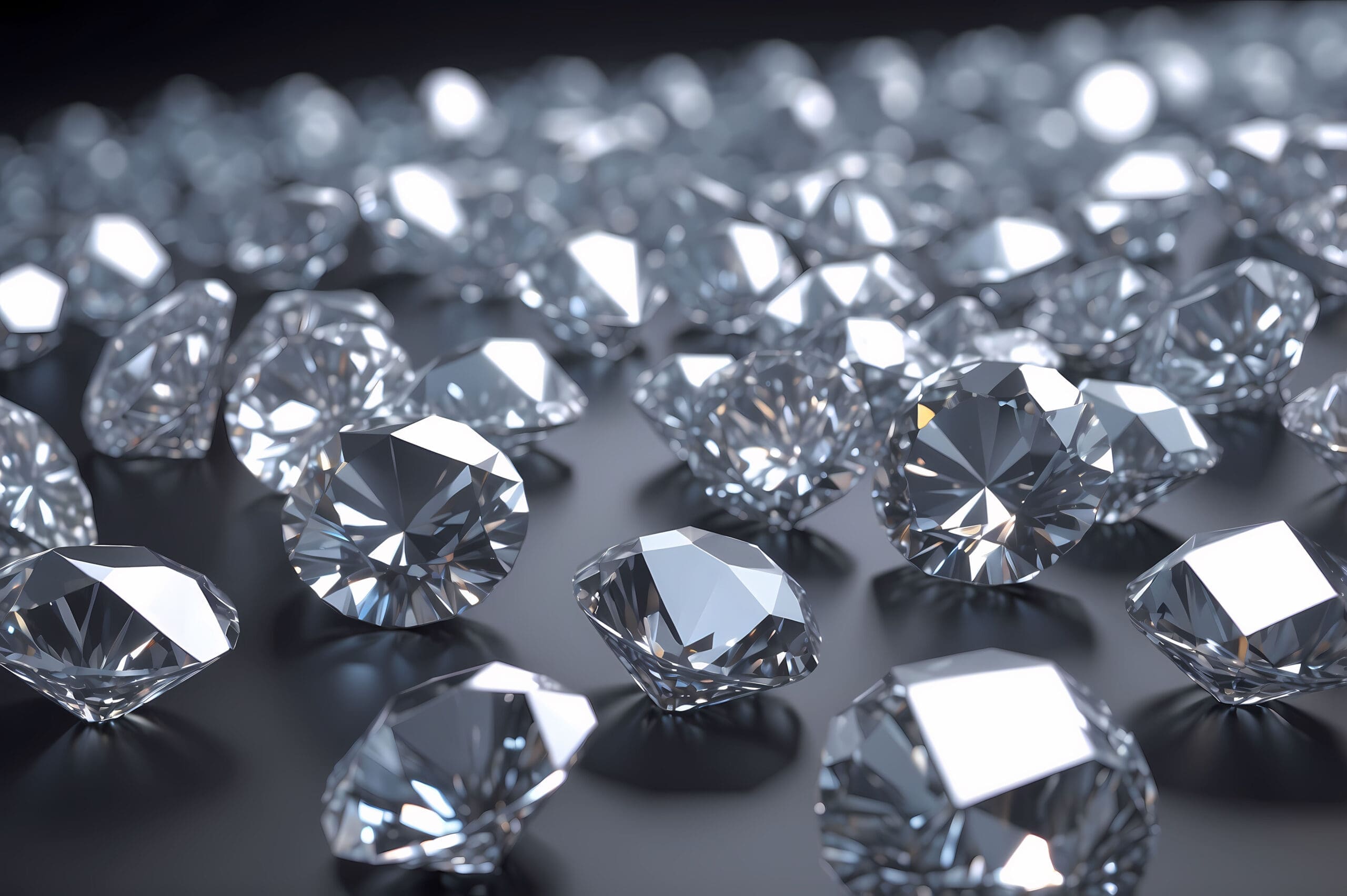
For nearly a century, the mined diamond enjoyed an uncontested reign over fine jewelry. That dynamic has undergone a fundamental shift. As consumers look more critically at gemstone science, supply chains, and retail markups, moissanite has emerged as a premier modern alternative. Originally discovered in fragments of an Arizona meteorite by French chemist Henri Moissan in 1893, silicon carbide proved too scarce in nature for commercial use. Decades of laboratory innovation later, scientists mastered the process of synthesizing pure, gem-grade crystals, giving rise to a jewel that rivals, and in specific optical metrics surpasses, the diamond.
Deciding between these two stones comes down to understanding two clear points of comparison: how they behave in the light and what they demand from a personal budget.
What Your Eyes Notice: The Optical Differences
To the untrained eye glancing across a dinner table, high-grade moissanite and fine diamond appear remarkably similar. Both are transparent, cool-toned gemstones shaped with precision faceting designed to return maximum ambient light. Under direct sunlight, spotlighting, or candlelight, however, their differing crystalline structures produce distinct optical signatures.
Refractive Index and Brilliance
Brilliance refers to the flashes of bright, white light that bounce back from a gemstone’s interior facets to the eye. This measurement depends entirely on the material’s refractive index; the speed at which light bends as it enters the stone. Diamond registers a refractive index of 2.42, giving it a crisp, classic scintillation. Moissanite carries a refractive index between 2.65 and 2.69. Because it slows and bends light more drastically than diamond, moissanite returns more raw surface brilliance, appearing noticeably brighter when viewed in identical lighting conditions.
Dispersion and “Fire”
The most striking visual distinction lies in dispersion, commonly called fire. When white light enters a faceted gem, the stone acts like a miniature prism, splitting that beam into visible spectral colors. Diamond has a dispersion rating of 0.044, which produces modest, subtle rainbow flashes interspersed with bright white light. Moissanite possesses a dispersion rating of 0.104; more than double that of a diamond.
In practical wear, this creates a lively, vivid display of colored flashes. Under intense direct sunlight or spot halogen illumination, moissanite produces vibrant flashes of red, blue, green, and orange. In larger stone sizes, this high level of fire creates a distinct sparkle that gemologists can immediately identify. For those who prioritize maximum sparkle and lively light play, this elevated dispersion is moissanite’s defining charm.
Cut, Clarity, and Color Consistency
Because mined diamonds develop deep beneath the Earth’s crust under volatile geological conditions, they regularly carry internal inclusions, feathering, and natural yellow or brown undertones. Securing a diamond that is completely colorless (D, E, or F on the gemological scale) with very high clarity requires paying a steep premium.
Moissanite, by contrast, is synthesized within carefully controlled laboratory environments. This clean growth allows manufacturers to produce stones that consistently meet top-tier color grades (often comparable to D-color diamonds) and eye-clean clarity (equivalent to VVS grades). As a result, a moissanite solitaire rarely displays cloudy inclusions, visible carbon spots, or uneven color zoning.
Everyday Durability and Wearability
Fine jewelry is meant to be worn, celebrated, and preserved across decades. Consequently, resistance to surface scratching, chipping, and environmental wear is paramount.
Mineral hardness is measured on the Mohs scale, which runs from 1 (talc) to 10 (diamond). Diamond is the hardest substance known in nature, making it virtually scratch-proof against any everyday object except another diamond.
Moissanite scores 9.25 on the Mohs scale, positioning it higher than rubies, sapphires, emeralds, and every other popular colored gemstone. At 9.25, moissanite is exceptionally tough and immune to scratches from keys, coins, dust (which contains quartz at hardness 7), and typical abrasive contact. It does not scuff, cloud over time, or lose its structural integrity with daily wear.
A high-quality moissanite ring or pendant will retain its original clarity and mirror-like surface polish twenty or thirty years down the line, requiring only periodic cleaning with warm water and mild soap to remove everyday skin oils and lotion residue.
What Your Wallet Notices: The Price Divide
While optical variations between diamond and moissanite require close inspection under direct light, the financial disparity is immediately apparent.
Moissanite decouples beauty from artificial scarcity. Because the crystals are efficiently grown in laboratories, the material does not carry mining overhead, heavy geopolitical tariffs, or speculative investment margins.
This pricing structure eliminates the traditional financial compromises buyers face when choosing between stone size, clarity, and overall jewelry construction. The savings can remain in personal savings, help fund travel, pay down debts, or cover wedding and home costs without sacrificing visual impact.
Environmental and Ethical Accountability
The decision to choose moissanite frequently extends beyond economics into sustainability. Diamond mining historically carries heavy ecological footprints, requiring open-pit excavation, massive soil displacement, and considerable energy and water consumption. Even with industry certifications like the Kimberley Process, tracking the exact human and environmental ethics of individual stones through complex global supply chains remains difficult.
Moissanite avoids these concerns entirely. Because every stone is cultivated inside high-tech research and production facilities, it involves zero open-cast mining, zero soil displacement, and an entirely traceable origin. Moissanite is intrinsically conflict-free, offering complete peace of mind for wearers who prefer their jewelry to align with personal values of environmental stewardship.
Accessible Luxury: The Nice Jewelery Approach
Online fine jewelers such as Nice Jewelery have built their core identity around bridging the gap between luxury appeal and financial accessibility. Guided by the principle of delivering all the fire of a diamond without the traditional compromise, the brand focuses exclusively on lab-grown moissanite jewelry designed for everyday wear.
Rather than positioning moissanite as a temporary placeholder, Nice Jewelery crafts lasting designs in solid S925 sterling silver finished with high-polish platinum plating. This metal pairing complements the cool, icy brilliance of D-color moissanites while offering hypoallergenic, tarnish-resistant settings that stand up to daily life.
Their catalog showcases the full versatility of the gemstone across multiple categories:
- Rings: From classic round solitaires and egg-shaped oval stones to vintage-inspired octagonal cuts and infinity twist bands, with signature one-carat and two-carat centerpieces.
- Necklaces & Pendants: Minimalist clavicle chains, solitaire pendants, and heart-cut designs crafted to catch natural movement close to the collarbone.
- Earrings: Classic stud sets ranging from 0.5 to 1 carat per ear, along with platinum-plated hoop and light-luxury drop earrings.
- Bracelets & Matching Sets: Open cuffs, delicate chain links, and coordinated three-piece sets designed for gift-ready presentations.
To back their pieces, Nice Jewelery offers free international shipping with full parcel tracking, simple exchange and return processes, and a lifetime brilliance promise confirming that the stones will never fade, cloud, or lose their characteristic fire over time.
Choosing between moissanite and diamond ultimately reflects what an individual values most in a piece of jewelry. For buyers who prize historical tradition and the geological mystique of a mineral formed billions of years ago beneath the earth, diamond retains its timeless appeal. For those who prioritize heightened optical performance, everyday resilience, guaranteed ethical production, and financial freedom, moissanite offers a compelling modern standard in fine jewelry.
