


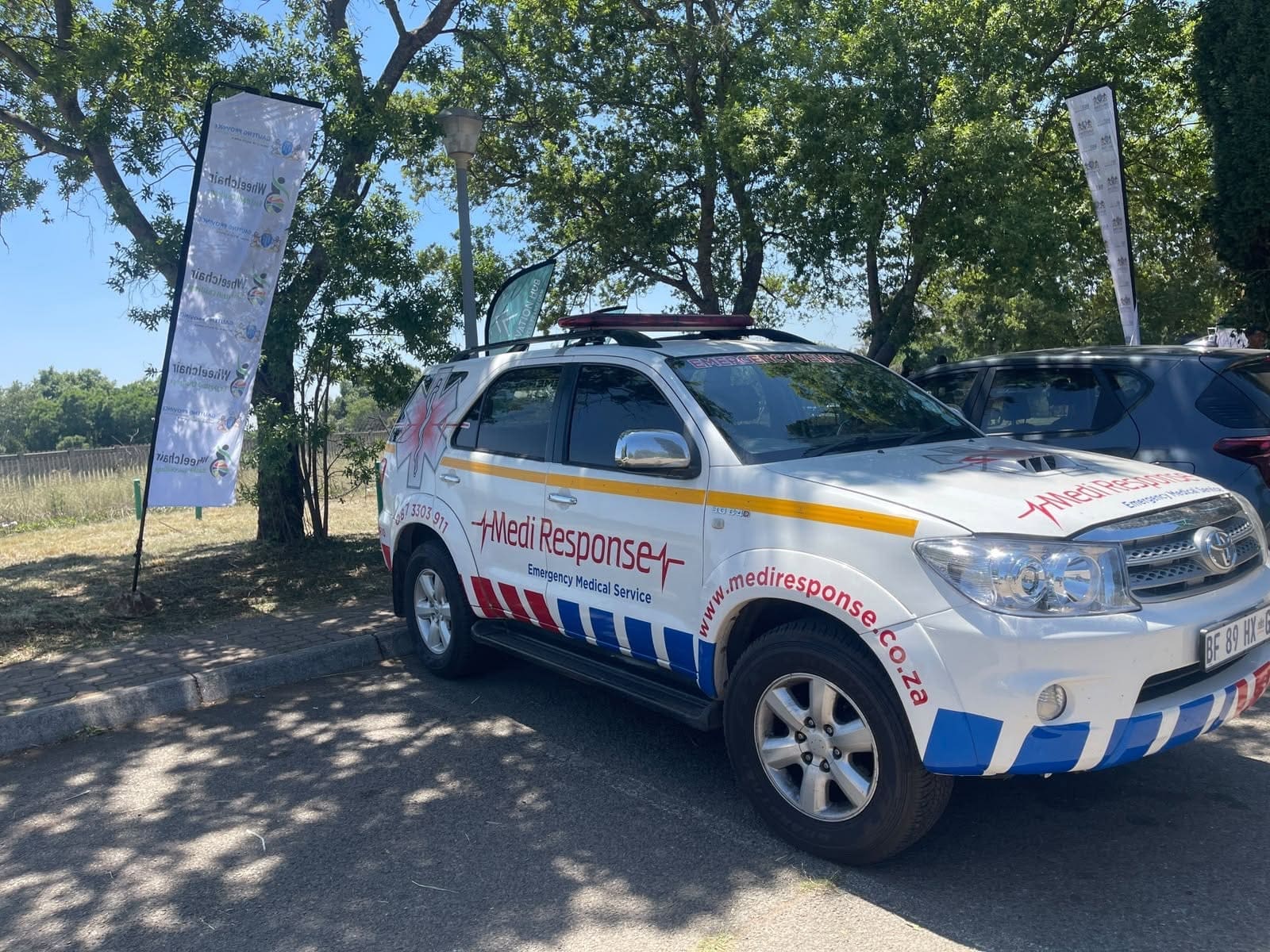
Why mines need an on-site medical specialist
When an incident stops a mine shift, every minute before skilled care arrives can cost the worker first and the operation second. From the moment of injury until the patient reaches hospital, the priority is fast help and trained hands, both on the spot and in transit.
Emergency medicine calls the period after a serious injury the golden hour, because treatment within it is linked to better outcomes. Research into the distance from mine to hospital shows that, for many South African mines, the trip cannot fit inside that hour. That gap is the clearest case for placing an on-site medical specialist at the mine itself.
The nearest hospital is further than many plans assume
A third of mines sit beyond 25 km
A recent study, The Golden Hour Gap, mapped all 245 of South Africa’s operating mines against hospitals that list 24-hour opening and measured how far each site is from the nearest one in a straight line. Roughly a third are more than 25 km from confirmed 24-hour care.
The Northern Cape is furthest from care
In the Northern Cape, two in three mines are more than 25 km from 24-hour care, so a long transfer is the norm for most operations in the province. Mines in Gauteng and the North West platinum belt face shorter distances.
A nearby town is no guarantee of emergency care
Koffiefontein shows the risk
Being close to a town can give a false sense of security. Koffiefontein mine in the Free State is 1.4 km from the town of the same name, yet its nearest 24-hour hospital is in Jagersfontein, 56.6 km away.
The closest hospital may not take emergencies at night
The study found a related trap. For 27 mines, the nearest hospital that lists 24-hour opening is more than 20 km further than the closest hospital of any kind. A plan that names the first hospital on the map, without checking whether it takes emergencies at night, can send an ambulance to the wrong door and lose time a seriously injured worker cannot spare.
What an on-site medical specialist changes
Treatment starts at the scene
An on-site medical specialist is a qualified practitioner, such as an Advanced Life Support paramedic, based at the mine for each shift. Once an incident is reported, treatment can begin within minutes, with bleeding control and airway support started where the patient lies, well ahead of any transfer.
Local knowledge saves time
A specialist who works the same operation every week knows the layout and the blasting schedule, so they can reach a patient by the quickest safe route.
Deciding what happens next
Early in a case, the on-site practitioner judges whether the patient can be managed at the mine or needs evacuation, with a doctor supporting that decision through telemedicine. Where a transfer is needed, a coordination centre confirms which hospital will accept the patient before the vehicle leaves. For the most remote sites, aeromedical evacuation can shorten the trip because an aircraft can fly close to the straight-line route, which roads seldom follow.
The value between emergencies
Health checks and site clinic care
A medical specialist earns their place on ordinary days too. Pre-deployment medicals confirm workers are fit for the demands of their roles, while ongoing surveillance flags occupational health risks early. Site clinics can treat minor injuries, so workers no longer have to travel into town for routine care.
A workforce trained in first aid
Site medical teams can also run first aid and fire training for staff. When the first person to reach an injured colleague knows what to do, the specialist arrives to find a patient who has already had basic care.
Matching medical cover to the mine
Cover scaled to the site
The right level of cover depends on a mine’s location and what it does. A site close to a confirmed 24-hour hospital may need a lean setup. A remote operation in the Northern Cape will likely need practitioners on every shift. An equipped 4×4 ambulance and an agreed air evacuation arrangement should sit alongside them.
Conclusion
Distance to the nearest hospital is fixed for every mine. What a site can control is how quickly a patient gets skilled care. Medi Response delivers this through on-site medical specialist teams of Advanced Life Support practitioners and paramedics, working from 4×4 ambulances and rapid-response vehicles.
A 24/7 operational control centre oversees each deployment and coordinates evacuation when a patient needs a higher level of care. The company has run on-site medical operations across sub-Saharan Africa, including in Mozambique and the DRC. For a remote mine, emergency care starts on site and continues through to the hospital.
