


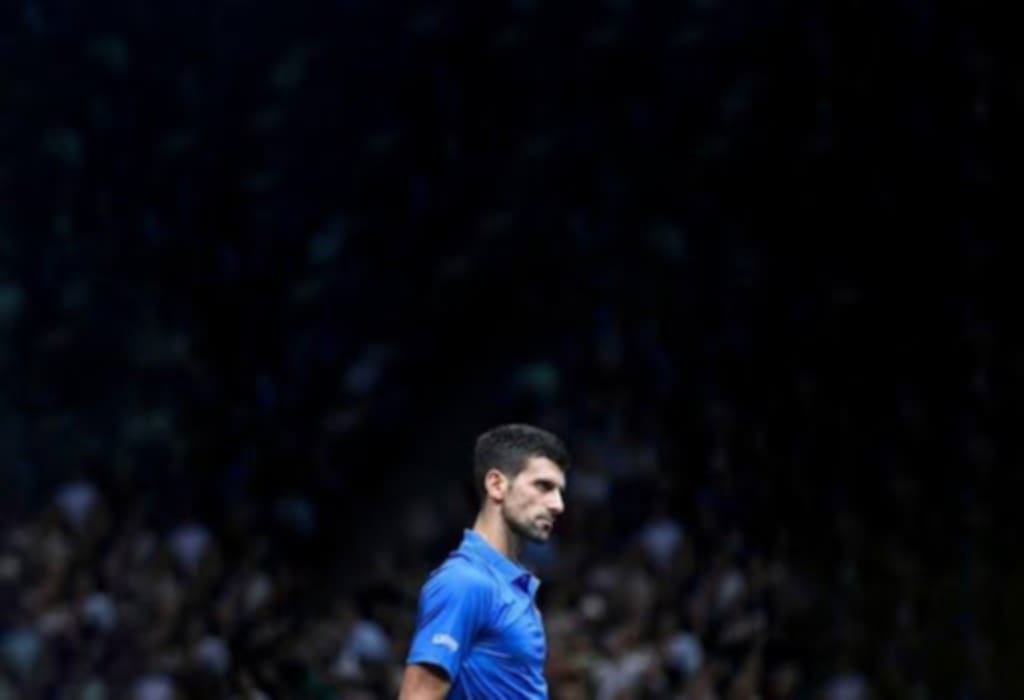
Novak Djokovic remains one of tennis’ biggest talking points despite approaching the twilight of his remarkable career. Boris Becker believes the Serbian still possesses the mindset needed to conquer Wimbledon once again.
The former Wimbledon champion shared his latest thoughts in a Telegraph column. Becker argued Djokovic’s mental strength could outweigh any physical decline during this year’s Championships.
Although younger rivals continue to emerge, Becker insists grass remains the perfect surface for experience, intelligence and composure under pressure.
Why Becker Believes Djokovic Can Still Win Wimbledon
Becker refused to dismiss Djokovic’s chances of lifting another Wimbledon title. Instead, he argued the tournament rewards intelligence as much as athleticism. The German believes the Serbian has lost some physical sharpness with age. However, he feels Wimbledon remains unique because the mental side of the game often proves decisive. That combination, Becker believes, gives Djokovic a realistic opportunity to add another Grand Slam trophy despite facing a younger generation filled with powerful opponents and exceptional athletes.
The former coach explained why grass courts demand a different mindset. Opportunities disappear much faster than they do on clay. A missed break point can completely change a set. Players rarely receive many second chances. Consequently, Becker believes mental resilience becomes even more valuable on the sport’s fastest surface.
Becker wrote: “Could it be Novak Djokovic’s summer at Wimbledon? I wouldn’t rule it out. Even if he has lost half a step since his peak years as an athlete, this tournament is all about the mind.”
Grass Rewards Experience and Intelligence
According to Becker, Wimbledon consistently rewards players capable of reading matches better than everyone else. Physical strength certainly matters. Nevertheless, tactical awareness often separates champions from contenders on grass.
Becker believes Djokovic (1.56) remains among the smartest competitors in tennis. He praised the Serbian’s ability to study opponents and recognise patterns during crucial moments. Every server has preferred locations under pressure. Therefore, Becker believes preparation before stepping onto court remains essential. That knowledge allows elite players to anticipate instead of simply reacting, which becomes especially valuable during the biggest points in tight matches.
He also described Djokovic as the game’s elder statesman. While younger players may move faster, Becker feels experience frequently proves decisive during pressure moments. Furthermore, he believes Djokovic’s calmness allows him to thrive when others become tense.
Coaching a Perfectionist
Becker reflected on the three years they spent working together. Those seasons produced two Wimbledon titles and strengthened Djokovic’s already incredible legacy. During that period, Becker discovered just how demanding his former pupil could be.
He wrote: “During the three years that I spent coaching Novak, I learned a few Serbian swearwords. If you get the game plan wrong, he will be p—-d off, because the man is the ultimate perfectionist.”
That perfectionism, however, became one of Djokovic’s greatest strengths. Becker explained they worked hard on introducing greater unpredictability into his game. Rather than relying on consistency alone, Djokovic learned to surprise opponents with bold decisions. As a result, Becker believes he became even more dangerous on grass.
The German also praised Djokovic’s bravery during decisive moments. Instead of waiting for mistakes, Becker said his former player often seized control. Those aggressive decisions frequently shifted momentum when matches reached their most important stages.
Tactical Changes Sparked Wimbledon Success
Becker revealed one adjustment transformed Djokovic’s career trajectory. Before they started working together, Djokovic often positioned himself several metres behind the baseline. That defensive position extended rallies and drained valuable energy.
Instead, Becker encouraged him to play much closer to the baseline. The adjustment allowed Djokovic to take time away from opponents. It also shortened matches considerably. Although the change appeared simple, its long-term impact proved enormous, because it not only reduced the physical burden across a fortnight but also increased the constant pressure placed upon opponents, allowing Djokovic to preserve energy for later rounds while simultaneously dictating rallies more frequently against the world’s best players.
Becker explained that shorter points became another major objective. Endless baseline exchanges no longer suited Djokovic’s strengths. Consequently, the Serbian adopted a far more aggressive approach.
He recalled telling Djokovic: “Do it three times, and then go for the winner.” That philosophy encouraged quicker decision-making and prevented unnecessary physical exhaustion.
Serve Became a Crucial Weapon
Another important area involved Djokovic’s serve. Becker believed a more reliable delivery would save precious energy across long tournaments. Together, they simplified the service motion and removed unnecessary technical complications.
That improvement paid immediate dividends. Djokovic developed a dependable serve capable of producing free points during difficult moments. Moreover, Becker believes it became one of the foundations of his continued Wimbledon success.
The German admitted Djokovic occasionally became too focused on technical details. Becker regularly reminded him not to overthink every stroke. Tennis requires instinctive reactions. Players simply cannot hesitate when facing world-class pace.
Eventually, Djokovic embraced that balance between technical excellence and natural instinct. Becker believes that willingness to evolve separates the greatest champions from everyone else.
Becker Hails Djokovic’s Extraordinary Intelligence
Beyond tennis, Becker highlighted Djokovic’s remarkable intellect. He believes the Serbian possesses exceptional curiosity about life outside sport. That quality, in Becker’s view, helps explain his longevity and adaptability.
Becker wrote: “He soon understood everything we worked on and took it into his game. This is what the great players do: they evolve. And Novak, as his record proves, is the greatest of all time.”
He continued by praising Djokovic’s broad interests and language skills. Becker also referenced inventor Nikola Tesla as Djokovic’s personal hero. Those intellectual qualities, Becker argued, reflect the same analytical mindset visible throughout his tennis career.
Comparisons With Sinner and Alcaraz
Becker also compared Djokovic with world number one Jannik Sinner. He believes both players share outstanding tactical intelligence. Additionally, Becker credited coach Darren Cahill for helping Sinner improve his serve in recent seasons.
Meanwhile, Becker described Carlos Alcaraz very differently. He argued the Spaniard resembles Roger Federer because both rely heavily on creativity rather than rigid planning. Their instinctive approach contrasts sharply with Djokovic’s calculated style. Although each path can produce greatness, Becker believes Djokovic’s detailed preparation remains perfectly suited to grass-court tennis.
Looking ahead, Becker hopes Djokovic continues competing until the 2028 Olympic Games in Los Angeles. However, he warned that limited tournament schedules could become problematic. Even great champions need regular match practice. Fans, analysts and even those following online sports betting sites such as Easybet will undoubtedly continue watching closely as Djokovic attempts to prove Becker’s confidence justified during another fascinating Wimbledon campaign.


