


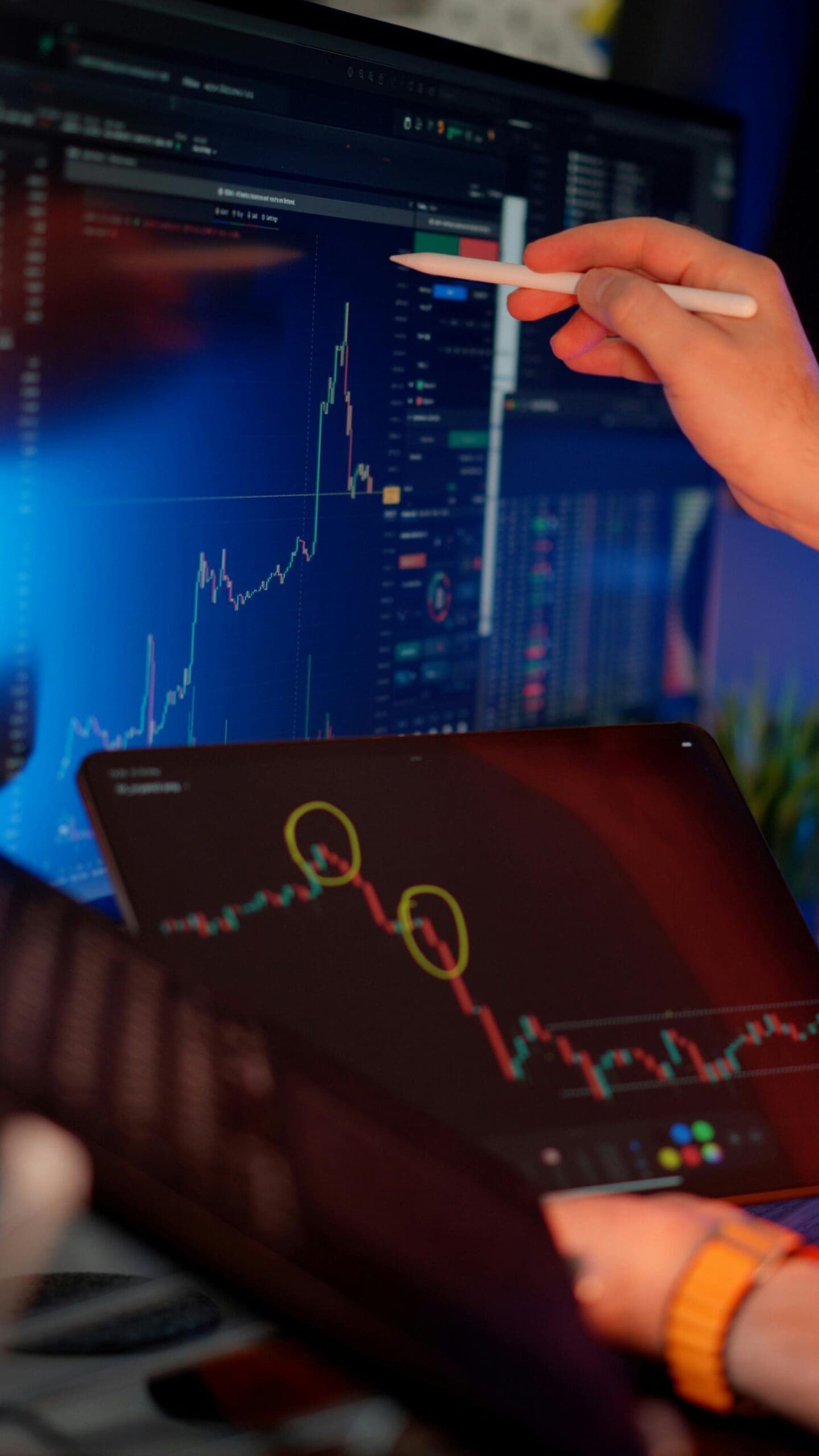
The blend of artificial intelligence with algorithmic implementation really brings significant changes to global currency exchanges. Trading is gradually shifting from continuous manual intervention to more technologically advanced and faster systems. This transition means that you will eventually be able to trade based on data rather than emotions, using technologies previously accessible only to institutional traders. At the same time, strategies implemented via algorithms may leverage data more quickly.
The foreign exchange market is really changing rapidly as well. Trading floors with live brokers and phone calls gave way to cloud servers and trading algorithms.
Now the currency exchange market is operating at such a rapid pace that no single individual could ever make sense of what is going on there in a timely manner. The reason for introducing such systems to the market is not solely about increasing trading speeds. It is equally important to apply logic in a volatile environment.
The Rise of Algorithmic Precision
Manual trading often runs into familiar psychological traps such as fear, greed or hesitation after losses. Algorithms remove many of those issues by placing trades according to predefined rules and mathematical models. That means entries and exits can stay aligned with your strategy regardless of headlines, pressure or short-term market emotion.
In practice, consistency becomes the goal rather than something traders struggle to maintain.
Technology also allows you to backtest strategies against years of historical data in seconds. This gives a clearer picture of how a system may have performed through different economic cycles and market environments.
It adds a layer of validation that manual chart review cannot easily match. By reducing guesswork, automation can turn trading into a more structured process with a stronger focus on protecting capital.
Intelligent Market Navigation
Modern systems increasingly use machine learning to respond to changing conditions in real time. Unlike older static programs, newer models can detect shifting behavior and adjust their execution. That matters in foreign exchange, where one central bank announcement can reverse a trend within minutes and leave manual traders trying to catch up.
By using a forex bot, you can monitor multiple currency pairs at once, spotting breakout moves or pricing inefficiencies across different regions and sessions. These tools continuously process large volumes of market data and technical indicators, helping ensure that potential setups are not missed while you are away from the screen.
It also means your strategy can remain active during quieter hours as well as more volatile periods.
Enhancing Execution Speed and Efficiency
In today’s markets, even small delays can matter. Automated systems can place orders and manage risk faster than manual execution, helping reduce slippage and improve price efficiency. This can be especially useful during volatile moments, such as interest rate announcements, when markets move quickly and hesitation can be costly.
Key benefits of automated execution include:
- Reduced emotional bias and fatigue during long trading sessions.
- The ability to run simulations and stress tests on active strategies.
- Faster order placement through stronger technical infrastructure.
- Consistent use of stop-losses and predefined risk controls.
When these tasks are handled automatically, your attention can shift from clicking buttons to managing the bigger picture of your portfolio. That can create a more scalable approach to growth without demanding more screen time or mental energy each day.
For many traders, it changes the market from a constant source of pressure into a more manageable technical challenge.
The Democratization of Financial Technology
Advanced trading tools were once mostly limited to investment banks and hedge funds. Today, better computing power and retail-friendly platforms have made those capabilities more widely available. As a result, independent traders can now access tools that previously required major institutional resources.
This wider access has also created active communities of developers and strategists who test, improve and share ideas. Ongoing collaboration helps keep software under review and pushes constant refinement. As platforms become easier to use, the barrier to entry for professional-style execution continues to fall.
Increasingly, success depends less on company size and more on the quality of your process.
Integrating Risk Management and Security
Although there are clear benefits to automation, the industry’s future growth also depends on security and stability. Automated software should be equipped with a protection system that guards against disconnections, server breakdowns and other factors that may affect internet connectivity and cause unintentional exposure or delays in trade execution.
Modern technologies have enabled higher uptime through backup power supplies, alternative internet connections and virtual private servers.
There may be further developments of fail-safe solutions that automatically terminate trades under abnormal market circumstances. This can serve as a safeguard in the event of shock incidents or other unforeseen disruptions.
Certain platforms could provide real-time notifications that allow users to take immediate actions if the platform goes down or exceeds the risk limit. With advances in cybersecurity and technological infrastructure, automated trading platforms are bound to offer greater stability for traders who focus on preserving their capital.


2 Comments
You’re spot on about AI changing the game for algo traders. I’ve been burned by off-the-shelf EAs that don’t fit my edge, so I’ve been using Ratio X EA Generator to build custom bots that match my exact entry rules and drawdown limits — way better than guessing if some template strategy will hold up in a prop firm challenge. You literally describe your logic in plain English and it generates the MQL5 code, no coding skills needed. Has saved me months of backtest trial-and-error. Curious if you’ve tried any no-code builders like that, or are you still hand-coding your strategies?
You’re spot on about AI + algorithms changing the game, but I’ve learned the hard way that one “smart” bot doesn’t cut it across different market regimes. I’ve torched accounts on 20+ EAs that killed it in backtests but couldn’t handle regime shifts in live trading. What finally worked was treating this like a toolkit instead of a silver bullet—I run Ratio X Toolbox (www.ratioxtrade.com) now, which gives me different EAs for ranging vs trending conditions rather than forcing one bot to do everything. The diversification across scenarios has eliminated the drawdown disasters I used to see.