

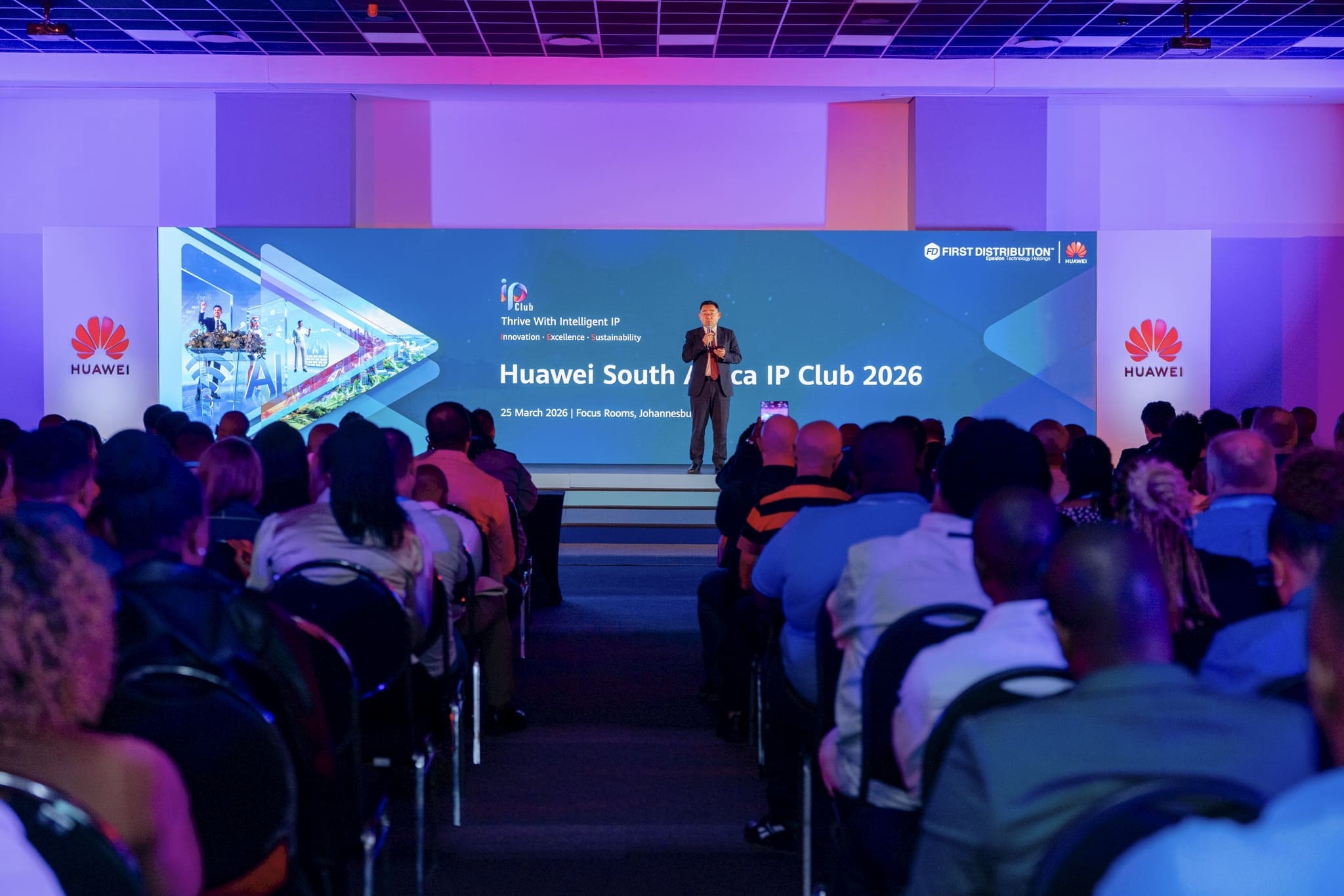
Huawei South Africa showcased its Xinghe portfolio of AI-driven networking solutions at its IP Club 2026 event.
AI-driven networking is moving from theory to deployment, and Huawei South Africa is leaning into that future. A key part of that is its Xinghe portfolio – a suite of AI-driven solutions designed to secure and optimise enterprise networks – showcased at IP Club 2026. The event drew more than 450 customers, partners and industry stakeholders.
This shift is driven by growing pressure from increasingly sophisticated, AI-driven cyber threats. As these threats evolve, traditional security models are falling short. Companies now need systems that can monitor, diagnose, and respond in real time.
These ideas were unpacked at Huawei’s IP Club 2026 event, held at Focus Rooms in Johannesburg on 25 March. A key focus was Huawei’s AI Campus approach, which combines existing network infrastructure with AI-driven tools such as iMaster NCE and NetMaster. Together, these systems detect threats automatically while improving network performance and security.
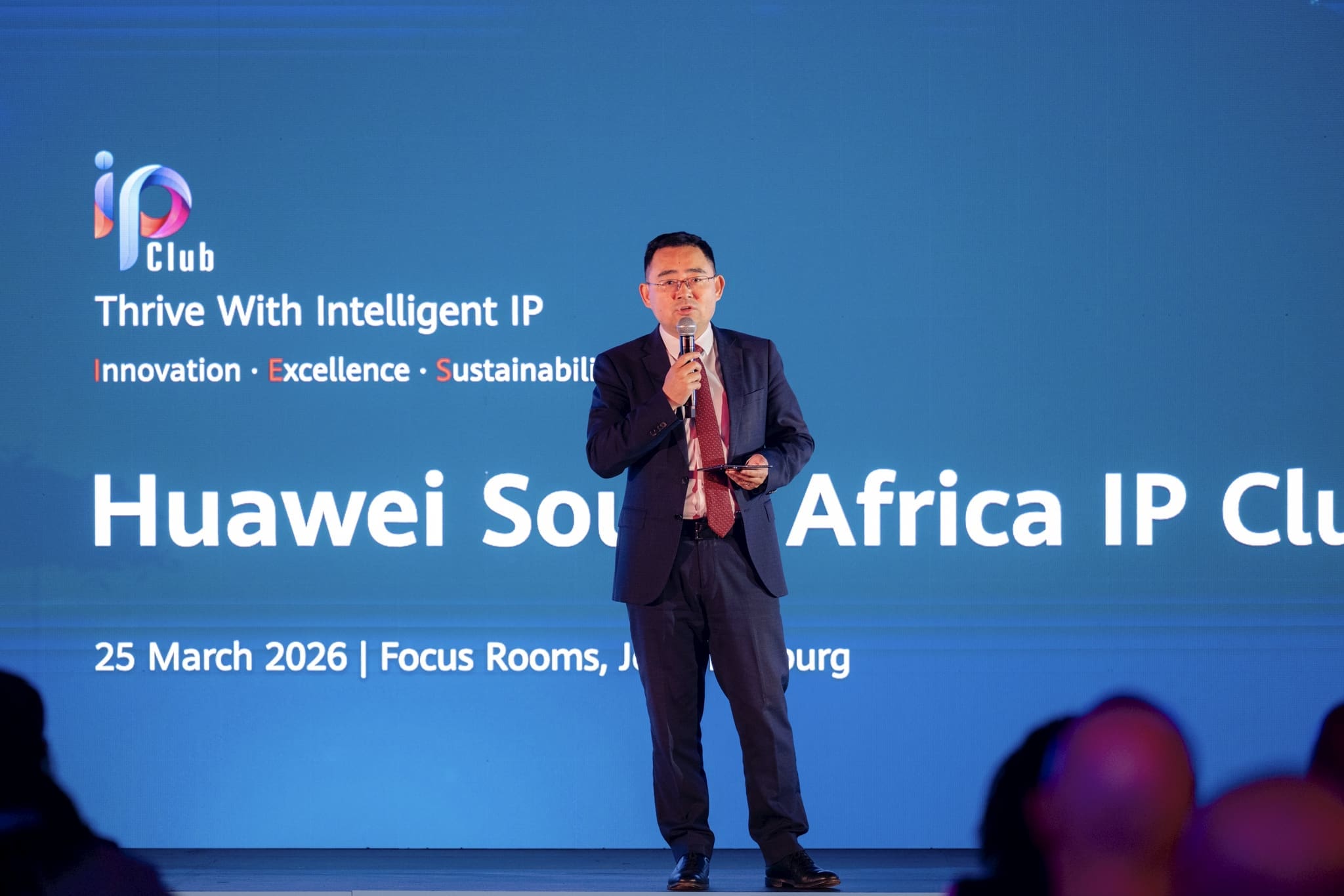
In his opening speech, Kui Zheng, CEO of Huawei Enterprise South Africa, highlighted how Huawei is responding to these shifts by focusing on secure and future-ready network solutions. “Everywhere we look, people are using AI. AI makes our business faster, smarter, and better. But, as network and IT leaders, we know the truth: AI also brings new dangers.”
One of the biggest cybersecurity threats, Zheng explains, is ransomware. And the drive behind these crimes is financial gain.
Expanding on this, Yanjun Yu, Senior Principal Architect at the AnShi Lab, Edison Research Center, who travelled from Canada, pointed to how cybercrime has evolved into a structured economy. “Nowadays, most cybercrimes are driven by financial gain. Organised cybercriminals operate like thriving businesses. They offer many different types of services, for example, malware as a service and ransomware as a service.”
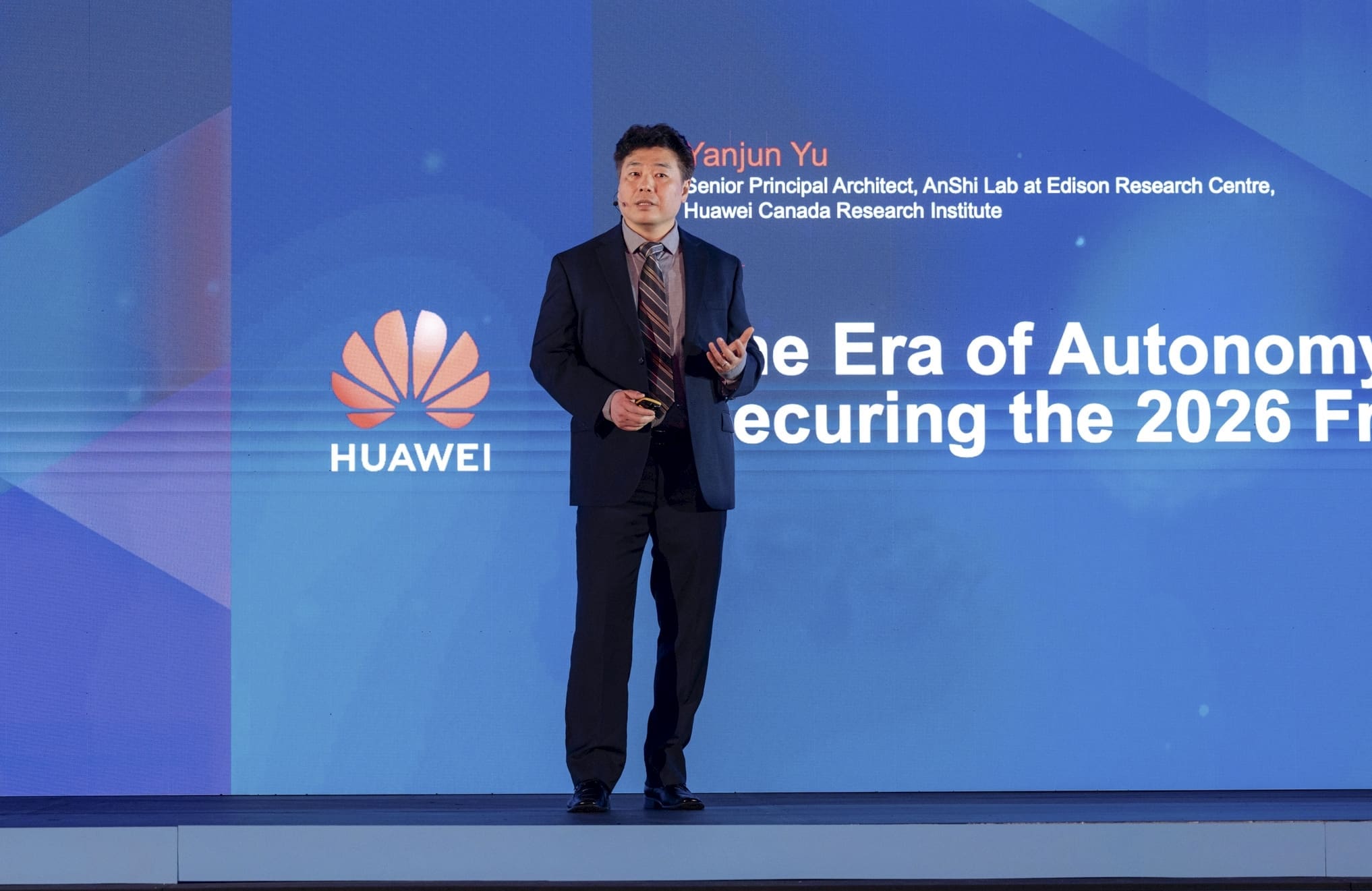
He pointed to recent high-profile ransomware incidents in South Africa, adding, “All these attacks cause major severe service disruption, or data breaches, or both. […] The damage is significant.”
To address these new challenges, Huawei positions its Xinghe portfolio as a comprehensive suite of AI-driven solutions that support more intelligent, future-ready networks.
Huawei Xinghe AI Unified SASE Solution
Traditional network architectures were built around a single central system, but companies have since adopted hybrid work models. Businesses now operate across diverse cloud and remote environments. This makes security harder to enforce and systems easier to exploit.
Huawei’s Galaxy AI Fusion SASE solution uses an “AI vs. AI” approach to fight fire with fire. It uses AI to detect and respond to cyber threats powered by AI. The system connects everything in a business and protects it without slowing operations down or relying too heavily on human intervention.
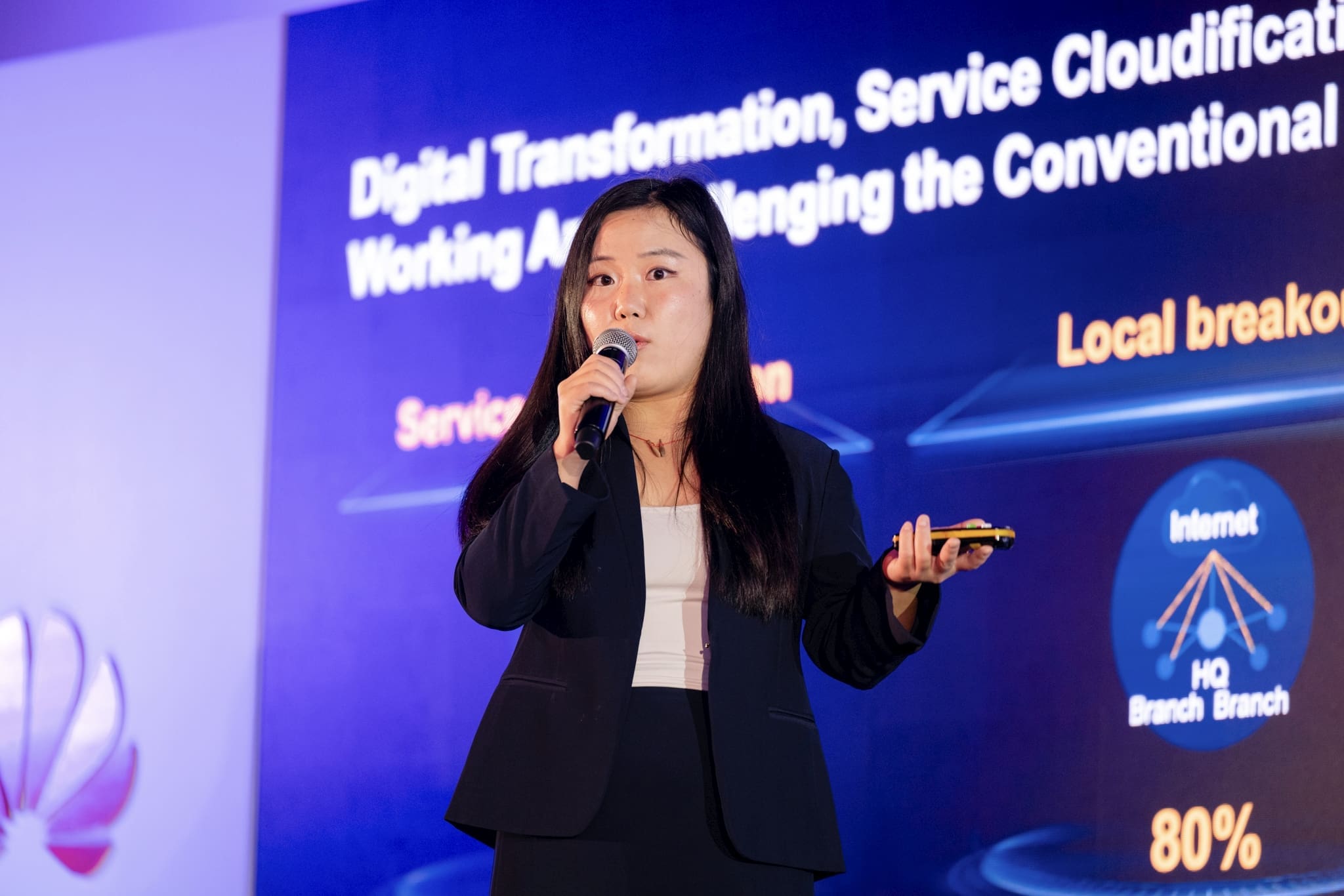
Han Wu, Product Manager at Huawei Southern Africa ICT Marketing & Solution Sales, said the rise of AI is making an already complex security environment even harder to manage. With multi-cloud systems and a remote workforce, the traditional perimeter model is losing relevance fast.
Han explains: “The traditional defense method of focusing on the data and data centres can no longer meet the needs of the traditional and frequent service success.” She says in this new environment, Huawei is using AI to build an all-scenario intelligent protection system for customers.
Used across sectors including government, transport, finance and education, it has been proven to reduce risk, cut complexity and maintain consistent security across remote users and data centres.
Xinghe portfolio overview
Huawei positioned its approach as spanning multiple layers of enterprise infrastructure, from campus networks to WAN and data centre environments.
- AI Campus: Builds secure and intelligent campus networks using AI to improve user experience and integration across environments.
- Intelligent WAN: Provides a secure and intelligent network foundation that connects distributed environments, with built-in automation and security to support performance and reliability at scale.
- AI Fabric: Supports always-on data centre networks with enhanced automation and intelligent operations to improve reliability and performance.
- Unified SASE: Delivers AI-powered, end-to-end security across networks, addressing evolving cyber threats through more adaptive and integrated protection.
The event also emphasised the importance of collaboration across South Africa’s ICT ecosystem by demonstrating how AI-driven networks work in real-world environments.
Huawei is working with Business Connexion (BCX) as its primary implementation partner to bring this solution to local enterprises and public sectors. Through this partnership, integrated cloud and cybersecurity services can now be tailored to the region.
BCX sits behind much of South Africa’s digital infrastructure – from providing critical telecommunication services to enable elections in South Africa, to managing the dispensation of medication within the pharmaceutical network, and enabling transactions within service stations and ATMs. Therefore, customer service availability is crucial, powered by an always-on and secure network.
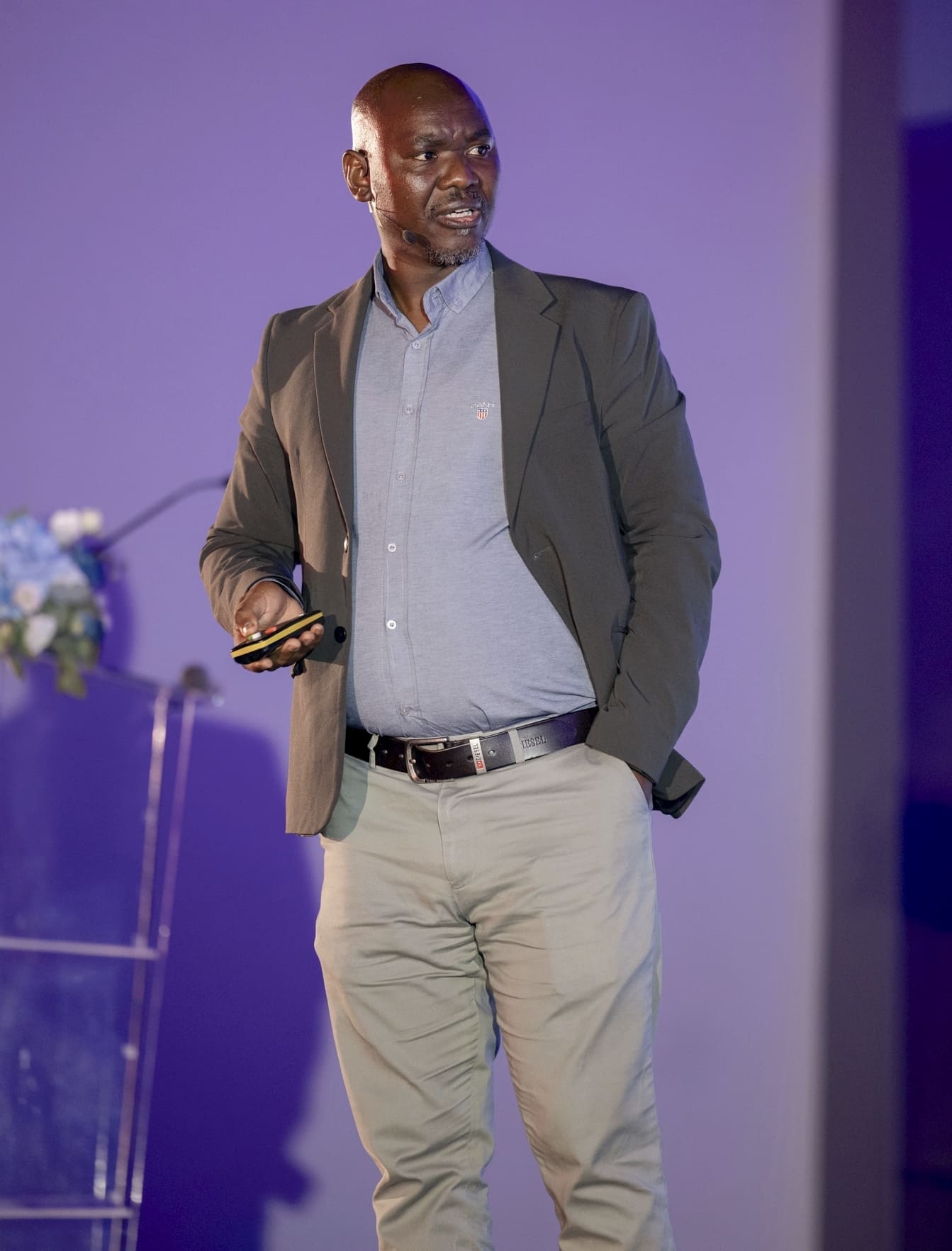
Lucky Sibanyoni, Sales Business Development Executive at BCX, put it plainly: “We are here to solve customer pain points—developing and deploying solutions that address our customers’ challenges and improve quality of experience for their end customers and society at large.”
Through its partnership with Huawei, BCX is upgrading legacy systems with newer, AI-supported infrastructure. These systems reduce downtime, improve performance, and give teams clearer visibility across complex environments. The result is more stable, consistent services for the businesses that rely on them.
With initiatives such as the IP Club, Huawei supports South Africa’s digital transformation across the country’s most vital sectors, including education, healthcare, and enterprise. These initiatives focus on skills development and innovation, while helping organisations strengthen and modernise their networks.
Huawei is also expanding its IP Club community through a structured member recruitment programme, designed to bring together ICT professionals to connect, learn and exchange expertise in the IP domain.
The initiative offers members access to exclusive technical workshops, global expert engagement and tailored programmes, strengthening skills development and collaboration across South Africa’s digital ecosystem.
The direction is clear: a stronger focus on AI-driven networking and more secure, adaptive systems.
