

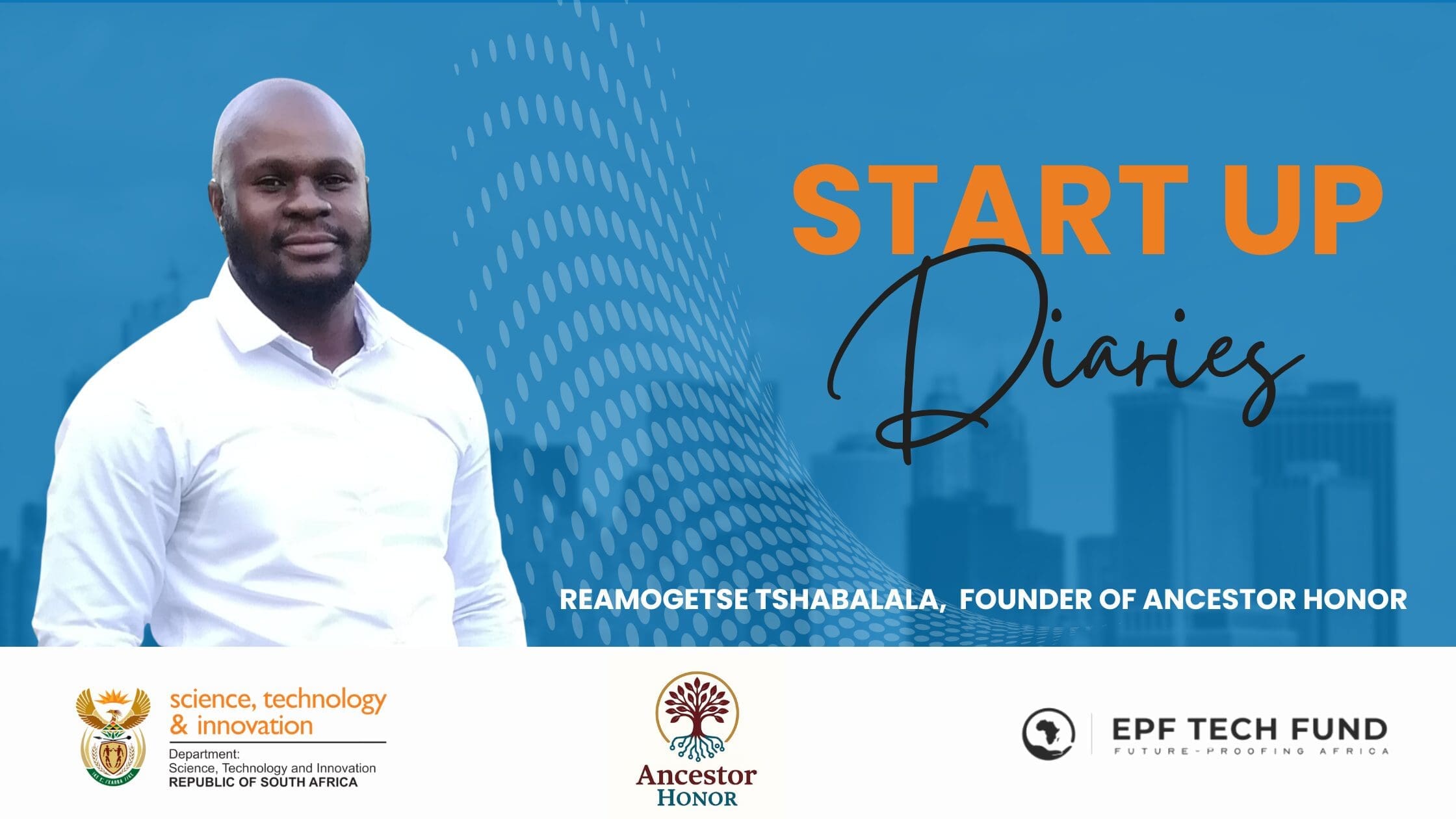
In many African homes, history does not live in books, but it lives in people. In stories told at family gatherings, in names passed down through generations, in quiet knowledge carried by elders about who we are, where we come from, and even the illnesses that seem to follow certain bloodlines.
But what happens when those voices are no longer there? Reamogetse Tshabalala asked this question not as an abstract idea, but as a lived reality. Through his work in the funeral and tombstone industry, he witnessed something profound; families searching not just for graves, but for connections, for answers and for pieces of themselves that had quietly disappeared over time.
Records were incomplete, graves were difficult to trace, stories were fragmented,
and with each gap, something deeper was lost, identity, continuity, and critical knowledge that could shape future generations. This is where Ancestor Honor begins, not as a product, but as a response.
At its core, Ancestor Honor is an AI-powered digital platform that transforms memory into something tangible, structured, and enduring. What started as a grave locator has evolved into a living, breathing archive where ancestral records, lineage mapping, oral histories, and hereditary health insights converge. But this is not just about preserving the past, it is about activating it.
Because within family histories lie patterns of resilience, of struggle, and of health. By capturing and connecting this information, Ancestor Honor allows families to see themselves more clearly; to understand inherited health risks earlier, to make more informed decisions, and to move from reactive care to preventative wellbeing. In this way, memory becomes more than remembrance, it becomes medicine.
As Tshabalala puts it: “We’ve always known that our history matters. What we’re doing now is showing that it can also protect us. Your family story is not just something you carry, it’s something that can guide how you live.” Yet Ancestor Honor does not stop at data.
It recognises that in many cultures, honouring loved ones is an ongoing act. Through its integrated marketplace, the platform connects families to services such as grave care, memorial offerings, and funeral support creating a meaningful ecosystem, while also opening economic opportunities for local service providers. What emerges is something larger than a platform, it is an infrastructure for ancestral intelligence.
One that has the potential to reshape how healthcare systems understand patients, how insurers assess risk, and how communities long excluded from formal data systems reclaim ownership of their narratives. In a world where data is power, the world asks a critical question, “who gets to own their story and who gets left out?” By digitising heritage and centring African knowledge systems, Ancestor Honor offers a powerful answer.
Looking ahead, the vision is expansive; to serve families across the continent and beyond, ensuring that no story is lost, no lineage erased, and no generation disconnected from its roots. Because the past is not only behind us, but it is within us.
And when we choose to preserve it intentionally, intelligently, and collectively
we don’t just remember where we come from. We begin to shape where we are going.
