





LiDAR technology addresses limitations, such as slow capture times, limited range, and indoor-only constraints, of older methods, thanks to LiDAR’s automation, efficiency, and the ability to capture a space’s or object’s full geometry with precision, with millimeter accuracy. It works well both in indoor and outdoor conditions, including total darkness or bright outdoors.
That’s why there is rarely any industry that won’t benefit from using LiDAR technology. From real estate and construction to mining and self-driving vehicles, it’s everywhere now.
Let’s have a quick, easy-to-comprehend overview of LiDAR Technology and its use cases:
What is LiDAR technology?
LiDAR (Light Detection and Ranging) is a remote-sensing technology that uses laser pulses to measure precise distances in real time, faster, with greater precision and high resolution.
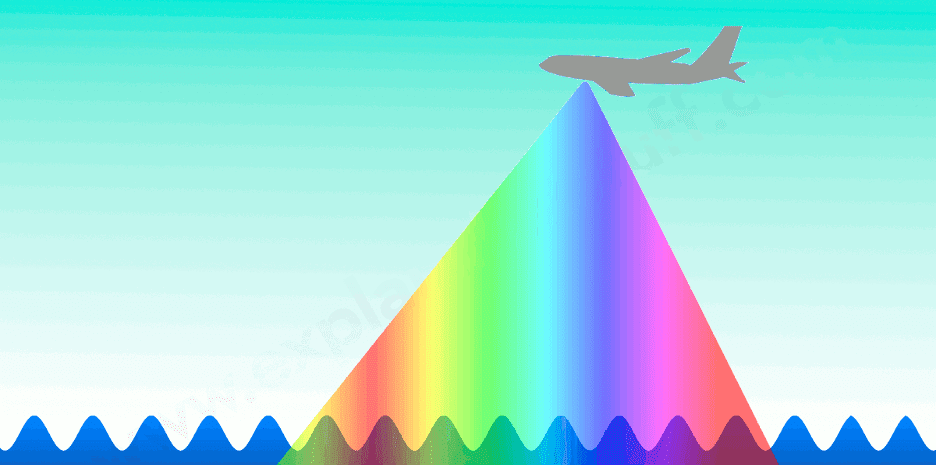
Those laser pulses bounce off surfaces and return to the device (scanner), which calculates distance faster. As pulses bounce off, they create millions of data points (called LiDAR point cloud), combining into a dense 3D visualization of real-world objects and spaces.
Key components of a typical LiDAR instrument
- a laser scanner that emits laser beams
- a LiDAR sensor that detects and collects returning light pulses
- a processor that measures the distance and time and creates LiDAR point clouds.
- time-keeping electronics
- an inertial measurement unit (IMU)
- GPS
LiDAR technology applications and use cases
LiDAR technology is especially useful in fields requiring accurate spatial data and visual documentation. It helps professionals get a real view of the real world, which helps them move faster, reduce errors, and make more confident decisions.
Agriculture: To measure agricultural landscape and terrain, estimate crop biomass, and identify soil qualities by mapping differences in depth, slope, wetness, and aspect.
Architecture, engineering, and construction (AEC): Scanning a space before, during, and after a project to record as-built conditions and progress.
Aerospace and defense: Terrain mapping, target tracking, mine hunting, cloud imaging, and advanced battlefield visualizations for mission planning.
Automotive: Advanced driver assistance systems (ADAS) and self-driving cars help drivers see and traverse roads.
Insurance and restoration: Create thorough, high-resolution 3D scans of damaged properties to plan restoration scopes and insurance claims.
Environmental mapping and conservation: Map forests, wetlands, and watersheds. LiDAR technology can penetrate vegetation and disclose the ground surface beneath, allowing researchers to monitor erosion, track deforestation, and predict floodplains with high precision.
Retail and commercial space optimization: Analyzing layout efficiency, testing merchandising tactics, and ensuring consistency across several sites. Measure aisle lengths, fixture locations, and foot circulation routes.
Robotics: To provide robots with enhanced mapping and navigation skills. To correctly assess distances between the robot and its surroundings, enabling real-time decision-making in dynamic contexts.
As mentioned above, the LiDAR technology has so many applications thanks to the accuracy, speed, and precision it offers. The technology is continuously developing, enabling broader adoption across various industries and applications. So, expect many more developments in the LiDAR technology.


