


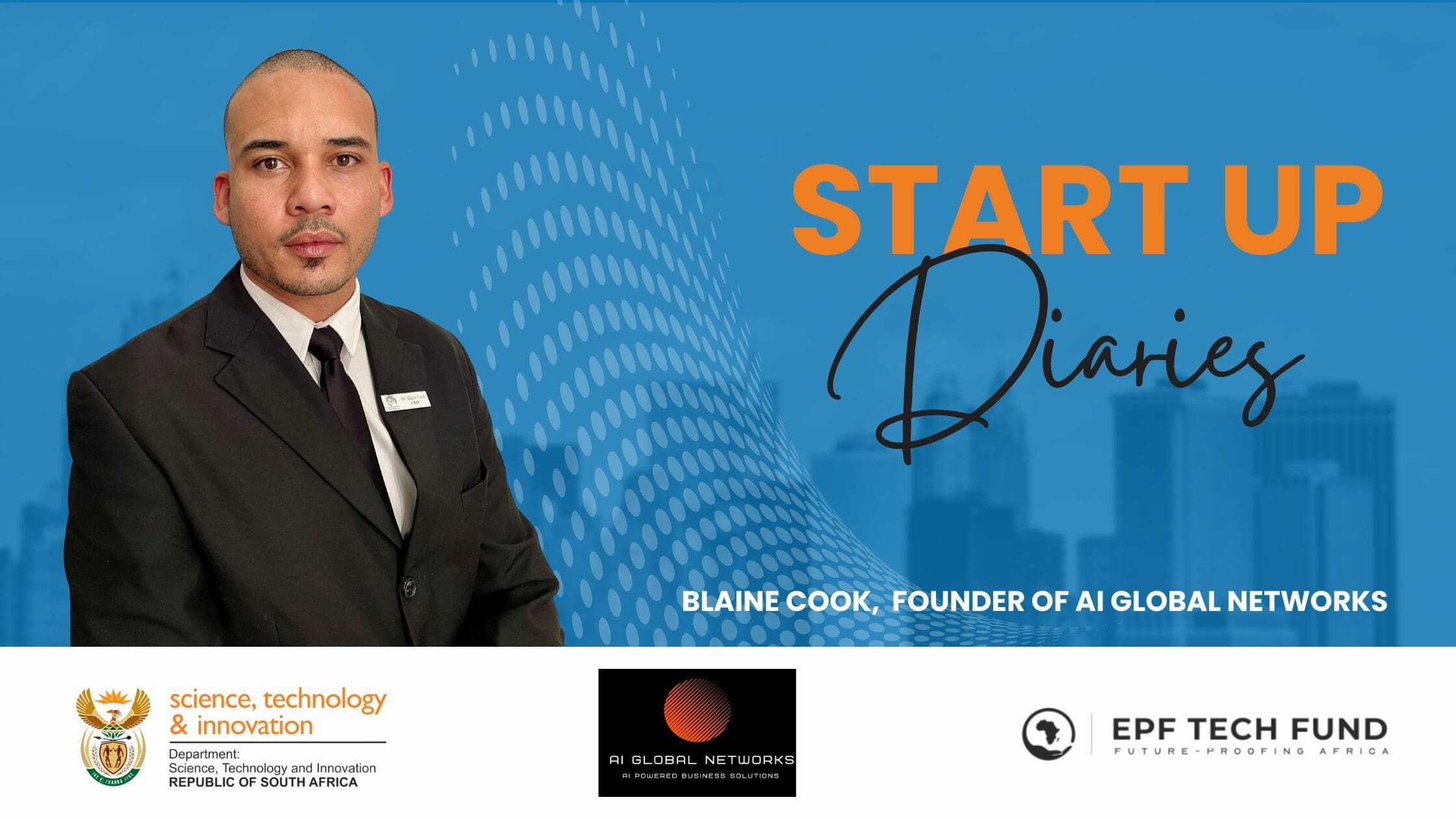
AI Global Networks (AGN) is taking on one of Africa’s most pressing challenges in the digital age, the widening gap between rapid technological progress and meaningful access to it. Founded by Blaine Cook, the startup is driven by a clear, human-centered belief, that when people are equipped with knowledge and the right tools, they can fundamentally change the direction of their lives.
Cook’s commitment to this mission stems from a personal experience, he grew up surrounded by capable, hardworking people whose potential was constrained not by talent or effort, but by limited access to emerging industries. As artificial intelligence began reshaping economies worldwide, he recognized that the divide was no longer theoretical it was accelerating.
“The moment I realized how wide that gap had become, especially with AI moving so fast, I knew something had to exist to bridge it,” he says.
AGN was established to serve as that bridge. While many startups are built to survive market pressures, AGN is structured to do more than endure, it is designed to shift outcomes. The company starts by reframing what technology can feel like for ordinary people, not distant, intimidating, or reserved for a select few, but accessible, practical, and achievable.
AGN works on two interconnected fronts. At the community level, the startup introduces AI skills to individuals who may never have been exposed to the field, opening pathways to employment, entrepreneurship, and upward mobility. At the industry level, it supports organizations in adopting AI to improve efficiency and competitiveness while prioritizing ethical, responsible, and sustainable use.
Cook emphasizes that the most enduring change AGN seeks is not only technical fluency, but confidence. “The real transformation is confidence,” he explains.
“Once people believe they can compete in the global tech economy, everything else follows.” In his view, confidence is what converts learning into momentum and momentum into opportunity.
Like many founders who build in emerging markets, Cook’s “why” is rooted in impact. His work across AI, education, and automation reflects a conviction that circumstance should not define destiny. Having seen how lack of opportunity can quietly limit ambition, he is determined to build systems that expand access and unlock potential.
“I want to look back one day and see thousands of people working in tech, supporting their families, and knowing it started with something we created regardless of the challenges,” he shares.
Those challenges are part of AGN’s context and strength. Africa’s constraints, from infrastructure gaps to unequal access to digital education are real, but they also cultivate a rare kind of innovation. Founders learn to build with resilience, adaptability, and purpose.
Solutions must be relevant at scale, designed for inclusion rather than convenience. This environment has shaped AGN’s disciplined, mission-first approach. As Cook puts it, “When you build in Africa, you’re not just building a company. You’re building futures.”
AGN’s trajectory has been sharpened further through its participation in the DSTI × EPF Venture Building Program, where it is one of 21 selected startups. The program helped Cook refine strategy, broaden ambition, and clarify AGN’s long-term role.
Cook says the program helped him see AGN not just as a startup, but as a potential ecosystem positioned to influence Africa’s digital future.
Even as the company scales, Cook holds firmly to one non-negotiable principle, integrity. AGN’s growth is anchored in the belief that AI should empower people, not displace them. Ethical deployment is not an add-on to the business model, it is central to the mission and without it, Cook believes the work loses its value.
Looking ahead, Cook envisions AI Global Networks becoming a continental leader in accessible AI education, digital infrastructure, and socially driven innovation. Yet the legacy he seeks is ultimately measured in people, not platforms.
At its core, AGN exists to answer a single, defining question, how many more people could rise if they simply had access?