Against the backdrop of a continent at an inflection point, the message from the Southern Africa Telecommunications Networks and Applications Conference (SATNAC) 2025 was unequivocal: Africa’s future will not be imported. It will be built.
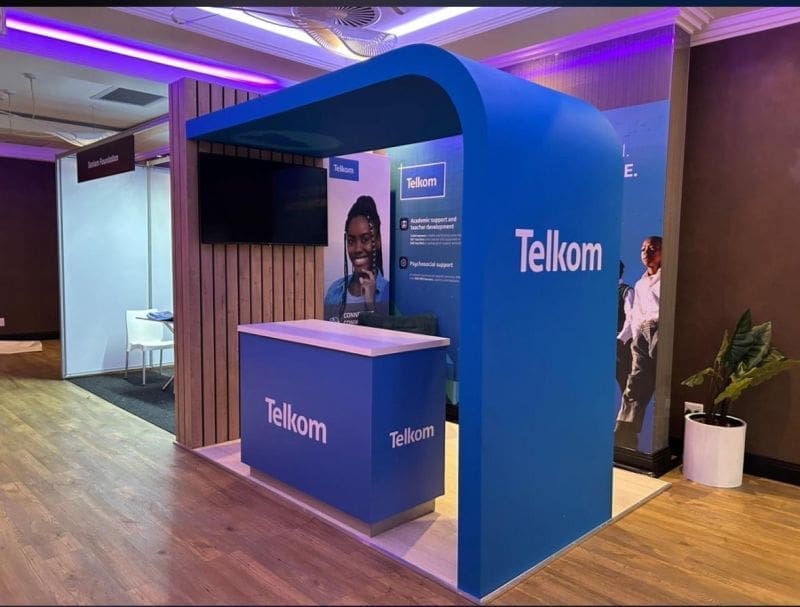
Hosted by Telkom under the theme “Africa’s Ascent: Towards a Sustainable and Resilient Future,” the conference became a test for a powerful new consensus. The continent’s digital destiny, leaders asserted, will be decisively shaped by three intrinsically African assets: its dynamic people, its sovereign data, and its unparalleled ability to collaborate across sectors and borders.
The panel discussion, “Digital Sustainability – the African way,” moderated by Sello Mmakau, Group Chief Digital Officer at Telkom SA, set the tone.
Mmakau defined the urgent task with clarity, stating, “The emergence of its young, dynamic population and the rise of AI offer a historic opportunity to leapfrog traditional ways. Our discussion today is about defining digital sustainability, also rooted in African context. What does that mean? It means we are building solutions that are not just high-tech, but are fundamentally practical, desirable, and viable for our unique context.”
He welcomed a panel of formidable thinkers: Dr. Brenda Didi, Chief Risk Officer Group Digital at Momentum Group; Nomonde White-Ndlovu, Chief Information Officer at Bidvest Bank; and Naeem Seedat – Group Executive Digital Strategy at Telkom SA.
Dr. Didi captured the moment’s significance: “The way you’ve framed conversation today shows real clarity of purpose. So this isn’t just a conference. It actually feels like it’s a strategic gathering of people who are genuinely committed to Africa’s digital future.”
Digital Sustainability: Access, Dignity, and Ground-Up Transformation
The conversation immediately anchored itself in the African reality.
When asked how AI transforms sustainability, Nomonde White-Ndlovu redefined technology’s primary role on the continent:
“Technology in Africa isn’t just about innovation. It’s actually about access. It’s about dignity and the possibility of a different future for our people… AI isn’t transforming Africa from the top down necessarily. It’s transforming Africa from the ground up through inclusion, localization and practical access.”
She outlined critical applications: predictive analytics for climate and health, decentralized access via telehealth and low-data learning, and hyper-local solutions for African languages, crops, and financial behaviors. This grounded, human-centric view defined the panel’s entire ethos.
Seedat detailed Telkom’s dual-strategy to operationalise this, moving beyond mere efficiency.
“At Telkom, we’ve taken a dual approach… Looking at it through the efficiency lens… [and] the growth lens, which is looking at how these technologies cannot just be something we adopt, but can be what we use to create that next set of capabilities, products, services… reinventing our business model.”

This balance between optimising the present and inventing the future is the tightrope African enterprises must walk.
Inclusion: The Non-Negotiables of Affordability, Context, and Risk
On the paramount challenge of inclusion, the panel moved past clichés.
Dr. Didi emphasised that “digital inclusion is not just about the tech… It’s also about the people… the business models… the partnerships.”
She cited successful African innovations like mobile money, zero-rated education/health platforms, and community Wi-Fi as models.
White-Ndlovu delivered a sobering perspective on affordability and design: “A lot of our people don’t have access to data because it’s relatively expensive… How we actually design technology needs to actually have that in mind… What digital inclusion should be asking is can you participate confidently and safely within the whole digital inclusion ecosystem.”
She argued for “micro-pricing” in financial services and solutions designed for specific national contexts, not regional assumptions.
With scale comes profound responsibility.
Dr. Didi laid out the inseparable link between inclusion and risk management: “Organizations have a responsibility to make sure that they implement the right and adequate risk management practices to safeguard the interests of the people.” She highlighted three non-negotiables: data privacy, cybersecurity awareness, and mitigating AI bias by using contextually relevant data. “Unknowingly,” she warned, poor governance “creates exclusion.”


Sovereignty, Trust, and the Governance Imperative
The discourse naturally escalated to the macro challenges of sovereignty and ethical governance in the age of breakneck AI advancement.
Seedat pinpointed the core dilemma: the “spacing problem” (keeping pace with tech) and the “black box problem” (AI’s opacity). His solution was a philosophical shift: “See [governance] as flip sides of the same coin. Governance and innovation… We’re under-aligned, which is the problem.”


He issued a powerful call for digital self-determination: “Our future is not about digital transformation, but it’s about digital self-determination. And governance plays a big role in us purposely deciding what our future wants to be as opposed to being led towards that.”
On data sovereignty, he added a personal note: “I think about the decisions that folks like us in these rooms are making and how it’s going to impact [future generations].”
Dr. Didi provided the strategic framework for embedding this trust, advocating for governance woven into three layers: strategic leadership buy-in and risk appetite, operational “privacy by design” principles, and continuous monitoring and validation for explainability.
“The ethical component is important because it directly impacts the people that are using these solutions in a very personal kind of way,” she concluded.


Seedat shared Telkom’s practical mantra for balancing speed and responsibility:
“Think big, design carefully, and act fast.” He stressed, “Just because you can doesn’t mean you should… that doesn’t mean you should is going to be driven by what makes you tick in your values and your moral compass.”
Building Resilience: Investing in People and Strategic Foundations
Facing finite resources, where should Africa invest first for digital resilience? White-Ndlovu pointed to foundational needs:
\Zero trust” security architectures, redundancy, and crucially, “regulatory collaboration between all ecosystems.” She cited the successful collaboration to address South Africa’s greylisting as a model.
Seedat, however, argued that the ultimate foundation is human capital.
“Resilience is going to come from our people,” he stated, calling for surgical investment in education and healthcare. “If average life expectancy in our part of the world is lower… our potential is constrained.”
He listed the other “elephants in the room”: connectivity, adult literacy, and stable electricity.
“Those areas… are things that we should spend more time in a room figuring out unique solutions that are uniquely African.”
The Call to Action: Co-Creating the African Digital Era
In closing, the panelists issued a unified yet multifaceted call to action.
Dr. Didi focused on ownership and interest:
“Come back home and to really take in terms of the needs of Africa… We need to invest in data… protect our data… Be interested… This has to be something that you are interested in understanding so that we can co-create an Africa that all of us can be proud of.”
White-Ndlovu championed strategic support:
“How do we find that 20% [of citizens who will create 80% of the value]? How do we galvanize around them, support them, nurture them and give them everything they need so that they can create the future in which the rest of us 80% can benefit from their brilliance.”
Moderator Mmakau integrated the dialogue into a compelling vision.
He noted Africa’s “young and digitally receptive population” is a powerful advantage, but achieving its potential requires “African context AI models” and “strong data sovereignty frameworks.”
He outlined the ecosystem roles: telcos enabling connectivity and infrastructure, financial services driving human-centric inclusion, and all parties mitigating risk through ethical governance.
He concluded with a powerful proclamation that encapsulates the conference’s spirit: “
Ultimately, ladies and gentlemen, Africa’s future destiny will be shaped by its people, its data, its ability to collaborate across the sectors and the borders.” Invoking the African proverb, “rain doesn’t fall on one roof alone,” he affirmed, “Our digital progress must uplift the whole continent… we will resiliently and unapologetically do it on our own terms.”

The message from Hermanus is clear. The African digital journey is being re-mapped. It is a path defined not by following, but by forging; not by isolated sectors, but by unified purpose. The tools are global, but the blueprint—practical, inclusive, sovereign, and collaborative—is unmistakably and powerfully African.