
Close Menu
  • Homepage
  • News
  • Cloud & AI
  • ECommerce
  • Entertainment
  • Finance
  • Opinion
  • Podcast
  • Contact

Subscribe to Updates

Get the latest technology news from TechFinancials News about FinTech, Tech, Business, Telecoms and Connected Life.

What's Hot

Resolv Secures $500,000 Pre-Seed To Build The Recovery Layer For Stolen Crypto

2026-01-21

Huawei Says The Next Wave Of Infrastructure Investment Must Include People, Not Only Platforms

2026-01-21

The Productivity Myth That’s Costing South Africa Talent

2026-01-21
Facebook X (Twitter) Instagram
Trending
  • Resolv Secures $500,000 Pre-Seed To Build The Recovery Layer For Stolen Crypto
Facebook X (Twitter) Instagram YouTube LinkedIn WhatsApp RSS
TechFinancials
  • Homepage
  • News
  • Cloud & AI
  • ECommerce
  • Entertainment
  • Finance
  • Opinion
  • Podcast
  • Contact
TechFinancials
Home»News»A National Vision, But No Cost Model: Profmed-Led Roundtable Probes NHI Feasibility
News

A National Vision, But No Cost Model: Profmed-Led Roundtable Probes NHI Feasibility

At a recent Profmed-hosted roundtable, experts urged the government to confront South Africa’s fiscal reality and prioritise a collaborative, multi-fund approach to universal healthcare
Staff WriterBy Staff Writer2025-08-05No Comments5 Mins Read
Share Facebook Twitter Pinterest LinkedIn Tumblr Email
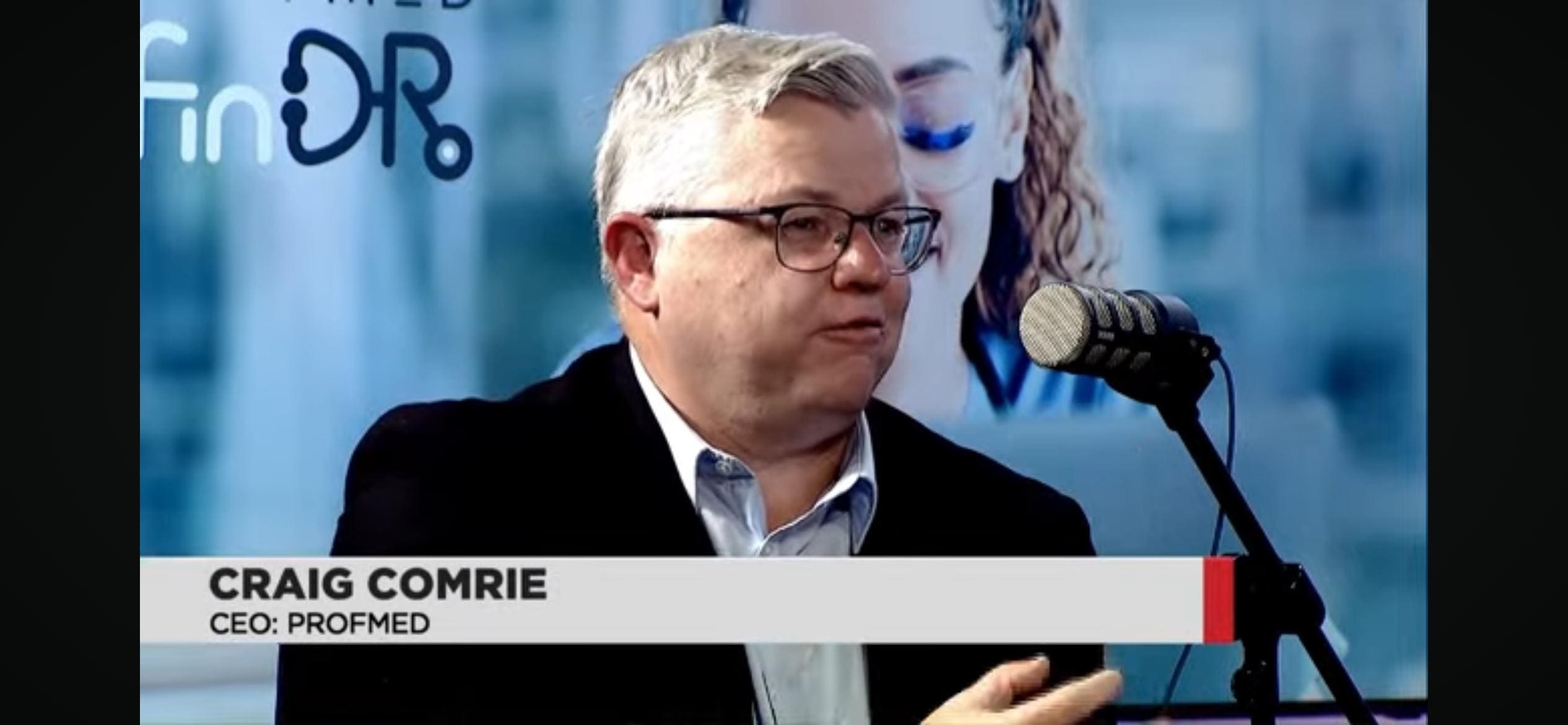
Craig Comrie, CEO of Profmed
Share
Facebook Twitter LinkedIn Pinterest Email Copy Link


Universal healthcare is a goal no South African would dispute, but how we achieve it is fast becoming one of the country’s most urgent and polarised policy challenges. At a recent Business Day TV roundtable hosted by Profmed, healthcare, finance, and policy leaders came together to debate the economic and structural realities of the NHI Act, which has been signed into law.

For Craig Comrie, CEO of Profmed, the conversation must start with the health consumer. “We saw 75% of respondents in our 2025 State of Health Report believe the NHI will worsen healthcare access. And 90% have little or no confidence in the Government delivering improved healthcare services,” he said.

Comrie emphasised that reform is necessary, but it must be realistic, affordable, and inclusive. “We need something realistic and that will make a difference in the lives of health consumers tomorrow, not in 10, 20, 30 years’ time. But, the private sector needs a space where we can partner with government to produce meaningful changes in healthcare, not be sidelined in the conversation by unrealistic policies and laws like the NHI.”

The economic elephant in the room

One of the strongest calls for economic pragmatism came from Martin Kingston, Executive Chair of Rothschild & Co. South Africa and Vice President of Business Unity South Africa. “The way it is currently structured, it’s not realistic. In fact, we’ve argued that it’s not financially viable. It’s not implementable and it’s not practical,” he warned. “We need to live within our means. We had not one, not two, but three budgets tabled. We don’t have the fiscal space.  Indeed, not even for the budget for the spending we’ve got in front of us at the moment.”

Kingston argued that South Africa cannot afford to abolish the private sector in pursuit of a centralised health fund. “We saw great work through COVID. Things like the Solidarity Fund and elsewhere where the public and the private sectors could work together quite well.”

A single fund won’t solve a multi-sector problem

Other panellists echoed concerns about centralisation, cautioning that a single-fund NHI model could undermine the very system it aims to reform. “NHI actually went a little bit further, right? It promises the same level of cover medical schemes provide but for all 61 million people,” said Thoneshan Naidoo, CEO of the Health Funders Association. “That would take R941bn to fund, which means more than double what we currently pay in tax. VAT would have to increase from 15% to 36%.”

Naidoo said this makes conversations around NHI almost feel academic, what with such a yawning chasm between the rands-and-cents reality on the ground versus what is practical.

Barry Childs, actuary and Joint CEO of Insight Actuaries and Consultants, added that there is no public-domain actuarial modelling that explains how the system will work. “There isn’t any single version of the truth for what NHI will cost, partly because benefits haven’t been defined, funding sources haven’t been defined, and it’s really not clear what the end game is going to look like from an NHI point of view.”

Workforce and infrastructure challenges loom large

Comrie also flagged critical bottlenecks in human resources. As the majority of Profmed members are made up of doctors, Comrie said, “We’ve seen the average age of a GP now being 55 or 56. At the same time, we have young community service doctors finishing their training but unable to be employed in either the public or private sector,” he said. “Out of every ten professionals who leave Profmed, three are emigrating. They aren’t leaving for another medical scheme, they are leaving the country. We need every doctor we can keep in South Africa to deliver better healthcare access and quality services.”

The discussion also raised concerns about inflated public expectations, particularly the belief that NHI will immediately deliver private-sector-level care to everyone. Panelists warned that this assumption is unrealistic and could undermine trust in the reform process if left unaddressed.

Profmed’s role: Convening the right voices at the right time

The roundtable underscored Profmed’s role as more than a restricted medical scheme — it is positioning itself as a thought leader, data provider and convener in the national healthcare reform dialogue. Its 2025 State of Health Report served as a foundational reference point during the discussion, grounding policy and financial theory in lived realities.

“Perhaps a national health dialogue is what we actually need,” asserted Comrie. “We need to get away from the legal cases which will continue to undermine the trust we need to build between the private sector and government. It’s going to be difficult to get a national dialogue and action plan which delivers quick short-term gains while also addressing long-term structural changes in health services. The voice of the consumer cannot be left out of the dialogue.”

As litigation around the NHI Act continues, and as Treasury remains silent on how to fund it, the message is clear: the goal is not in question, but the roadmap needs a reality check. Both the private sector and citizens of South Africa should play a vital role in that conversation.

Watch the full Profmed x BDTV roundtable on the economics, realities and future of the NHI below:

Play

NHI Profmed
Share. Facebook Twitter Pinterest LinkedIn Tumblr Email
Staff Writer

Related Posts

Kili Technologies: Unlocking Africa’s Clean Energy Potential With Trusted Data

2026-01-19

Luminance Expands In Africa Amid Demand Surge

2026-01-15

Mpumalanga’s Top Matric Achiever Luyanda Ndlozi Rewarded With Brand New Car

2026-01-14

Say Hello To Haier: Intelligent Appliances Designed For SA’s Future

2026-01-14

Victory For Members: MediCheck Forces Reversal of Discovery Health’s R170 Million “Clawback”

2026-01-12

Volvo Recalls 372 EX30s In South Africa Over Battery Fire Risk

2026-01-09

Wholesale And Retail SETA Funds 50 SA Students To Study E-commerce In China

2026-01-09

OUTsurance To List On A2X Markets

2026-01-07

SA Marks Over 200 Days Of Uninterrupted Power Supply

2026-01-05
Leave A Reply Cancel Reply

DON'T MISS
Breaking News

Huawei Says The Next Wave Of Infrastructure Investment Must Include People, Not Only Platforms

As countries push ahead with digital transformation, infrastructure planning is evolving. It is no longer…

Cartesian Capital Expands Investor Toolkits With JSE Listings

2026-01-20

South Africa: Best Starting Point In Years, With 3 Clear Priorities Ahead

2026-01-12

How SA’s Largest Wholesale Network is Paving the Way for a Connected, Agile Future

2025-12-02
Stay In Touch
  • Facebook
  • Twitter
  • YouTube
  • LinkedIn
OUR PICKS

The EX60: A Volvo That Talks Back

2026-01-20

Could ChatGPT Convince You To Buy Something?

2026-01-15

Over R270M In Phuthuma Nathi Dividends Remain Unclaimed

2025-11-27

Africa’s Next Voice Revolution, When 5G Meets AI

2025-11-21

Subscribe to Updates

Get the latest tech news from TechFinancials about telecoms, fintech and connected life.

About Us

TechFinancials delivers in-depth analysis of tech, digital revolution, fintech, e-commerce, digital banking and breaking tech news.

Facebook X (Twitter) Instagram YouTube LinkedIn WhatsApp Reddit RSS
Our Picks

Resolv Secures $500,000 Pre-Seed To Build The Recovery Layer For Stolen Crypto

2026-01-21

Huawei Says The Next Wave Of Infrastructure Investment Must Include People, Not Only Platforms

2026-01-21

The Productivity Myth That’s Costing South Africa Talent

2026-01-21
Recent Posts
  • Resolv Secures $500,000 Pre-Seed To Build The Recovery Layer For Stolen Crypto
  • Huawei Says The Next Wave Of Infrastructure Investment Must Include People, Not Only Platforms
  • The Productivity Myth That’s Costing South Africa Talent
  • Bitcoin Hyper Falls Short Where Remittix Delivers, How Is RTX Reshaping The PayFi Narrative As Platform Goes Live Feb 9th
  • Solana Price Prediction: SOL Is On-Track To Regain $250 This Year but the Question Is When? Is Meme-Mania Truly Over?
TechFinancials
RSS Facebook X (Twitter) LinkedIn YouTube WhatsApp
  • Homepage
  • Newsletter
  • Contact
  • Advertise
  • Privacy Policy
  • About
© 2026 TechFinancials. Designed by TFS Media. TechFinancials brings you trusted, around-the-clock news on African tech, crypto, and finance. Our goal is to keep you informed in this fast-moving digital world. Now, the serious part (please read this): Trading is Risky: Buying and selling things like cryptocurrencies and CFDs is very risky. Because of leverage, you can lose your money much faster than you might expect. We Are Not Advisors: We are a news website. We do not provide investment, legal, or financial advice. Our content is for information and education only. Do Your Own Research: Never rely on a single source. Always conduct your own research before making any financial decision. A link to another company is not our stamp of approval. You Are Responsible: Your investments are your own. You could lose some or all of your money. Past performance does not predict future results. In short: We report the news. You make the decisions, and you take the risks. Please be careful.

Type above and press Enter to search. Press Esc to cancel.

Ad Blocker Enabled!
Ad Blocker Enabled!
Our website is made possible by displaying online advertisements to our visitors. Please support us by disabling your Ad Blocker.