

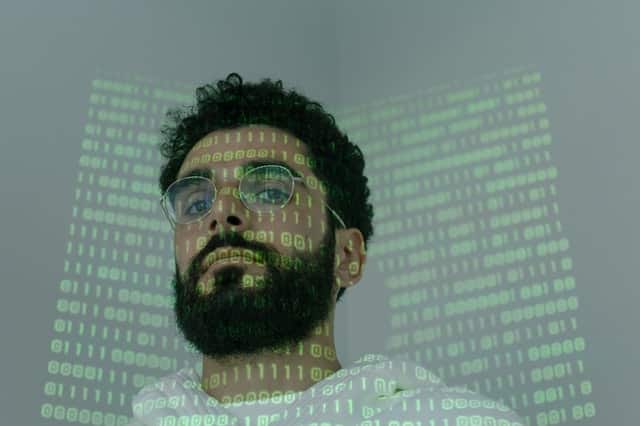
As biometric identity becomes a central tenet in secure access to finance, government, telecommunications, healthcare services and more, 2024 is expected to be a year where we see biometrics evolve, and important regulatory conversations taking place. Here are some of the trends we believe will be shaping the biometric identity market in the coming year.
1. Behavioural biometrics
Cybercriminals are increasingly weaponising generative AI tools to spoof human images and voiceprints used for identification at scale. These tools are growing more and more accessible, with professional criminals strengthening deepfake and bot attacks, and amateurs sourcing fraud-as-a-service kits on the dark web. Essentially, AI is able to define and replicate one of the strongest defences companies have had against crime in the past: authenticity. This leaves us with the question: how do we get one step ahead in how we discern a genuine human interaction from a fraudulent one?
4D liveness facial biometrics is a safe and foolproof solution to this challenge, but there are additional, complementary solutions entering the market. For example, biometric systems that authenticate users with real-time data such as typing patterns, gait analysis or voice recognition could offer enhanced security that doesn’t require consumers to conduct any authentication actions.
Take the case of behavioural biometrics, which analyses a user’s digital, physical, and cognitive behaviour to distinguish whether the person behind the screen is a legitimate customer. A genuine user, for example, enters information in a particular manner. This pattern in human activity is increasingly being identified and analysed through machine learning, aiding in discerning whether an online activity is being driven by a human or part of an automated attack.
2. Ethics and privacy in biometrics
As biometric data becomes the dominant form of identification, necessary conversations around the ethics of biometric data collection and usage need to take place. Consumers are rightfully concerned about how data is being used and if, for example, their identifying features could be used as part of surveillance. And if used unethically, biometric tools could exhibit biases towards certain population groups or misidentify individuals leading to, for example, wrongful incarceration.
Regulating the biometric space is becoming an issue of national urgency for many governments. The UK government, for example, has recruited new advisors for its Biometrics and Forensic Ethics Group (BFEG), which is responsible for defining how biometric data, forensic material, and large data sets are used in machine learning. In the US, the Department of Justice is creating a board on the ethical and lawful use of AI, including biometrics.
What biometric companies should be doing is to save the biometric data used as part of the face identification process as a reference template. A reference template refers to a set of ones and zeros that match up to what our system deems a user’s face to look like. This cannot be viewed by the naked eye or used by any technology other than the biometrics company itself and is thoroughly protected.
3. Biometrics in Internet of Things (IoT)
The Internet of Things refers to interconnected devices with sensors, processing ability, and software that connect and exchange data with other devices and systems within a network. This results in simplified daily processes for consumers, for example a smart home in which manual tasks are automated, or a telematics device that measures your essential health data and communicates it with your health insurance provider in return for more accurate risk assessment. As more processes are automated and more data is shared, there is a wealth of information that needs to be protected. This offers a prime opportunity for biometrics to secure access to various IoT systems and devices.
4. Biometrics in healthcare
While banks, telecommunications companies and financial institutions have been exploring the possibilities of biometrics for a long time already, insurance companies, pension funds and employee benefits agencies are investing in biometrics in response to growing threats. A fascinating and essential application of biometrics is in healthcare, from patient identification and access control, to monitoring and managing health data. Biometrics could extend healthcare beyond traditional settings such as hospitals and doctors rooms and enable efficient and secure remote diagnosis and electronic prescriptions. These interventions could revolutionise a sector that is hindered by a maze of logins and fragmented data.
Biometric identity could even improve access to healthcare services. For example, Ethiopia’s Ministry of Health has partnered with its national identity programme to integrate the Fayda digital ID with its healthcare sector. This will serve as a patient registry while supporting national health insurance schemes, employee and professional licensing, and the sharing of health records. Kenya has recently announced a biometric vaccination program pilot for newborns and Rwanda is considering introducing biometrics as a means of ensuring that all children participate in routine immunisation campaigns.
In conclusion, the technology and ethics discussions around biometrics continue to evolve, resulting in biometric systems that consumers can trust. Ultimately, biometric identity can be a tool for empowerment, especially in Africa. As seen in these use cases, the more people use biometrics, the more they will be empowered to use their biometric identity to access and expedite other critical services such as voting and healthcare or to protect their savings and data. I believe that in South Africa we have the technology and the skills to catapult our services far beyond the status quo. This could result in greater protection against fraud in our country and serve as a catalyst for unprecedented growth.
- Lance Fanaroff, iiDENTIFii Chief Strategy Officer
